
Termite Treatment Melbourne
Termite treatments across Melbourne from $1,800 — dusting, foaming, baiting and barrier systems, installed by accredited technicians.
Melbourne Termite Treatment — From $1,800
Once termites are in a building they are already doing damage, and every week they stay costs more to put right. A termite treatment deals with the colony that is there and then protects the property against the next one, which is a different job from finding them in the first place.
Protech has been treating termites across Melbourne since 2001. Every treatment begins with a termite inspection, because what gets applied depends entirely on the species, where the activity sits and how the building is constructed. We work to Australian Standard AS 3660, and our technicians are accredited applicators for the systems we install.
Treatments start from $1,800 ex GST. To arrange an inspection and a written proposal, call 03 9449 4244.
What Is Actually Used to Treat Termites
People often ask what the solution for termites is, expecting a single product. There is no one answer, because the four methods below solve different parts of the problem and most jobs use more than one of them.
- Dusting the workings. A fine termiticide dust is applied directly into the active workings — the mud tunnels and galleries where termites are moving. Termites groom one another constantly, so the dust travels back through the colony on their bodies. It is the usual first step when live activity is found, because it uses the colony's own behaviour to carry the treatment somewhere no technician can reach.
- Foaming. Foam expands to fill a wall cavity, a void or a length of tunnel that a dust or a liquid cannot coat evenly. It is used where the activity sits inside a structure and the void needs treating along its whole length, which a spot application cannot achieve.
- Baiting and monitoring. Bait stations are installed in the soil around the property and checked on a cycle. Termites feed on the bait and carry it back, which eliminates the colony over time. Stations stay in place afterwards as an early-warning system. We install Sentricon, Nemesis, Agenda and Trelona ATBS systems.
- Chemical and physical barriers. A treated zone in the soil, or a physical membrane built into the structure, that stops termites reaching the building at all. We install Termidor, HomeGuard, Biofilm and TERM-seal. A barrier is prevention as much as treatment, and it is normally what follows once an active infestation has been dealt with.
Protech do not offer heat treatment of any kind for termites. Where you see high-temperature methods advertised for timber pests, that is a different service from anything we provide.
Our guide comparing barriers with baiting goes through when each of the longer-term options is the better fit for a particular property.
How a Termite Treatment Runs
- Inspection first, always — Nothing is applied before the property has been inspected. The inspection establishes which species is present, where the activity is, how far it has travelled and where the nest is likely to sit. Treating without that is guesswork, and the wrong treatment can push a colony somewhere harder to reach.
- A written proposal — You get a proposal setting out the recommended approach, what it covers, what it costs and the terms that apply. Nothing starts until you have agreed to it.
- Treating the active workings — Where there is live activity in the building, that is dealt with first, usually by dusting or foaming, so the colony begins taking the treatment back with it.
- The longer-term programme — Once the immediate activity is under control, the property needs protecting against the next colony. That is a baiting system, a barrier, or both, depending on the construction and the site.
- Monitoring and annual inspections — Baiting systems are managed under an annual monitoring agreement. Barriers carry manufacturer warranties that are conditional on annual inspections, so the yearly visit protects your cover as well as your home.
If You Have Found Termites, Leave Them Alone
This is the part homeowners most often get wrong, and it makes the job harder for everyone.
Do not spray them. An off-the-shelf insecticide kills the termites it touches and does nothing to the colony, which may number in the hundreds of thousands. Worse, the survivors abandon that route and re-enter somewhere else, so the activity disappears from the one place a technician could have found it.
Do not disturb the workings. Mud tunnels, damaged timber and the termites themselves should be left exactly as they are. Those workings are the map to the nest, and they are where a dust or foam treatment is applied. Breaking them open scatters the colony.
Do not panic. Termites work slowly. A few more days while a proper inspection is arranged will not change the outcome, whereas a rushed DIY attempt very often does. The full explanation sits on our termite control page.
What Termite Treatment Costs
A termite inspection starts from $220 and a full treatment or barrier from $1,800, both ex GST. Those are starting prices. What moves them is the size of the property, how it is built, how far the infestation has spread and which system suits the site.
Our termite treatment cost guide for Melbourne sets the figures out in detail, and the full price list covers every service we offer. You get a written figure before any work starts, and the quote itself is free.
Set against the alternative, the arithmetic is not close. Termite damage is not covered by most basic home insurance policies, so repairs to structural timber come out of your own pocket.
What Is Guaranteed, and What Is Not
Termite work sits outside the six-month re-treatment guarantee that covers our general pest treatments. It is a specialised programme with its own terms, and we would rather set them out here than have you assume something broader.
- Chemical barrier — up to 10 years. Termidor's manufacturer product warranty runs to 10 years, subject to annual inspections.
- Physical barrier — per product installed. Manufacturer warranties on Biofilm, HomeGuard and TERM-seal run to 50 years and beyond, subject to accredited installation and annual inspections.
- Baiting system — ongoing, managed continuously under an annual monitoring agreement.
- Termite inspections — a report on what was found at the time of the visit. An inspection is a different service from a treatment.
- Timber damage — not covered. Protech does not offer a warranty for timber damage caused by termites. A treatment establishes a treated zone designed to control them; existing and future timber damage is not warranted.
The barrier warranties above are conditional on annual inspections, and a baiting system is managed under an annual monitoring agreement, so the yearly visit is what keeps your cover alive. An inspection on its own reports on what is found at the time of the visit; it is not a treatment and carries no re-treatment cover. The full schedule is on our guarantee page, and your technician confirms the exact terms for your job before you commit.
Termite Treatments in Melbourne by Property Type
Termite treatments in Melbourne are not interchangeable between properties. What suits a 1920s weatherboard on stumps in Coburg is the wrong answer for a slab-on-ground townhouse in Point Cook, and the difference is mostly about where a colony can get in without being seen.
Older homes on stumps and bearers. A subfloor gives access to the underside of the building, which makes inspection easier and treatment more direct. Activity is often found on stumps or in bearers and joists before it reaches living areas. Dusting the workings and installing a soil barrier around the perimeter is a common combination here.
Slab-on-ground houses. A concrete slab looks solid and is anything but sealed. Termites travel up through service penetrations, expansion joints and the perimeter edge, none of which can be seen once the house is finished. That concealment is why slab homes usually suit a baiting and monitoring system, which detects a colony while it is still working towards the building, well before anything appears inside.
Townhouses and units. Shared walls and shared soil mean a colony affecting one dwelling can be feeding under several. Treatment usually needs the agreement of the owners corporation, and we are used to working through that. Our strata pest control page covers how those jobs are run.
Commercial and industrial buildings. Larger footprints, more penetrations and documentation requirements. Termite work on a commercial site is normally folded into a scheduled programme with written reporting, which our commercial pest control page sets out.
New builds and extensions. Protection is designed in at the build stage under AS 3660.1-2014, and parts of Melbourne sit within council Declared Zones where it is a compliance requirement. Send us your plans and we will advise on what is needed.
Treating Different Termite Species
Around 350 termite species live in Australia and only a handful damage buildings, but the ones that do need different handling.
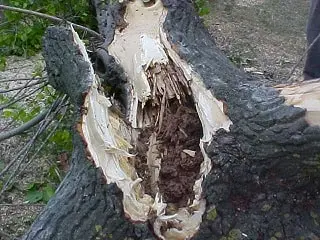
Subterranean termites cause the overwhelming majority of damage in Melbourne. They nest in soil, in stumps and inside living trees, then forage outward and build mud tunnels to reach timber while staying hidden. Because the nest sits away from the building, treatment has to reach back to it, which is why dusting, foaming and baiting all work by getting the termites to carry the treatment home. Killing the ones inside your wall achieves very little on its own. Our subterranean termite guide covers the species in detail.
Drywood termites live entirely inside the timber they are eating and need no contact with soil, so soil barriers and ground bait stations do nothing to them. They give themselves away through small gritty droppings pushed out of the timber. Treatment is directed into the infested timber itself. See the drywood termite guide.
Dampwood termites attack timber already softened by moisture, so the fix is usually as much about the water as the insect. Repairing the leak, improving subfloor ventilation and replacing the affected timber is often most of the job. The dampwood termite guide explains the conditions they need.
This is the practical reason an inspection comes first. Applying a subterranean treatment to a drywood infestation wastes money and leaves the colony untouched.
After the Treatment
Termite treatments in Melbourne run on a seasonal rhythm worth knowing about. Colonies stay active all year in this climate, but foraging and swarming pick up through the warmer, wetter months from roughly September onward, which is when most homeowners first notice mud tunnels or discarded wings. Work booked in late winter and early spring goes in ahead of that peak.
Expectations are worth setting, because termite treatment does not look like a general pest spray where the problem is visibly gone the same afternoon.
Where workings have been dusted or foamed, activity usually declines over the following weeks as the treatment moves through the colony. You may see termites for a while after the visit; that is the treatment working its way back through the colony, and it is a reason to leave the workings undisturbed.
Where a baiting system has gone in, colony elimination typically runs over four to five months, because it depends on termites finding the stations and feeding steadily. Technicians check the stations roughly every ten to twelve weeks and report what they find. Once the colony is gone the stations stay in the ground as an early-warning system for the next one.
Where a barrier has been installed, protection is immediate and continuous for the life of the product, provided the treated zone stays intact. Landscaping, new paving, a garden bed built up against the wall or an extension can all breach a barrier without anyone realising, so tell us before that work happens.
In every case the property needs an annual inspection. That is what keeps the manufacturer warranty valid and what finds the next colony early enough for the treatment to be straightforward.
Why Melbourne Homeowners Use Protech for Termite Work
Protech has treated termites across Melbourne since 2001, and the team carries more than forty years of combined experience. We are licensed, insured and accredited, hold HACCP, NPMA and AEPMA accreditation, and work to Australian Standard AS 3660. Muzi Tsolakis, who founded the business, is Victoria's official Competency Assessor for Pest Management.
The species behind most Melbourne infestations is Coptotermes acinaciformis, a subterranean termite that nests in soil, stumps and living trees and reaches buildings through concealed routes. Museums Victoria records it across the state, and CSIRO's guidance on managing termites explains why treatment has to account for a nest that may sit well away from the building being damaged. Our subterranean termite guide covers the biology.
We are rated 4.8 out of 5 from 405 Google reviews, answer the phone 24 hours a day, seven days a week, and cover the whole metropolitan area from Campbellfield. To book, call 03 9449 4244 or send us a message.
Sources
- Victorian Department of Health — Pest control: termites
- Standards Australia — Australia's termite management standard (AS 3660) revised
- CSIRO — Managing Termites (research guide, PDF)
- Museums Victoria Collections — Coptotermes acinaciformis (Subterranean Termite)
- Australian Pesticides and Veterinary Medicines Authority (APVMA)
Learn More About Pest Solutions
Same-day service, eco-friendly treatments and a pest-free guarantee. Domestic & commercial — all Melbourne suburbs.