

Dairy Industry
HACCP-accredited, fully documented pest management for Melbourne dairy factories and processing plants — food-safe, audit-ready and backed by our pest-free guarantee.
Pest Control Challenges in the Dairy Industry
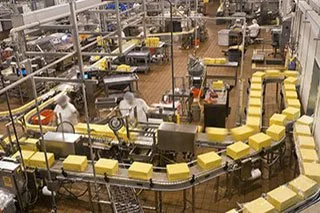
The dairy industry brings its own pest control challenges. Even with strict hygiene and production standards in place, a single pest intrusion can compromise product integrity and lead to significant operational and financial losses.
Pests are drawn to dairy processing environments by the availability of food, moisture and strong organic odours. Once inside a facility they can contaminate production areas quickly, which makes proactive pest management essential to maintaining product safety and compliance.
To arrange a program for your plant, call Protech on 03 9449 4244.
How Can We Help?
We have extensive experience managing pest issues across Melbourne and have worked with a wide range of dairy industry facilities. Our HACCP accreditation lets us provide compliant pest control tailored to food and dairy production environments.
Our technicians are trained in current pest management technologies and understand the strict operational and hygiene requirements of sensitive industries. Pest control for a dairy processing facility differs from the approach used in other food production settings, so we adapt our method, products and monitoring accordingly.
This industry-specific understanding, together with our commitment to compliance and quality, sets our Melbourne commercial pest control services apart from standard providers.
Why Call Protech Pest Control?
Pest emergencies can occur without warning in dairy processing facilities. Even a single sighting of a rodent calls for immediate assessment and action to reduce the risk of contamination and protect product safety.
At Protech Pest Control we are committed to a rapid response when urgent situations arise, with prompt service across Melbourne so pest issues are addressed without delay. Our treatments are designed to be effective and considerate of sensitive production environments, using solutions that keep safety and compliance front of mind.
We focus on reliable pest control that safeguards dairy facilities and maintains high standards of hygiene and operational continuity, from rodents and flies through to bird proofing and stored-product pests.
Complete Dairy Pest Management Programs
Every facility runs differently, so we build each program around your production areas, your storage and the pests most likely to threaten your product. Our dairy pest management services include:
- Routine inspections and preventative treatments
- Integrated Pest Management (IPM) programs
- Rodent monitoring, baiting and physical proofing
- Fly and flying-insect control for production and storage areas
- Cockroach management programs
- Bird proofing and exclusion systems
- Stored-product pest management
- Digital reporting and HACCP-aligned compliance documentation
- Site-specific risk assessments and corrective action recommendations
Because dairy sits alongside broader food and beverage manufacturing, we also service the wider plant environment through our factory and industrial pest control programs.
Pest Control for Dairy and Food Processing Environments
A dairy plant is one of the more demanding versions of a problem shared across food manufacturing. The same program structure covers beverage production, ready-meal and packaged-food plants, bakeries, ingredient warehousing and cold storage operations, and the differences between them come down to which of the following zones dominates the site. Each one is inspected, monitored and treated on its own terms.
Processing halls and wash-down areas
Wet processing gives pests the three things they need in one place: water, warmth and organic residue. Floor wastes, trench drains, grated channels, plinths under tanks and the joints where equipment meets the floor collect product residue that wash-down pushes around without removing. Drain biofilm supports small flies such as drain flies and vinegar flies, which breed in the film itself and complete a generation in days, so treating adults on the wing achieves nothing while the breeding site is intact. Cockroaches use the same warm, damp harbourage around pump housings, cable trays and equipment bases. Our inspection concentrates on the drainage network, the voids under and behind plant, and the transition points between wet and dry areas, and the corrective actions we write are often about drainage falls, cleaning access and residue capture as much as about treatment.
Cold storage, chillers and the cold chain
Low temperature slows pests down without excluding them. Rodents nest in the insulated panel cavities, service penetrations and door frames around a cold room, feeding in the warm areas nearby and returning to shelter, and door curtains, seals and roller shutters that no longer meet properly leave a permanent gap. Condensation on external walls and evaporator platforms adds a water source. Cold rooms, chillers, freezer anterooms and their door hardware are inspected at every visit, with monitoring placed in the warm approach to the door where activity is actually detectable.
Packaging lines and product-contact zones
Packaging halls carry a different risk again. Cardboard, shrink wrap, pallets and outer cartons arrive from suppliers and bring stored-product pests and cockroach egg cases with them, and film reels, carton magazines and the framework of a filling line offer harbourage that a cleaning crew cannot reach. Where product is open or a surface is product-contact, residual chemical application is excluded, so the work in those zones is monitoring, physical proofing, non-chemical devices and housekeeping controls, with any chemical treatment confined to areas and times agreed with your quality team.
Dry-goods and ingredient stores
Milk powder, whey and casein powders, sugar, starch, flour, cocoa and stabiliser blends all support stored-product pests. Flour beetles, weevils and pantry moths breed inside the product, and in most cases they arrive in a delivery that was already infested. Monitoring in ingredient and dry-goods storage is set up to detect the problem while it is confined to one pallet or bay, and to give you a delivery record to work back from when it is found. Stock rotation, pallet setback from walls and inspection lanes between bays are recorded as part of the site assessment. Fumigation is available for commercial sites where it can be carried out safely, and it is assessed case by case.
High-Risk Areas We Inspect
Our technicians carry out detailed inspections to identify pest activity, harbourage and entry points throughout your plant. Areas we commonly assess include:
- Production and processing areas
- Cold rooms, storage and packaging zones
- Loading docks and dispatch areas
- Staff amenities and lunchrooms
- Roof voids and ceiling spaces
- Drainage systems and subfloors
- Waste and bin storage areas
- External perimeters and service penetrations
Safeguarding your dairy factory means safeguarding the people of Melbourne who depend on what it produces.
Traceability, Documentation and Working Inside a Food Plant
In food manufacturing the pest management file is part of the food-safety system, and it is read by people who have every reason to look at it closely. Our reporting is built for that audience from the start.
The standards your pest file is read against
HACCP is rarely the only framework a Melbourne food business is measured on. The same pest management records are normally examined under BRC and SQF certification, under supermarket supplier programmes such as those run by Woolworths and Coles, by your certifying body at recertification, and by your local council’s environmental health officer under the Food Act. A customer audit or a second-party supplier audit will ask for the same evidence. Protech is a pest management contractor, so we do not issue HACCP, BRC or SQF certification. What we supply is the pest management evidence those audits examine, and our HACCP pest control page sets out exactly what an auditor receives.
Traceability from a device to a corrective action
Every bait station, monitor, insect light trap and inspection point on the site is numbered and plotted on a site plan, and each visit records what was found at each device, what was applied, the batch and product details, and any corrective action raised. That gives you a chain a reader can follow from a single numbered device back through the servicing history to the action taken, which is what closing out a non-conformance actually requires. The pest-activity trend log then shows whether the site is under control across a season, and the whole pack is issued through our digital reporting system after every visit and kept on file as a complete service history.
Flying-insect monitoring and insect light traps
UV insect light traps are placed to intercept flying insects on their way in, positioned away from open product and away from any location where a unit would sit above an exposed line or bench. Typical positions are inside dock and personnel entries, in corridors between the dock and the processing hall, and in packaging areas. Each unit is numbered against the site plan, the catch is checked and recorded at every visit, and tubes and boards are replaced on a scheduled cycle. Reading the catch by species and by unit is what tells you whether the pressure is coming in through a specific door or breeding somewhere inside the building.
Induction, access and product-contact constraints
Working inside an operating food plant means working to your rules. Where a site requires a contractor induction, a permit to work, escorted access, sign-in, PPE and hygiene protocols, allergen controls or key and alarm handling, that is agreed and recorded before the first visit and built into the servicing plan. Servicing is scheduled around production runs, wash-down windows and planned shutdowns so the work does not interrupt a line or place any product at risk. Product-contact surfaces and open-product areas are excluded from residual application, and where the site handles declared allergens, the treatment plan and any equipment we install are agreed with your quality team before anything goes in.
Where a plant draws raw product straight from farms, the same thinking extends up the supply chain through our farming and agriculture pest control programs, and the wider plant environment is covered by our commercial pest control agreements.
Why Dairy Facilities Choose Protech
Local, HACCP-accredited and trusted since 2001 — rated 4.8★ from 411 Google reviews.
HACCP accreditation
Our HACCP accreditation lets us deliver compliant pest control for food and dairy production, with programs built to suit the strict hygiene requirements of a processing plant.
Dairy-specific approach
Pest control for dairy processing differs from other food settings, so we adapt method, product and monitoring to the conditions inside your facility.
Rapid response
A single rodent sighting in a dairy plant calls for immediate action. We respond promptly across Melbourne so the source is found and the risk to product safety is reduced.
Audit-ready documentation
Every visit is fully documented for third-party audits and internal food-safety reviews, with pest activity records, treatments and corrective actions kept on file.
Proven experience
More than 40 years of combined industry knowledge and a company history going back to 2001, with clean, consistent workmanship on every site.
Fully licensed service
Our technicians are licensed, insured and trained to industry standards to deliver safe pest management — backed by our NPMA and AEPMA accreditation and our pest-free guarantee.
Frequently Asked Questions
Why does the dairy industry need specialist pest control?
Dairy processing environments offer pests a steady supply of food, moisture and strong organic odours, so the risk of contamination is high. Our HACCP accreditation and food-production experience let us build programs suited to the strict hygiene and compliance requirements of dairy plants.
Do you provide HACCP-aligned documentation?
Yes. Every service visit is fully documented with pest activity records, treatment details, site observations and corrective actions, formatted for third-party audits and internal food-safety reviews and kept on file as a complete service history.
How quickly can you respond to a sighting?
A single rodent sighting in a dairy plant needs immediate assessment. We aim to respond promptly across Melbourne so the source can be found and the risk to product safety reduced without delay.
Which areas of a dairy facility do you treat?
We cover production and processing areas, storage and cold rooms, loading docks, staff amenities, roof voids, drainage and external perimeters, using methods chosen to suit sensitive food-production environments.
Do you service food processing and manufacturing sites other than dairy?
Yes. The same program structure covers food manufacturing, beverage production, ready-meal and packaged-food plants, bakeries, cold storage operations and ingredient warehousing. Dairy is one of the more demanding versions of the same problem, because the combination of wet processing, organic residue and continuous wash-down gives pests everything they need. A plant handling dry goods or packaged product carries a different balance of risk, so the monitoring plan and the servicing frequency are set accordingly.
How are insect light traps positioned and serviced?
UV insect light traps are placed to intercept flying insects on their way in, away from open product and away from any position where a unit would sit above an exposed line or bench. Typical positions are inside dock and personnel entries, in corridors between the dock and the processing hall, and in packaging areas. Each unit is numbered against the site plan, the catch tray or board is checked at every visit, and the catch is recorded so the trend can be read across the year. Tubes and boards are replaced on a scheduled cycle so the units keep working.
Can your technicians meet our induction and site-access requirements?
Yes. Where a site requires a contractor induction, a permit to work, escorted access, sign-in, PPE and hygiene protocols, or key and alarm handling, that is agreed and recorded before the first visit and built into the servicing plan. Our technicians are licensed and insured, and we can supply licence, insurance and accreditation certificates for your contractor file.
What guarantee applies to a food-processing pest management program?
Commercial pest management carries the guarantee terms set out in your service agreement, matched to the service frequency we agree. That structure suits a scheduled program, because the site is being attended continuously. The underlying treatments carry their own periods, which are published in full on our guarantee page, and bird proofing and netting carries workmanship cover for six years and product cover for up to ten, subject to annual inspections.
Protect Your Dairy Facility With Professional Pest Management
Talk to the Protech Pest Control team about a HACCP-aligned program for your Melbourne dairy plant. Call 03 9449 4244 or request a free quote.
Learn More About Pest Solutions
Same-day service, eco-friendly treatments and a pest-free guarantee. Domestic & commercial — all Melbourne suburbs.