

Pest Control Seaford
Older coastal homes with damp subfloors, wetlands nearby and steady bird pressure off the beach — treated at the cause, and backed by a pest-free guarantee.
Pest Control in Seaford
Coastal homes, damp subfloors and wetlands
Seaford sits on Port Phillip Bay in the City of Frankston, with a housing mix that runs from original beach houses and weatherboard homes on stumps through to post-war brick and newer infill. The Seaford wetlands and a network of drainage reserves sit behind the residential streets, and the whole suburb runs on sandy, low-lying ground.
Three things drive most of what we treat here. Damp subfloors under the older housing are the single biggest cause, feeding borers, termites, silverfish and rodents at the same time. The wetlands and drainage corridors raise the mosquito load through the warmer months. And roofs closer to the foreshore take steady pressure from gulls and pigeons.
Protech has protected Melbourne properties since 2001, with more than 40 years of combined experience across the team, a 4.8-star rating, with 400+ five-star Google reviews, and HACCP, AEPMA and NPMA accreditation. Every treatment is backed by our pest-free guarantee.
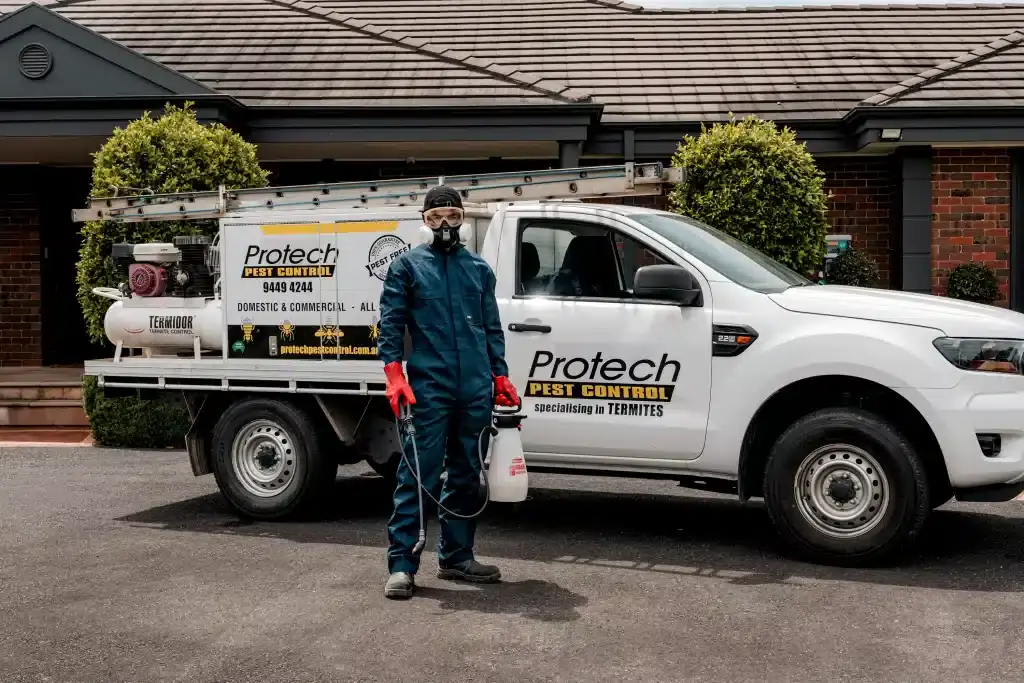
The subfloor is the common cause in older Seaford homes
A house on stumps has a dark, sheltered void underneath it with direct access to bare soil, and on low-lying coastal ground that space holds moisture for long periods. Blocked or painted-over vents, garden beds built up against the base of the house, poor cross-flow and stormwater discharging close to the perimeter all keep it damp.
That single condition produces several problems at once. Damp timber draws wood borers into bearers and joists. It gives subterranean termites the moisture they prefer immediately beneath structural timber, with a concealed route to work in. Silverfish breed in the same conditions and move upwards into wardrobes, bookshelves and stored linen. Rats use the stumps and unsealed vents as an entry and travel up wall cavities into the roof, and redback spiders colonise the dry pockets around stumps and stored items.
Because they share a cause, treating them one at a time is how a household ends up paying for the same problem repeatedly. Our approach on an older Seaford property is to inspect the subfloor first, treat what is active, and then deal with the conditions — clearing debris and stored timber, correcting airflow and drainage, and installing subfloor ventilation where the space cannot dry on its own. Sandy soil offers no protection against termites, incidentally; free-draining ground can make their movement easier rather than harder.
Wetlands, mosquitoes and coastal birds
Where the mosquitoes actually breed
Households backing onto the wetlands and drainage reserves reasonably assume that is the source of their mosquitoes. The reserves contribute, but most of the mosquitoes biting around a house have bred within a short distance of it. Blocked gutters holding water, pot-plant saucers, unused containers, tarpaulins, poorly draining garden beds and untreated water features are the usual culprits, and all of them are fixable. We treat the harbourage around the property and identify the breeding sources worth removing, because the two together achieve considerably more than treatment alone.
Gulls, pigeons and bird mites
Roofs closer to the foreshore take steady pressure from gulls and pigeons roosting on ridgelines, chimneys, parapets and solar panels. Droppings block gutters, corrode roofing and wash across paths and entries. Where birds have nested, bird mites commonly move down into the ceiling and start biting the occupants, which surprises households who have not connected the two. We proof the roosting and nesting points with netting, spikes or solar panel proofing, and treat the mites at the same time rather than leaving a second problem behind.
Rodents, ants and the newer housing
Rats and mice move in from the reserves and drainage corridors as autumn cools, and older housing gives them ample access at the roofline, vents and service penetrations. In the newer infill housing the profile shifts to ants after landscaping and cockroaches in compact kitchens and laundries.
Our pest control services for Seaford
- Subfloor ventilation and subfloor pest treatment
- Termite inspections, barriers and treatments for stumped and coastal homes
- Wood borer treatment for affected bearers, joists and flooring
- Silverfish treatment for damp wardrobes and storage
- Rat and mouse control for subfloors and roof voids, including proofing
- Mosquito treatment and breeding-source advice near the wetlands
- Bird control and proofing, including bird mite treatment
- Spider control, including redbacks around stumps, sheds and outdoor furniture
- Ant control and cockroach control for newer homes and units
Not sure what you are dealing with? Send us a photo or a short description and our team will identify it and explain how we would treat it.
Servicing Seaford and the Frankston area
We reach Seaford from our Campbellfield base at 4/11 Cooper Street on our bayside and south-eastern run. It is one of our longer runs, so we group those jobs together, which keeps travel out of your price and lets us give you a clearly booked appointment window, with the same pest-free guarantee we offer everywhere in Melbourne.
Around Seaford we also service Frankston, Carrum Downs, Mentone and Cheltenham. For the full picture of where we work, see our Melbourne service areas.
Seaford Pest Control FAQs
Our subfloor never seems to dry out — is that causing our pest problems?
Very often it is the root of several at once: borers in bearers and joists, termites, silverfish moving up into wardrobes, and rats and spiders sheltering. We inspect the subfloor first, treat what is active, then address ventilation and drainage.
We live near the wetlands — are mosquitoes something we have to accept?
Not entirely. Most mosquitoes biting around a house breed within a short distance of it — gutters, saucers, containers and poorly draining beds. Treating harbourage helps, and removing those breeding sources usually does more.
Do seagulls and pigeons cause problems this close to the beach?
Mostly to the building. They roost on ridgelines, chimneys and solar panels, and droppings block gutters and corrode roofing. Where they have nested, bird mites often move into the ceiling below. We proof the roosting points and treat the mites together.
How quickly can you get to Seaford from Campbellfield?
It is one of our longer bayside runs, so we group those jobs together. That keeps travel out of your price and lets us book a clear appointment window — 7 days a week, including after-hours emergencies, on 03 9449 4244.
We service the suburbs either side of Seaford on the same run, including Langwarrin and Carrum Downs. See our full service areas.
Pest Pressure in Seaford Through the Year
Spring. Ants build quickly in Seaford's sandy soil, because a sand profile lets a colony move and re-nest with very little effort, and that is why a trail treated at the kitchen bench is back within a fortnight unless the nest itself is found. Spiders start on window frames and under eaves, with redbacks establishing in fence rails, meter boxes and the voids of timber retaining walls.
Summer. Mosquitoes are the defining Seaford problem, and the Seaford Wetlands and the Kananook Creek line are the reason. Pressure climbs from November and holds through to March, worst on still evenings and after rain, and the properties closest to the reserve and the creek get it hardest. European wasps peak in the same window, and foreshore properties also see them working bins and outdoor eating areas.
Autumn and winter. Rodents move in, and Seaford's older beach houses give them an easy route through subfloors and under weatherboard where the stumps and bearers sit close to sandy ground. Fleas run late here too, because sandy yards and a high rate of pet ownership keep larvae viable longer than they would be in heavy clay.
What Seaford’s Housing Stock Means for Treatment
Seaford's housing is a mix of post-war beach cottages and fibro holiday houses, later brick veneer, and a growing number of unit and townhouse developments closer to the station. The older stock is stumped, which puts the subfloor front and centre: it is the rodent route, it is where damp accumulates on a sand profile, and it is where a termite inspection spends most of its time. Sandy soil also changes termite work, because a sand profile behaves differently from the clay across most of Melbourne when a chemical barrier goes in.
More Seaford Pest Control Questions
Why are mosquitoes so bad in Seaford, and can you treat them?
The Seaford Wetlands and the Kananook Creek line are permanent breeding habitat, so properties near the reserve and the creek carry more pressure than almost anywhere else in the bayside south-east. Mosquito treatment starts from $227 ex GST and works on the resting harbourage around your property — dense shrubs, shaded fence lines, under decking — plus removing or treating the standing water on the property itself. We cannot treat the wetlands, so what we are doing is reducing the population that settles on your block.
Do older Seaford houses need the subfloor inspected?
On a stumped house, the subfloor is where the answers are. It is the main rodent route, it is where damp collects on Seaford's sandy profile, and it is where termites get at the bearers and joists. We inspect it as a matter of course on older stock, and where the damp is the underlying problem, subfloor ventilation is quoted on inspection (not a free quote) because the figure depends on the subfloor volume and the fan or vent configuration needed.
Book Seaford Pest Control Today
Call 03 9449 4244 or request a free quote — we will book your Seaford property into our next bayside run, with every treatment backed by our pest-free guarantee.
Last reviewed: October 2026
Learn More About Pest Solutions
Same-day service, eco-friendly treatments and a pest-free guarantee. Domestic & commercial — all Melbourne suburbs.