
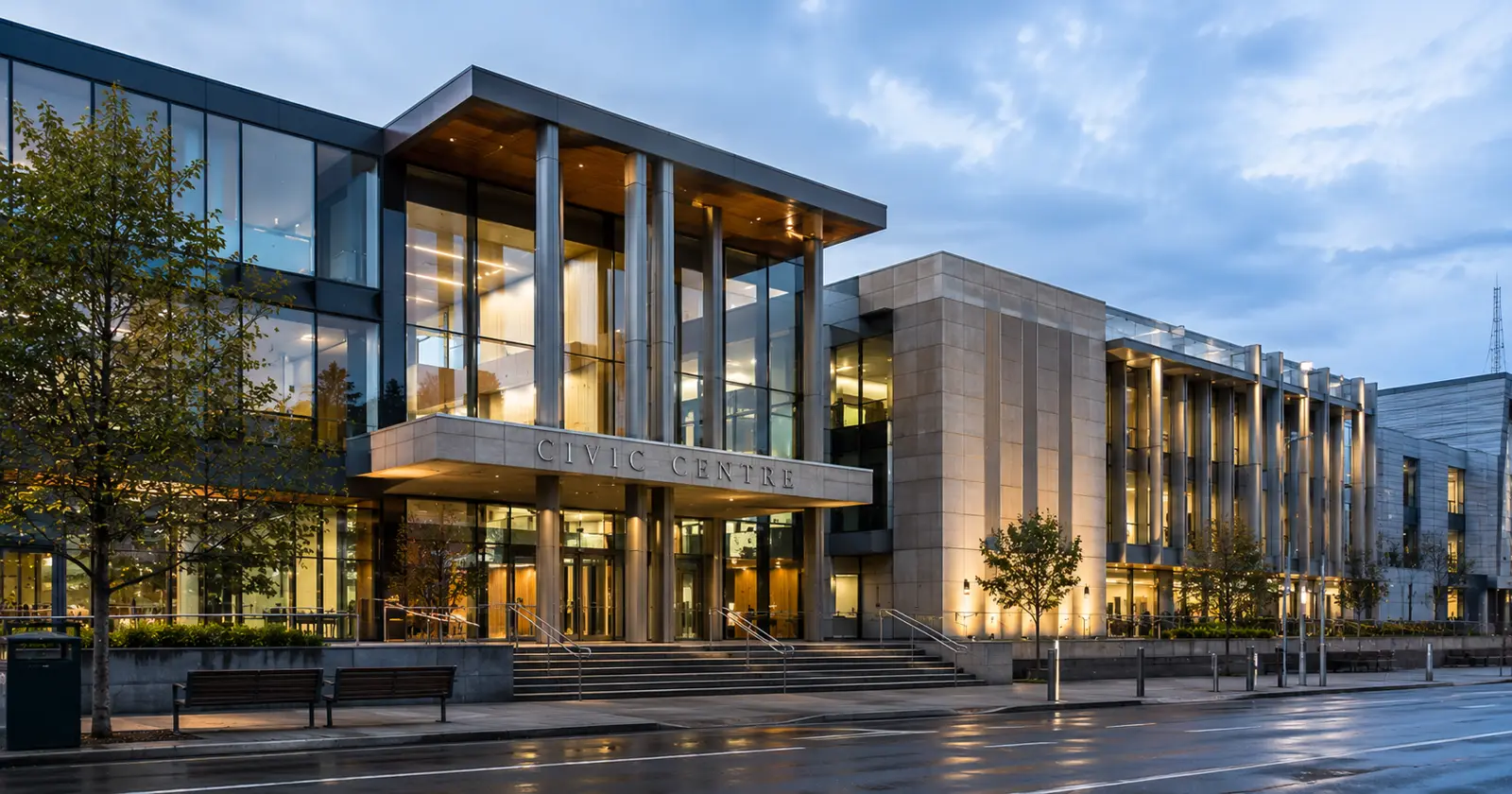
Government Building Pest Control Melbourne
Tailored, preventative pest management for government and public sector facilities across Melbourne.
Professional Pest Management for Government & Public Facilities
At Protech Pest Control, we understand that maintaining safe, hygienic, and professional environments for staff, visitors, contractors, and the wider community is your highest priority.
Government buildings and public facilities require proactive pest management to ensure compliant, disruption-free environments across all facility types — whether modern office buildings, heritage-listed properties, or high-traffic public spaces.
With accessible food sources, shelter, drainage systems, roof voids, subfloors, and high public traffic, government facilities can create ideal conditions for pests to thrive if not professionally managed.
That’s why government buildings and public sector facilities across Melbourne trust Protech Pest Control to deliver tailored, preventative pest management solutions designed specifically for the public sector.
Professional Pest Management for Government Facilities
Government buildings require more than reactive pest control.
At Protech Pest Control, we provide strategic long-term pest management programs focused on prevention, compliance, safety, and minimal disruption to daily operations and public access.
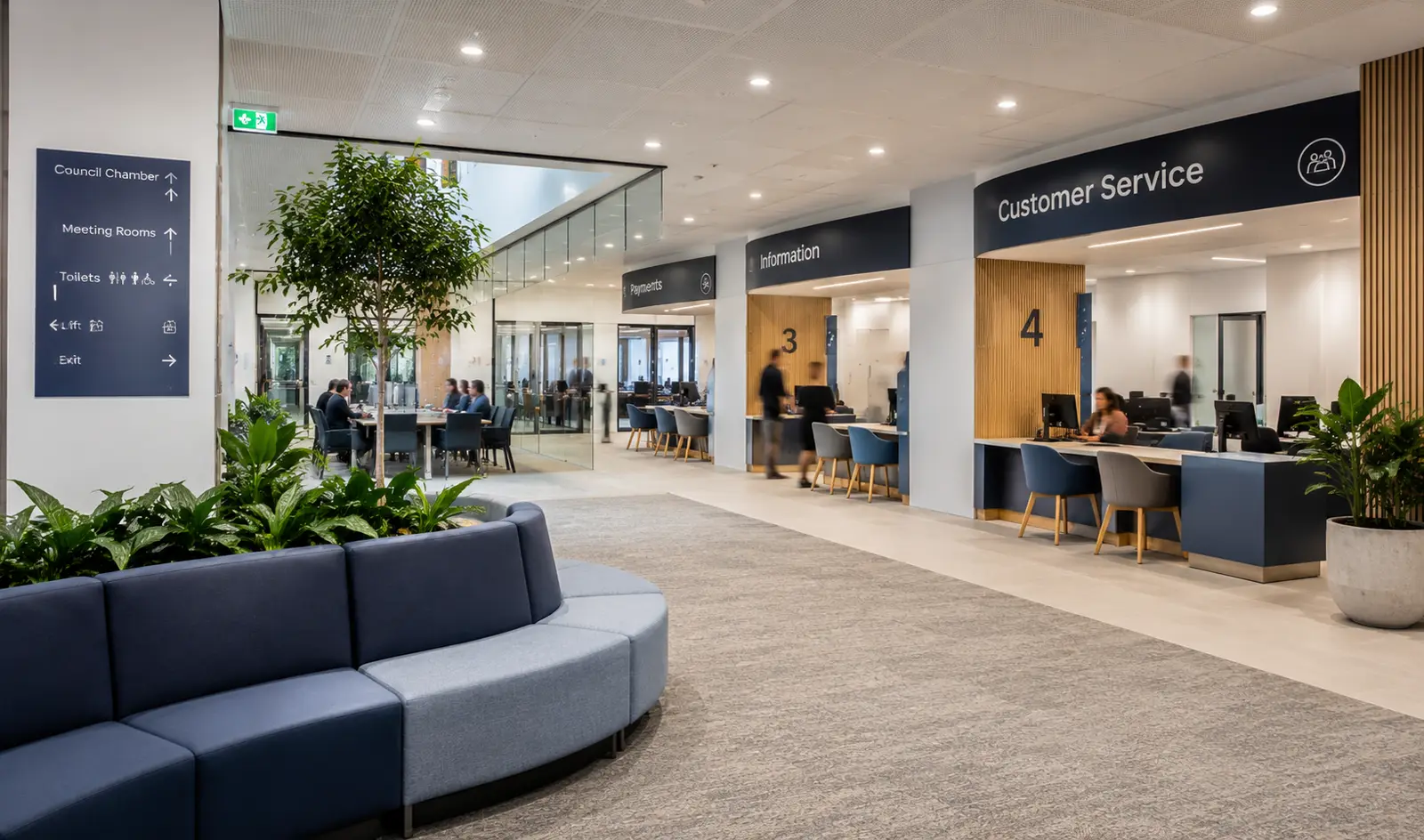
Our experienced technicians work closely with council buildings, civic centres, government offices, community centres, public service facilities, libraries, museums, public depots, transport facilities, maintenance buildings, public housing facilities, and recreational facilities across Melbourne.
We understand the importance of maintaining safe, clean, and professional environments for staff, visitors, contractors, and the communities these facilities serve.

Common Pest Issues in Government Buildings
Government and public facilities can attract a wide range of pests due to building access points, waste areas, food consumption zones, roof spaces, and surrounding environmental conditions.
Common pests we manage include rats and mice, cockroaches, ants, spiders, birds, flies, wasps, possums, termites, and stored product pests — the full range of pests that threaten the safety, compliance, and professional presentation of public facilities across Melbourne.
If left unmanaged, these pests can:
- Create public health concerns for staff and visitors
- Damage infrastructure, assets, and heritage materials
- Impact staff wellbeing and workplace safety
- Damage reputation and public confidence
- Affect operational continuity and access
- Create compliance and safety risks
High-Risk Areas We Inspect
Our technicians conduct comprehensive inspections and site-specific risk assessments to identify pest activity, entry points, nesting zones, and environmental conditions contributing to infestations.
Areas commonly inspected include:
- Roof voids and ceiling spaces
- Kitchens and staff lunchrooms
- Waste and bin storage areas
- Plant rooms and service areas
- Subfloors and drainage systems
- External building perimeters
- Storage and archive areas
- Loading docks and maintenance zones
- Public access areas and courtyards
Routine inspections help detect pest risks early before they escalate into larger infestations or disruptions to public operations.
The Public Buildings We Look After
A public sector portfolio rarely consists of one building type. A single council can hold a civic office, three or four libraries, a dozen community halls, an aquatic centre, a works depot and a network of public toilets and sporting pavilions, and each one carries a different pest risk on a different schedule.
Council offices and civic centres
Staff kitchens, lunchrooms and desk-side food are the recurring source of ant and cockroach activity in an office building. The customer service counter, the records and archive storage, and the basement plant rooms each add their own risk, and rodent pressure usually enters through the loading area and travels up the service risers. Work in these buildings is timed around counter hours so public-facing areas are clear when the doors open.
Libraries, archives and museums
Paper, cardboard, timber shelving and stable indoor conditions suit silverfish, booklice and stored-product pests, and the after-hours returns chute is a direct route in from outside. Collections and local-history archives can hold material that cannot be replaced, so monitoring locations and any treatment are planned with the collections staff and kept targeted to the affected area. Our silverfish control service covers the treatment side.
Community halls and neighbourhood houses
Halls sit empty between bookings and then host a function with catering, which is the pattern that lets a problem build unnoticed. The kitchens attached to them are used by different groups with no single person accountable for them, so bin management, food storage and cleaning vary from one booking to the next. Scheduled monitoring picks up activity during the quiet weeks, before a hirer finds it mid-function.
Leisure and aquatic centres
Warmth, permanent moisture and food service inside one building make an aquatic centre one of the harder public facilities to keep clear. Plant rooms, pump areas, changing rooms, wet-area drainage and cable trays hold the conditions cockroaches need, the cafe, kiosk and vending areas supply the food, and the public is present for most of the day. These sites usually justify a higher service frequency than an office building of comparable size.
Depots, works yards and storage compounds
Depots combine open ground, stored materials, vehicle bays and staff amenities in one site. Rodents nest in stacked pipe and timber, in disused plant and in the vegetation along fence lines, then move into the amenities building and the crib room when the weather turns. Perimeter monitoring and proofing of the occupied buildings does most of the work at these sites, supported by recommendations on how materials are stacked and where bins are kept.
Public amenities and open-space assets
Public toilets, barbecue shelters, sporting pavilions, grandstands and playground surrounds bring wasps, ants, spiders and birds into direct contact with the public. These assets are usually attended on a route across the municipality, and the reporting is what tells an asset team which locations keep recurring and need a physical fix to the structure.
Working in Buildings the Public Uses
A public building cannot be closed for a treatment the way a private office can, and the people walking through it have agreed to nothing in advance. That governs when we attend, what we apply and how the work is presented while it is being done.
How treatment is managed in a publicly accessible building:
- Treatments scheduled before opening, after closing or during a planned closure, agreed with the facility manager well ahead of the visit
- Areas closed off and signed while a treatment is applied and until the re-entry period stated on the product label has passed
- Signage naming the product applied, the date and time of application and the re-entry period, left in place for the required duration
- Bait stations locked, secured in position and sited where the public, and children in particular, cannot access them
- Products selected for low odour and short re-entry where an area has to be returned to public service quickly
- Safety data sheets supplied for every product held or applied at the site, so a facility officer can answer a question from a member of the public
- Technicians in uniform, carrying identification and signed in through the facility’s contractor induction process
Coordination with the facilities team is the practical half of it. Your facilities or asset team holds the booking calendar, the access keys and the knowledge of which rooms are in use on a given day, so the program is built with them: a standing schedule, a named contact for reactive callouts, an agreed escalation path when something is found, and a reporting stream directed to whoever has to act on it. Our facilities and asset management programs cover multi-site portfolios run this way, and our commercial pest control service sets out how a scheduled agreement is structured.
Buildings shared with a school, a childcare service or a maternal and child health service carry additional requirements around access, supervision and treatment timing. Those sites are covered under the same approach we use for schools and childcare centres.
Integrated Pest Management (IPM) Programs
At Protech Pest Control, we focus on long-term prevention through Integrated Pest Management (IPM) strategies.
Our IPM programs go past visible pest activity to identify and address the root causes of infestations through routine monitoring and inspections, proofing and exclusion recommendations, environmental management, rodent monitoring systems, preventative treatments, trend analysis and reporting, and risk reduction strategies.
This proactive approach helps reduce recurring pest issues while supporting safer, cleaner, and more compliant public environments.
Digital Reporting & Compliance Documentation
Professional documentation and reporting are critical for government facilities and publicly managed sites.
Every service visit generates a detailed digital report covering pest activity, treatment records, site observations, and corrective action recommendations. Everything your facility needs for compliance reviews, audits, and stakeholder reporting — accurate, on time, and ready to present.
Our documentation includes:
- Detailed digital service reports
- Pest activity monitoring records
- Site-specific risk assessments
- Corrective action recommendations
- Service history documentation
- Compliance reporting
- Audit-ready pest management records
Safe, Professional & Environmentally Responsible Solutions
Government buildings often require pest management solutions that prioritise safety, discretion, and environmental responsibility.
Our technicians use targeted treatment methods and industry-approved products designed to minimise risk while effectively managing pest activity. We focus on environmentally responsible pest management, safe treatment scheduling, minimising disruption to public operations, and reducing unnecessary chemical usage.
All Protech technicians are fully licensed, insured and professionally trained, and Protech holds CM3 contractor prequalification — meeting the standards required for government and public sector facilities.
Fast Response & Ongoing Support
Pest issues within public facilities often require immediate attention to protect staff, visitors, and public spaces.
Our team provides fast response times across Melbourne, routine preventative maintenance programs, emergency pest response services, flexible scheduling, and ongoing monitoring and support.
We work proactively with facility managers and stakeholders to minimise disruptions while maintaining professional service standards at all times.
Why Government Facilities Choose Protech Pest Control
Melbourne-Based Experience — With over 25 years servicing Melbourne and more than 40 years of combined industry experience, we understand local pest activity and the environmental conditions impacting Victorian properties.
Long-Term Prevention Focus — We focus on identifying and addressing the root causes of pest activity, so the result holds well beyond a single treatment.
Integrated Pest Management Specialists — Our IPM programs deliver smarter, preventative pest management solutions tailored to the specific requirements of government and public facilities.
Fast & Reliable Response Times — We understand the importance of rapid response when pest issues arise in public environments.
Detailed Reporting & Compliance Support — Professional digital reporting supports accountability, compliance, and facility management requirements.
Safe & Professional Service — Our technicians deliver discreet, professional pest management with minimal disruption to staff, visitors, and public operations.
Complete Pest Management Solutions — From rodents and termites to bird proofing and subfloor management, we provide complete pest management services under one roof.
Government & Public Facilities We Service
We provide pest management solutions for council buildings, civic centres, government offices, community centres, public service facilities, libraries, museums, public depots, transport facilities, maintenance buildings, public housing facilities, and recreational facilities across Melbourne.
Protect Your Government Facility
At Protech Pest Control, we help government buildings and public facilities maintain safe, compliant, and pest-free environments with professional pest management solutions tailored to public sector operations.
Procurement, Tenders and Reporting Obligations
Public sector work is bought differently from private sector work. A contract usually begins with a tender or a formal quotation request against a written specification, runs for a fixed term with option periods, and is then administered against service levels that somebody inside the organisation has to report on.
What a public sector procurement process typically requires from a pest management contractor:
- Current public liability and workers compensation cover, with certificates of currency
- Pest management licences held by every technician who will attend a site
- Recognised industry accreditation
- Safe work method statements and site risk assessments for the work being tendered
- Safety data sheets for the products proposed for use
- A schedule of rates covering scheduled servicing and reactive callouts
- Referees from comparable public sector or commercial sites
- A described service methodology setting out monitoring, treatment, documentation and escalation
Protech is fully insured, every technician who attends a site is licensed to apply the products they use, and the business holds HACCP, NPMA and AEPMA accreditation. We have serviced Melbourne commercial and public sector premises since 2001, with more than 40 years of combined industry experience across the team, and we are rated 4.8 stars from 411 Google reviews. Our tenders and contracts page covers how we respond to a formal procurement process.
Reporting for the life of the contract
Reporting is the obligation that continues once the contract is awarded, and it is where most pest management contracts quietly fall down. Every visit generates a dated digital report, and the pest-activity trend log maintained across each site gives a contract manager something substantive to table at a quarterly review: what was found, what was done about it, whether activity is rising or falling at each monitoring point, and which building defects remain unresolved.
Reports are written so a council officer can put one in front of a committee, an internal auditor or a councillor without rewriting it first. The activity found, the treatment applied, the recommendation made and the party responsible for acting on it are set out plainly, dated and signed off by the attending technician. Where a portfolio is covered by one agreement, the reporting is consolidated so the whole footprint can be reviewed at once. Our digital reporting page shows the format each document takes.
Heritage and Older Public Buildings
Councils hold a disproportionate share of Melbourne’s older public buildings: town halls, mechanics institutes, former courthouses, bluestone depots, timber pavilions and single-storey libraries built decades before anyone thought about sealing a building envelope. These buildings carry more pest risk than a modern facility, and they allow far less freedom in how that risk can be treated.
The building fabric is the reason. Suspended timber floors over ventilated subfloors, lath and plaster walls, unsealed cavity brickwork, slate and tile roofs with generous voids, and decades of service penetrations cut through original structure together give pests routes and harbourage that a sealed modern building simply does not offer. Older structural timber is also the material termites are looking for, and a heritage overlay limits what can be altered or fixed to the building to keep them out.
How we approach these sites:
- Inspection of subfloors, roof voids and wall cavities, which is where the activity almost always is
- Proofing designed around the heritage fabric — reversible, minimal-intervention work agreed with the asset manager before anything is fixed to the building
- Termite monitoring appropriate to a timber-framed structure, using the baiting and barrier systems the site can physically take
- Bird proofing to ledges, parapets, towers and clock faces, planned so fixings and netting are as unobtrusive as the building and its listing require
- Rodent monitoring along service runs and roof voids where entry points cannot be sealed without altering original fabric
- Written documentation of the building defects driving pest activity, so they can be programmed into the maintenance budget
Termite work on an older public building is planned against what the structure can accommodate. Our termite control service covers the baiting and barrier options available, and where original timber is affected the finding is documented for the asset team alongside the treatment recommendation.
Client Testimonials
Great to deal with and easy to speak to. I had a few issues with previous pest control companies but Protech came out and did a wonderful job and didn’t even leave a mess which the other 2 companies did.
– Andrew KalogirouGovernment Building Pest Control FAQs
Can you work around our opening hours and public access?
Yes, and it is how most of our public sector work is carried out. Treatments in publicly accessible buildings are scheduled before opening, after closing or during a planned closure, agreed with the facility manager in advance. Where an area has to be treated during operating hours, it is closed off and signed for the duration of the treatment and the re-entry period, and returned to service once that period has passed. Plant rooms, roof voids, subfloors and depot yards can generally be attended at any time.
What documentation do you provide for compliance reviews and committee reporting?
Every visit generates a dated digital service report covering pest activity, treatments applied, site observations and corrective action recommendations, and we maintain a pest-activity trend log for each site across the life of the contract. Safety data sheets, site plans showing monitoring point locations, risk assessments and the full service history are held on file. The reports are written so a council officer can put one in front of a committee or an internal audit without rewriting it. Our digital reporting page sets out the format.
Do you respond to tenders and quotation requests?
Yes. We regularly quote against written specifications for public sector and multi-site contracts. Protech is fully insured, every technician who attends a site is licensed to apply the products they use, and the business holds HACCP, NPMA and AEPMA accreditation. Our tenders and contracts page covers how we respond to a formal procurement process and what a submission includes.
How do you treat heritage-listed buildings?
With proofing and monitoring designed around the building fabric. Older public buildings have suspended timber floors, ventilated subfloors, cavity walls and generous roof voids, and a heritage listing limits what can be fixed to or cut into the structure. We inspect the subfloor, roof void and wall cavities where the activity usually is, propose reversible and minimal-intervention proofing agreed with the asset manager before anything is installed, and document the building defects driving pest activity so they can be programmed into maintenance.
How often should a government building be serviced?
It depends on the building and its use. A civic office or a library is commonly serviced quarterly, community halls and public amenities are often attended on a route through the year, and buildings with food service or permanent moisture — aquatic and leisure centres, cafes attached to public facilities, depot amenities — usually justify a higher frequency. We assess each site, recommend a frequency against its risk profile, and set it out in the service agreement.
Can you cover multiple council sites under one agreement?
Yes. A single agreement can cover a whole portfolio — civic offices, libraries, halls, depots, pavilions and public amenities — with one point of contact, consistent servicing standards and consolidated reporting across every site. That gives a contract manager a single view of pest activity across the portfolio and uniform paperwork wherever an auditor or an internal reviewer looks.
Talk to Protech About Your Facility
Keep your public buildings compliant, documented and pest-free with a scheduled program built around public access and your reporting obligations. Call 03 9449 4244 or request a free quote — scheduled servicing across your whole portfolio, 24/7 emergency attendance and one provider accountable for every site.
Learn More About Pest Solutions
Same-day service, eco-friendly treatments and a pest-free guarantee. Domestic & commercial — all Melbourne suburbs.