

Seagull & Bird Proofing Melbourne
Licensed seagull management and bird proofing for Melbourne rooftops, car parks and commercial premises — free quote, guaranteed results.
Seagull Control & Bird Proofing in Melbourne
Seagulls are one of the more persistent bird pests in Melbourne, particularly around coastal suburbs, the CBD fringe, waterfront precincts, and industrial areas with open roof space. A small roosting group can become a large colony surprisingly quickly, and once seagulls establish a nesting site they are tenacious about returning to it year after year.
Silver gulls are protected under Victoria's Wildlife Act 1975, so lethal control is not a legal option without a government permit. Effective, lasting management means preventing access to roosting and nesting areas through physical exclusion — bird netting, post-and-wire systems, spikes, and supporting deterrents. Hazing and noise devices alone rarely hold a colony once a site has been established.
Protech Pest Control is licensed to carry out compliant bird management work across Melbourne. Our technicians assess your property, identify where the birds are roosting and feeding, and design a system that keeps them off for the long term. Call 03 9449 4244 for a free no-obligation quote.
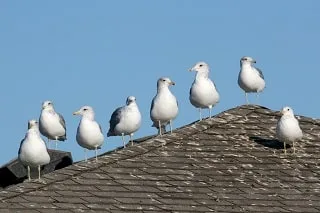
Identifying Silver Gulls (Seagulls)
The Silver gull (Chroicocephalus novaehollandiae) is the seagull species most commonly encountered across southeastern Australia. Adults are easy to recognise:
- White body with silver-grey wings tipped in black and white.
- Bright orange-red bill, legs, and eye-ring; white eye with a pale iris.
- Medium-sized — roughly 40–45 cm in length, with a wingspan around 90 cm.
- Juveniles have a dark grey-brown bill and legs, spotted brown-grey wings, and dark eyes — easy to mistake for a different species.
Silver gulls breed in colonies. A pair typically raises one or two clutches per year, with three eggs per clutch. The incubation period runs about 25 days, and chicks spend a further 35–42 days in the nest before fledging. This colonial, season-driven behaviour is part of why a problem that starts with a handful of birds can escalate to dozens within a couple of seasons if a site is left unprotected.

Where Seagulls Roost & Nest in Melbourne
Historically Silver gulls nested on coastal headlands, offshore islands, and sand spits close to the sea. The expansion of the Melbourne metro area has given them a new set of roosting options, and they have taken full advantage of it. The birds now treat flat industrial and commercial rooftops, multi-storey car parks, waterfront food precincts, and large car dealership lots as suitable habitat — the wide, open, elevated surfaces mimic the coastal flats they instinctively seek.
Common Melbourne hotspots include:
- Flat commercial and industrial rooftops, especially those with HVAC units, parapets, and plant equipment that create sheltered nesting pockets.
- Open car parks at shopping centres, supermarkets, and fast-food precincts where food scraps are readily available.
- Waterfront restaurants, fish markets, and food retail sites along Port Phillip Bay and the Yarra River corridor.
- School buildings and aged care facilities with flat rooflines near open green space or water.
Because seagulls eat away from their roosting areas — scavenging wherever food is available — treating just the feeding site rarely resolves a problem. The roosting and nesting site is where exclusion needs to be applied.
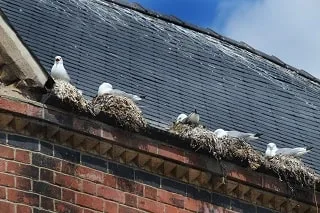
The Risks & Damage Seagulls Cause
Seagull colonies on or around a building create a range of problems that compound over time. The most significant issues Melbourne property owners and managers report:
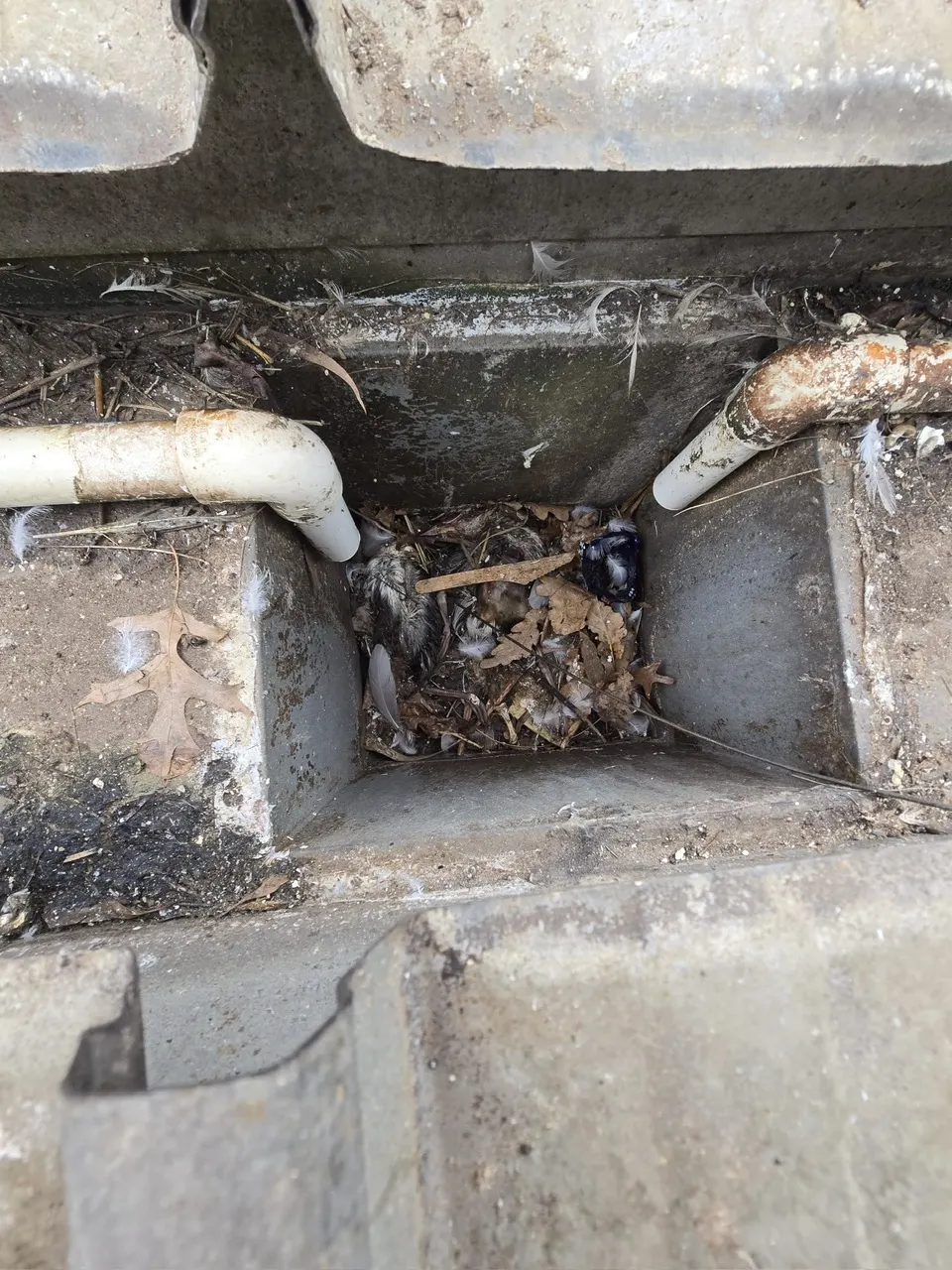
- Gutter and drain blockages: Nesting material — twigs, debris, feathers — accumulates in gutters and downpipes during breeding season. Combined with droppings, this creates blockages that can back water under roof membranes.
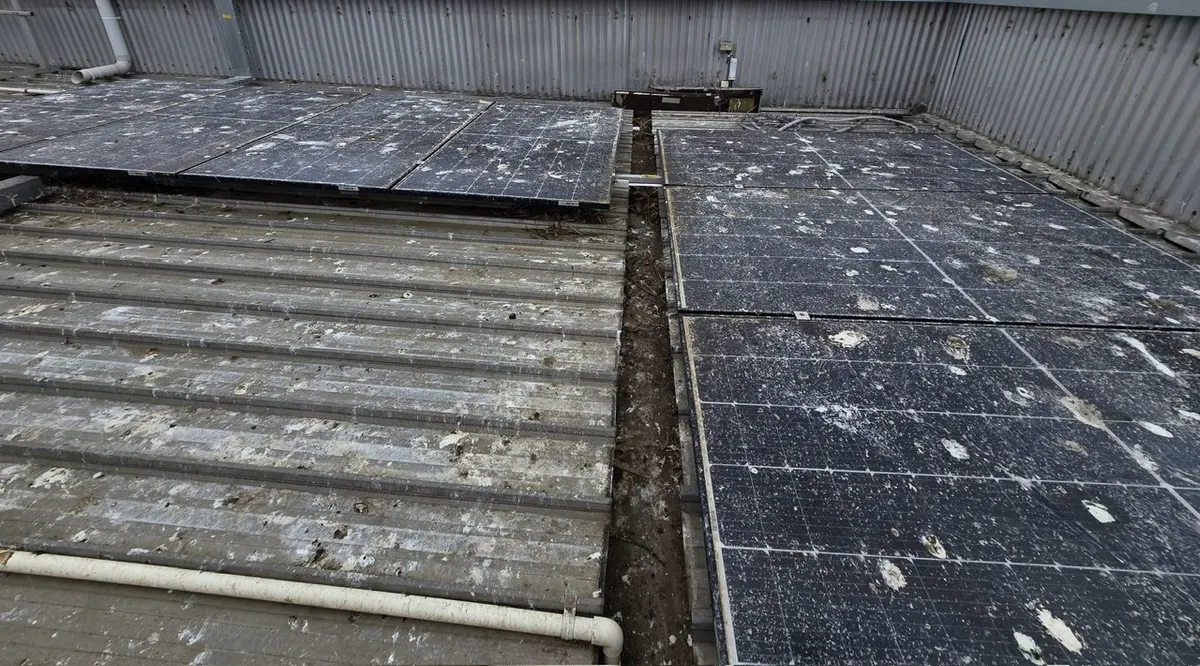
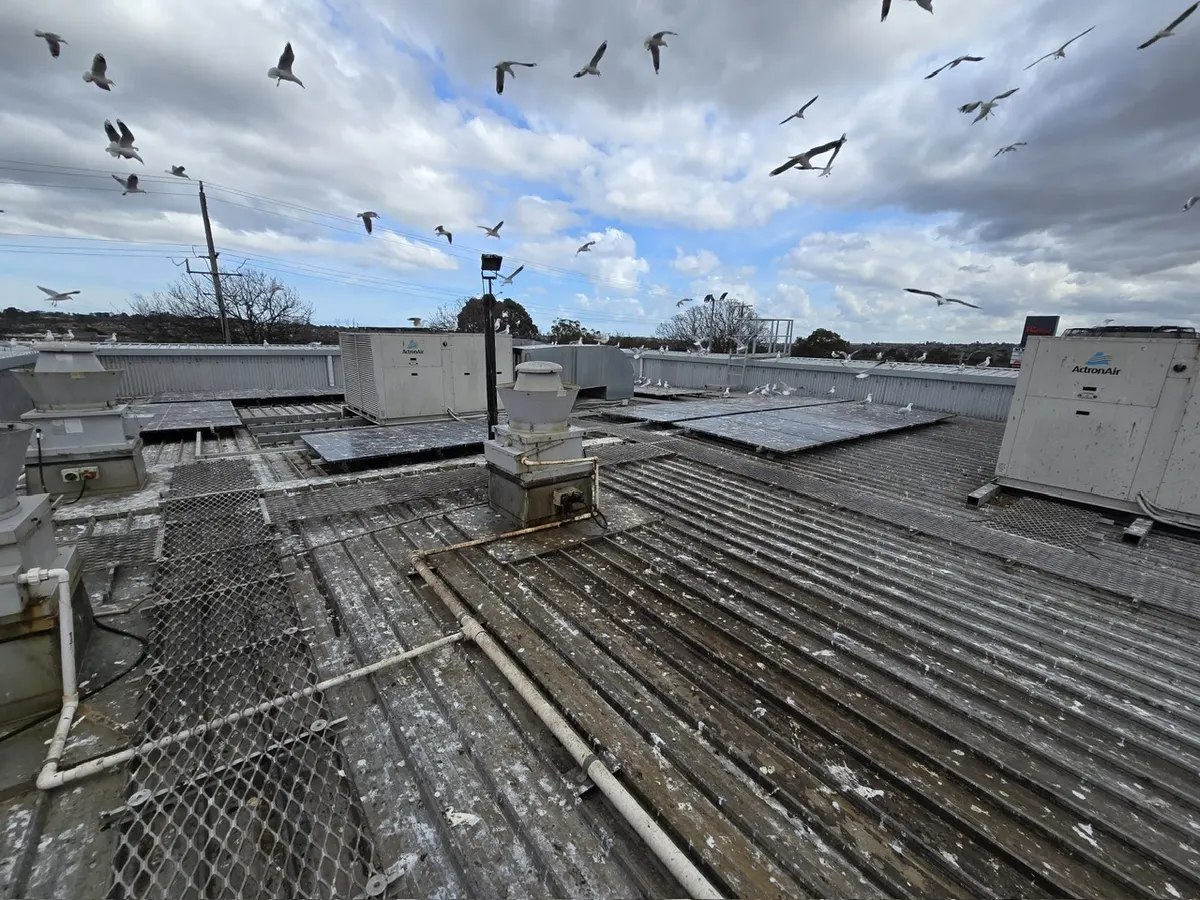
- Structural and surface damage: Seagull droppings are highly acidic. Repeated accumulation on roofing membranes, painted metalwork, HVAC equipment, solar panels, and vehicle paintwork causes corrosion and deterioration faster than most owners expect.
- Health and contamination risks: Bird droppings carry bacteria and fungi — including pathogens associated with respiratory illness — and can contaminate open water storage, picnic areas, food handling surfaces, and air intake systems.
- Noise and swooping: During nesting season, seagulls become aggressive, diving at people who approach their eggs or chicks. This is a genuine safety concern in high-foot-traffic areas such as car parks, alfresco dining, and school yards.
- Food contamination and brand damage: For food retailers, cafes, and hospitality businesses, seagulls hovering over outdoor dining or food displays create an immediate food safety and reputational problem.
- Native wildlife pressure: Large Silver gull colonies displace terns and other native coastal birds from breeding areas, and have been documented raiding the nests of other species.
Seagull Proofing & Deterrent Methods
There is no universal seagull solution — the right method depends on where the birds are roosting, how large the colony is, and the structure of the property. Protech assesses each site before recommending a system. Methods we install and supply across Melbourne:
- Bird Netting: The most reliable solution for large open rooftops and car parks. Heavy-duty UV-stabilised netting is tensioned across the roosting area, physically excluding birds from landing. Also the standard solution for loading bay canopies and food storage areas. See our bird netting installation service.
- Post and Wire Systems: Steel posts and tensioned wire strung across parapets, beams, and roof ridgelines. Effective on the ledges and elevated structures that seagulls prefer as staging perches before dropping onto a flat roof.
- Bird Spikes: Stainless steel or polycarbonate spike strips fixed to ledges, beams, signs, and window sills. Well suited to narrow ledges and perching surfaces; often used as a secondary measure alongside netting on wider roof areas.
- Bird Shock (Electrified Track): A low-voltage electrified track that delivers a mild aversive pulse on contact. Discreet and effective on architectural ledges where spikes are visually unacceptable.
- Bird Slope Panels: Angled panels installed on ledges and sills that prevent seagulls from gaining a foothold. Suitable for protected heritage buildings where fixings need to be minimal.
- Seagull Exclusion Systems: Custom-engineered solutions for complex roof plant and equipment areas where standard products do not fit cleanly.

Protech's Approach to Seagull Management
A reliable bird proofing outcome starts with a thorough site inspection. When we assess a seagull problem, we look at the full picture:
- Roosting and nesting locations: Where the birds are actually landing, sleeping, and nesting — often different from where the most visible damage is.
- Access points and flight paths: How the birds are approaching the property and which structures they use as staging posts before settling.
- Food availability: Nearby bin stores, open skips, food retail outlets, or water features that are sustaining the population.
- Wildlife compliance: Silver gulls are protected, so any active nest management requires assessment against Victoria's permit requirements. We advise on this upfront.
From that inspection we design a system — usually a combination of physical exclusion and supporting deterrents — and provide a fixed-price quote before any work begins. We cover the whole roosting area in every installation — partial treatments tend to push birds to an adjacent section of the same roof without resolving the underlying problem.
Our installations are built to last. We use commercial-grade materials and anchor systems designed for Melbourne's coastal wind loads, and we back our work with a 100% satisfaction guarantee. Call 03 9449 4244 to arrange a free quote.
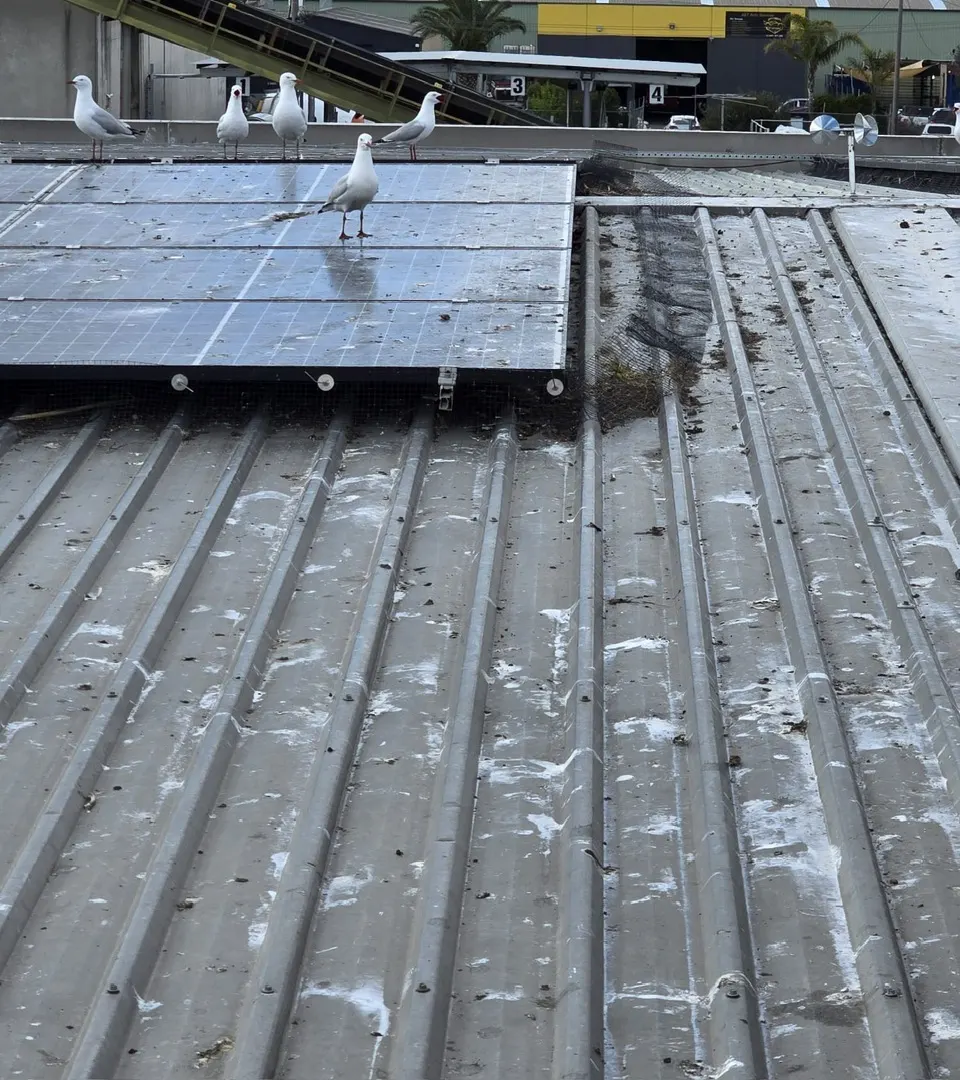
A Recent Commercial Seagull Job
Why Melbourne Properties Choose Protech
- Licensed and accredited bird management technicians — compliant with Victoria's Wildlife Act 1975.
- Free, no-obligation quote — we diagnose before we quote.
- Fixed-price quotes after inspection — no surprises on invoice.
- Commercial-grade materials with UV and corrosion resistance, suited to Melbourne's coastal and industrial environments.
- Same-day service available across Melbourne — metropolitan and surrounding suburbs.
- HACCP, NPMA, and AEPMA accredited — industry standards that matter for food and commercial operators.
- 40+ years of combined team experience in Melbourne pest management, established 2001.
- Eco-friendly approach — all methods and any supplementary products are safe around children and pets.
- 100% satisfaction guarantee.
Speak with a technician today on 03 9449 4244.
Frequently Asked Questions
Are seagulls a protected species in Victoria?
Yes. Silver gulls are protected under Victoria's Wildlife Act 1975, which means they cannot be harmed, captured, or killed without a permit. Protech holds the relevant licensing to carry out compliant population management and deterrence work. All our methods focus on exclusion and deterrence — not harm.
What is the most effective way to keep seagulls off a commercial rooftop?
A combination of physical exclusion (netting or post-and-wire systems) and secondary deterrents works best for flat commercial rooftops. The right approach depends on the roof type, the flock size, and how long they have been roosting there. A site inspection lets us design a solution that actually holds long-term.
How quickly can seagulls cause damage?
A roosting colony on a rooftop can block gutters and drains within a single breeding season. Droppings accumulate fast — a moderate colony can produce enough acidic guano to visibly damage roof membranes, painted surfaces, and HVAC equipment within months.
Do bird spikes work on seagulls?
Spikes work well on ledges and narrow surfaces where seagulls perch. On broad flat roofs or open car parks they need to be combined with other methods, as seagulls can simply avoid the treated strips and roost on the gaps. Our technicians assess your site before recommending a single method or a layered approach.
Will the seagulls just move to a neighbouring property?
Displacement is a real consideration, and we discuss it honestly before work starts. Physical exclusion systems that cover the entire roosting area give the best long-term results. We design every installation to protect the whole site from the outset.
Is the treatment safe around food premises?
All products and methods Protech uses are compliant with food-safety requirements. Netting and physical exclusion systems carry no chemical residues. Any deterrent products used are APVMA-registered and safe for use around food preparation and storage areas.
Client Testimonials
We had a technician called Joe come out. Service was top notch. Would highly recommend.
– Tony MaiutoLearn More About Pest Solutions
Same-day service, eco-friendly treatments and a pest-free guarantee. Domestic & commercial — all Melbourne suburbs.