

Fly Control Melbourne
Breeding-source treatments for lasting results — certified technicians, same-day service across Melbourne.
Fly Pest Control & Removal Services in Melbourne
Flies are a persistent hygiene problem across Melbourne homes, cafés, restaurants, and food-handling businesses. They move freely between waste, drains, and food surfaces, transferring bacteria at every stop — all without you noticing until food has been contaminated or a full infestation has taken hold.
The key to effective fly control is eliminating breeding sources, not just knocking back adult numbers. Spraying the flies you can see will reduce activity temporarily, but a new generation emerges within days if the organic material they breed in remains untreated. Protech's technicians identify the specific species present and the conditions sustaining them, then treat the source directly.
If flies have become a recurring issue in your home or business, professional treatment makes a significant difference. Call 03 9449 4244 to arrange a free quote today.
How to Identify a Fly Infestation
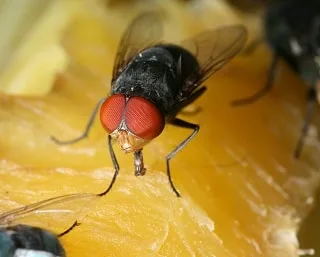
Melbourne properties can host several different fly species, and they look and behave quite differently from one another. Some general identification markers that apply across common species:
- Two wings (flies are the only insects with a single pair of functional wings — a useful distinguishing feature).
- Three body segments: head, thorax, and abdomen, with six legs attached to the thorax.
- Compound eyes occupying a large portion of the head; many species have red or dark-red eyes.
- Size varies from around 2 mm (fruit fly, drain fly) to 8–15 mm (horse fly, flesh fly).
- Colour ranges from dull grey-brown (house fly, bush fly) to metallic green or blue (blow fly, bottle fly).
- Fast, erratic flight pattern; most species land repeatedly on surfaces rather than hovering.
Fly Life Cycle and Breeding Behaviour
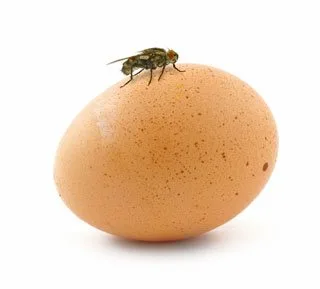
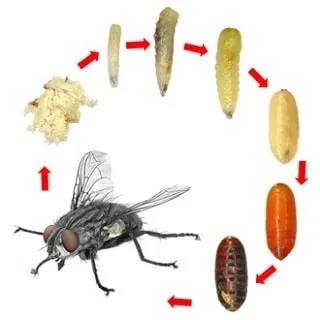
Flies undergo complete metamorphosis: egg, larva (maggot), pupa, and adult. The total time from egg to flying adult can be as short as ten days in warm Melbourne summer conditions, which is why populations grow so rapidly.
A fertilised female lays her eggs directly on a food source — rubbish, pet faeces, decaying organic matter, drain sludge, or food waste — so that the hatched larvae can feed immediately without moving. Once the larval feeding stage is complete the pupae develop wings, legs, and compound eyes before the adult emerges, ready to mate within 36 hours.
Because breeding happens in concentrated organic material, removing or treating that material is essential. Adult fly numbers will recover within a week or two from any surviving breeding site, even after effective treatment of the adult population.
Common Fly Species Found in Melbourne Homes & Businesses
Different species have different breeding habits and health implications. Correct identification is the first step to effective control — treatments for drain flies differ from those for blow flies or fruit flies. We also treat the occasional Melbourne flies that turn up less often, including horse flies, sand flies, and cluster flies.
House Fly
The most common fly found inside Melbourne homes and businesses. Greyish-brown with four dark stripes on the thorax, around 6–8 mm long. House flies feed on virtually anything — food scraps, rubbish, and animal waste — picking up bacteria at every stop and depositing it on whatever they land on next.
Blow Fly / Bottle Fly
Recognisable by their metallic blue-green or copper sheen, blow flies are typically drawn to meat, fish, and animal carcasses. They are fast breeders, laying hundreds of eggs on protein-rich material, and their presence often points to a dead animal nearby.
Fruit Fly
Small (about 3 mm), with red eyes and a tan-coloured body, fruit flies gather around overripe fruit, vegetable scraps, beer, wine, and any fermenting liquid. In a Melbourne kitchen or café they can go from egg to adult in under two weeks when conditions are warm.
Drain Fly
Fuzzy, moth-like flies about 2 mm long that breed in the organic sludge coating the inside of drains, floor waste grates, and grease traps. A cloud of small flies rising from a sink or floor drain in a commercial kitchen is a reliable indicator of drain-fly activity.
Flesh Fly
Larger than a house fly and marked with three dark longitudinal stripes on a grey thorax. Flesh flies do not lay eggs — they deposit live larvae directly onto carrion, pet waste, and wounds, making them a particular concern in food-handling environments.
Bush Fly
A smaller cousin of the house fly and a characteristically Australian nuisance through the warmer months. Bush flies are attracted to moisture — particularly sweat, tears, and saliva — and can be vectors for eye infections when they congregate around faces outdoors.
Health Risks Associated with Fly Infestations
Flies pick up pathogens by feeding and walking on faeces, rubbish, carcasses, and other contaminated material. Each time they land on a food preparation surface, utensil, or exposed food item they can deposit bacteria, protozoa, and virus particles from their feet, mouthparts, and bodies.
The diseases most commonly associated with house fly and blow fly activity include salmonellosis, campylobacteriosis, and E. coli-related gastroenteritis. Eye infections, including conjunctivitis, are a particular concern with bush flies and their habit of clustering around eyes and mouths. In food businesses, fly activity is a compliance risk under the Australian and New Zealand Food Standards Code.
For households with young children, elderly residents, or people with compromised immune systems, a fly infestation carries a genuine risk that goes beyond nuisance. Addressing the problem promptly reduces that risk rather than leaving it to chance.
Fly Control for Commercial & Food Premises
Cafés, restaurants, food processing facilities, aged care homes, and any business handling food face particular challenges with flies. A single fly spotted by a customer or an Environmental Health Officer during an inspection can trigger complaints, adverse reviews, or a compliance notice.
Protech's commercial fly control programs address all the common entry and breeding points specific to food premises: floor waste drains and grease traps, bin enclosures, loading dock areas, cool rooms with condensation pooling, and open delivery doors. We carry HACCP-compliant documentation and can provide service records for your compliance file.
UV fly-light traps, residual surface treatments, and drain biofilm treatments are all available as part of a tailored program. Contact us on 03 9449 4244 to discuss a commercial fly management plan.
Signs of a Fly Infestation
- Swarming adults: Multiple flies circling the same area — particularly around bins, drains, or food preparation surfaces — points to a breeding source close by.
- Maggots: Finding larvae in waste areas, around pet food, or in a bin confirms active breeding nearby. Maggots are the larval stage of blow flies and house flies.
- Dark specks on surfaces: Small dark spots on walls, ceilings, light fittings, and window frames are fly excrement and regurgitate — a reliable sign of a resting population.
- Persistent activity near drains: Small fuzzy flies or a cluster of tiny flies hovering just above a drain opening indicates drain fly breeding in the internal biofilm.
- Fruit fly clouds: A haze of tiny flies congregating around the fruit bowl, recycling bin, or bar area signals fermentation-attracting activity that will intensify quickly if not treated.
Preventing Flies in Your Home or Business
- Cover and seal food at all times. Uncovered food — including pet food — is both an attractant and a potential egg-laying site for house flies and blow flies.
- Keep bins tightly lidded and emptied regularly. Rubbish bins are the most common fly-breeding site in residential properties. Lined, lidded bins and weekly emptying cut breeding significantly.
- Clean drains with an enzymatic cleaner. The organic sludge coating the inside of drains is the sole breeding environment for drain flies. Weekly flushing with an enzyme-based product breaks it down.
- Remove compost and pet waste promptly. Open compost bins and uncollected pet faeces attract blow flies and house flies and provide ideal egg-laying conditions.
- Fit fly screens to windows and doors. Physical exclusion is the simplest and most durable control measure for residential properties where doors and windows are frequently opened.
- Address any decaying odours. A persistent unexplained fly problem, particularly blow flies clustering at one spot, may indicate a dead animal in the roof or wall cavity that needs to be found and removed.
Protech Fly Control Treatment Methods
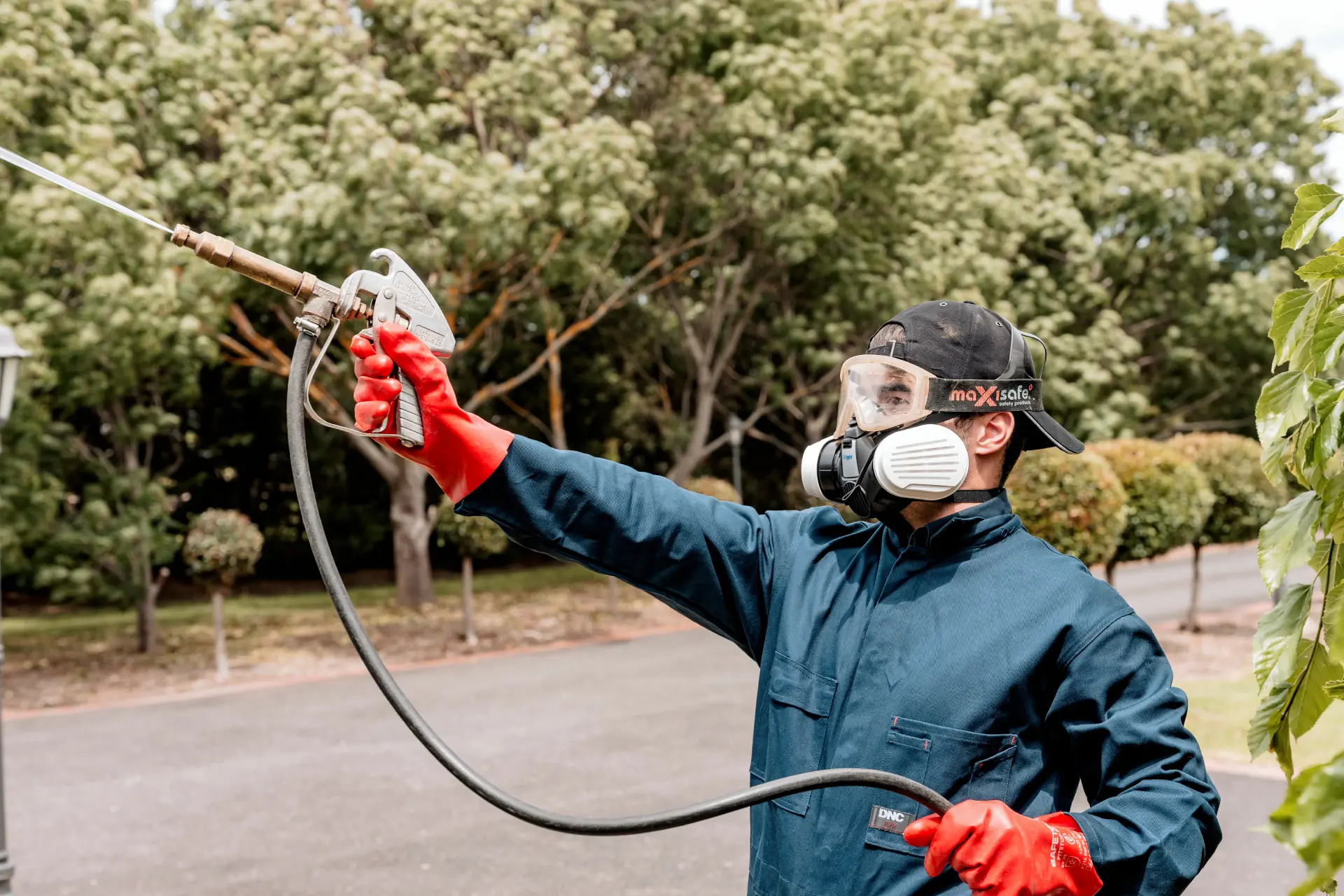
- Residual surface spray: Applied to resting surfaces — walls, ceilings, window frames, and door frames — to knock back adult populations and deter recolonisation. Suitable for homes and commercial premises.
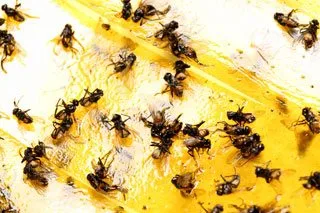
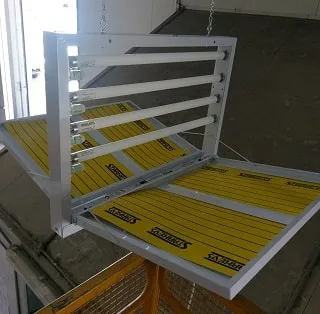
- UV fly-light traps: Electric fly traps use ultraviolet light to attract flying insects to an adhesive board or high-voltage grid. Essential for commercial kitchens and food-service areas where chemical sprays cannot be applied near open food.
- Drain biofilm treatment: Enzymatic or insecticidal treatments applied directly to drain interiors to destroy the organic matter drain fly and fruit fly larvae depend on.
- Source elimination: Locating and removing or treating the primary breeding site — including dead animals in roof cavities, exposed organic waste, or compromised bin areas — is often the single most effective intervention.
- Ongoing commercial fly management: Scheduled visits with trap monitoring, drain maintenance, and surface treatments to maintain compliance in food and hospitality premises.
Call Protech Pest Control on 03 9449 4244 for a free, no-obligation quote after inspection.
Why Choose Protech Pest Control for Fly Removal in Melbourne?
Protech Pest Control has been serving Melbourne homes and businesses since 2001, with a team carrying 40+ years of combined pest management experience. Our fly control programs are built around accurate species identification and breeding-source elimination — the two factors that determine whether results last or whether flies return within a week.
- Over 40 years of combined pest management experience
- Licensed, insured, and accredited technicians (HACCP / NPMA / AEPMA)
- Eco-friendly registered products safe for children and pets
- Same-day service available across greater Melbourne
- HACCP-compliant documentation for commercial clients
- 100% satisfaction guarantee
- Free, no-obligation quotes
- 4.8★ from 411 Google reviews
Frequently Asked Questions — Fly Control
Why do I suddenly have so many flies inside?
A rapid increase usually means a breeding source has developed somewhere nearby — an uncovered bin, a build-up of organic material in a drain, a hidden dead animal in the roof or wall cavity, or uncovered pet food left outside. Protech technicians locate and treat the source, not just the adult flies.
Are flies a health risk in my home or business?
Yes. Flies carry bacteria such as Salmonella and E. coli on their feet and mouthparts and transfer them to food surfaces with every landing. In a commercial food premises this creates a genuine food safety exposure; in a home it raises the risk of gastroenteritis, particularly for young children and older adults.
Can flies breed in my drains?
Drain flies (and to some extent fruit flies) breed specifically in the biofilm coating the inside of drains and floor waste traps. Regular cleaning with an enzymatic drain cleaner helps, but a significant infestation may require a professional treatment of the drain itself.
How quickly do flies breed?
Under warm Melbourne summer conditions a house fly can complete its life cycle — egg, larva, pupa, adult — in around ten days. A single female may lay up to 500 eggs across multiple batches, which is why populations can appear to explode seemingly overnight.
Do you use chemicals that are safe around children and pets?
Yes. Protech Pest Control uses only eco-friendly registered products that are safe for children and pets when applied as directed. Your technician will advise on any brief ventilation period after treatment.
How much does fly control cost?
Cost depends on the property size, fly species involved, and the extent of the infestation. Contact us on 03 9449 4244 for a free, no-obligation quote after an inspection.
Client Testimonials
During COVID stage 4 restrictions, our family home was faced with a major issue of maggots falling off the ceiling, and living in an area where possums are a nuisance — we identified something was not right. On calling the friendly staff they were very helpful and very clear about the cost, and organised a person to attend to the job straight away. A couple of hours from the call the technician arrived, cleared the dead possum, disinfected the area, and advised how we can prevent it from happening again. Thank you to the awesome team at Protech Pest Control for delivering such outstanding service.
– Sundeep MisraLearn More About Pest Solutions
Same-day service, eco-friendly treatments and a pest-free guarantee. Domestic & commercial — all Melbourne suburbs.