

Spider Control Melbourne
Professional spider control & removal across Melbourne — same-day service & pest-free guarantee.
Spider Control in Melbourne
Melbourne homes share their walls, eaves, and gardens with a wide range of spiders through the warmer months. Most are harmless nuisance species that build webs around windows and fences, but a handful — the redback in particular — carry a genuine bite risk that makes hands-off tolerance a poor idea when children and pets are around.
Protech has been treating spiders across Melbourne since 2001. Our licensed technicians identify what is actually present at your property, clear the existing webs and egg sacs, and apply a residual barrier that keeps working for weeks after we leave. The result is fewer webs to walk into, fewer redbacks tucked into the shed, and a home that stays clear through the busy spring and summer season.
If you have spotted webs building up, found a redback outdoors, or keep meeting huntsman spiders on the wall, call us on 03 9449 4244 for same-day service and a pest-free guarantee.
Dangerous Spiders vs Nuisance Spiders in Melbourne
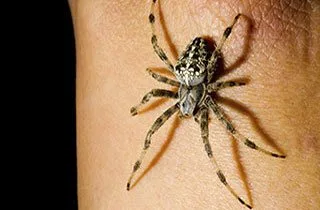
Knowing which spider you are dealing with changes how seriously to take it. Of the spiders that turn up around Melbourne homes, only two groups carry a real medical concern, and the rest are best treated as a nuisance that fouls windows and unsettles the household.
The redback — the one that matters
The redback is the spider of genuine concern in suburban Melbourne. Only the female's bite is medically significant, and according to the Better Health Channel it may require antivenom. Bites bring intense local pain that increases and spreads, along with sweating, headache, and muscle weakness. Redbacks favour dry, sheltered outdoor spots — under garden furniture, inside letterboxes and meter boxes, beneath the rims of pots, and around sheds — which puts them exactly where hands reach without looking.
The Victorian funnel-web — outer fringes only
A native funnel-web (Hadronyche modesta) lives in the wetter forested edges of Melbourne such as the Dandenong Ranges, and its bite is treated as medically significant. It is far less aggressive than its Sydney relative, and the Better Health Channel confirms the dangerous Sydney funnel-web does not occur in Victoria at all. Typical inner and middle-suburban gardens rarely see funnel-webs.
White-tailed, black house, huntsman and wolf spiders — nuisance biters
These species can bite and cause local pain and swelling, and they are the ones most people actually encounter indoors and around the yard. The white-tailed spider has long been blamed for skin ulcers, yet the Better Health Channel notes that medical studies have not been able to confirm any link between its bite and necrosis. Huntsman spiders, despite their size, are described as usually harmless. The health value in treating these species is mostly peace of mind and a home free of webs and egg sacs, rather than removing a serious danger.
The daddy-long-legs spider deserves its own mention because it is the species people ask about most often and worry about least justifiably. It is harmless to people, and the enduring story about it carrying the deadliest venom of any spider is a myth. Its untidy webbing in ceiling corners, garages and subfloors is a housekeeping nuisance and nothing more.
Common Spiders in Melbourne Homes
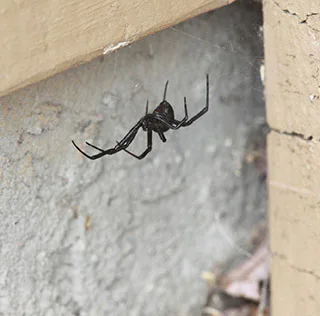
These are the species Protech technicians identify most often across Melbourne's suburbs, from redbacks in the shed to huntsman spiders behind the sun visor. For deeper identification detail and biology, see our cited spider identification guide in the Pest Library.
Redback Spider
The one Melbourne spider most people worry about, and reasonably so. The female is a glossy black spider around a centimetre across the body with the familiar red or orange stripe down the back of the abdomen. She spins a messy, tangled web low to the ground and favours dry, sheltered spots — under outdoor furniture, inside letterboxes, in the folds of tarpaulins, beneath the rim of pot plants, and around sheds and garages. Only the female's bite is medically significant, and it is a common reason for antivenom use in Victoria. Our redback spider guide covers her identification, the bite and correct first aid in full.
White-tailed Spider
A slender, dark grey to reddish spider with a distinctive pale marking at the tip of the abdomen and a cigar-shaped body around 12 to 18 mm long. It does not build a web to catch prey. Instead it roams at night hunting other spiders — black house spiders in particular — which is why it turns up indoors, in bedding, in clothing left on the floor, and along skirting boards. Its bite causes local pain and swelling; the white-tailed spider guide examines the long-running necrosis myth against the medical evidence.
Black House Spider
A shy, robust dark spider that builds a lacy, funnel-shaped web with a distinctive entrance tunnel. You will find these webs in the corners of window frames, in the gaps between bricks, on fences, around external lighting, and under eaves. They rarely leave the web and account for much of the untidy webbing that builds up around a Melbourne home over spring and summer. Their presence also draws in white-tailed spiders that prey on them. See the black house spider guide for identification detail.
Huntsman Spider
Large, flat, fast, and alarming to find on a wall or ceiling, though largely harmless. Huntsman spiders are grey to brown with long legs that let them sit flush against timber and slip into narrow gaps. They wander indoors through open windows and roof voids, and famously appear behind sun visors in parked cars. A bite may cause brief pain and swelling and little more, but their size makes them one of the most frequent callouts we get. The huntsman spider guide covers their behaviour in depth.
Wolf Spider
A ground-dwelling hunter with a mottled grey, brown, and yellow body that provides good camouflage on soil and lawn. Wolf spiders do not spin a snare web; they chase prey across the ground and shelter in burrows or under leaf litter, timber, and garden debris. They are common in Melbourne gardens and around the edges of lawns, and occasionally move indoors through ground-level gaps, particularly after heavy rain. Our wolf spider guide covers identification, the bite and first aid in full.
Funnel-web Spider
The Victorian funnel-web (Hadronyche modesta) occurs in the wetter, forested fringes of Melbourne such as the Dandenong Ranges rather than in typical suburban gardens. It is a dark, heavy-bodied ground spider that shelters in burrows in moist soil. The far more dangerous Sydney funnel-web is not found in Victoria at all. A Victorian funnel-web bite is still treated as medically significant and warrants prompt medical attention. Our funnel-web spider guide explains where they occur around Melbourne and how to tell them apart from harmless look-alikes.
Mouse Spider
Stout, glossy black and heavily built, with fangs large enough to be visible. Males of some species carry a bright red or orange patch on the head, which is what most people notice first. Mouse spiders live in burrows in the ground and do not build a catching web, so encounters usually happen when a male wanders across open ground by day, looking for a mate from late summer into early winter, especially after rain. Recorded bites are uncommon, and they are treated as medically significant: first aid is the same as for a funnel-web bite, a pressure bandage and urgent medical attention, and funnel-web antivenom has proven effective in the rare severe cases. Where burrows are found on a property, the work concentrates on the ground and the harbourage around it. Our mouse spider guide covers identification and first aid in full.
Trapdoor Spider
A stout brown to dark grey burrowing spider that is very often mistaken for a funnel-web, which is the main reason we are called to identify one. Many Victorian species build an open burrow with no lid at all, whatever the common name suggests. The females are slow-moving and stay close to the burrow entrance, so burrows turn up in garden beds, lawns and along path edges, while wandering males find their way indoors and into swimming pools in autumn and early winter. A bite causes local pain and swelling and is not considered medically significant. Correct identification is the valuable part of the visit, because the level of concern and the treatment both differ from a funnel-web. The trapdoor spider guide shows how to tell the two apart.
Orb-Weaving Spider
The large round webs that appear across paths, gateways and the gaps between shrubs overnight are the work of orb-weavers, and the garden orb-weaver is the one most Melbourne households meet. Many species rebuild the web each evening and take it down again at dawn, which is why the same spot can be clear one day and strung across the next. They are reluctant to bite and are not dangerous; symptoms are usually negligible or mild local pain and swelling, with nausea or dizziness following a bite only occasionally. Treatment concentrates on harbourage points and on the insects drawn to outdoor lighting that feed them, because the web itself is rebuilt too often for spraying it to achieve much. The orb-weaving spider guide covers their webs and season in detail.
Signs of a Spider Problem
Spiders are easier to spot than most household pests, but the early signs of a building population are easy to write off as ordinary. These are the indicators worth acting on:
Webs and funnel entrances
Fresh webbing that keeps reappearing after you clear it points to an established population. Black house spiders leave lacy webs with a funnel-shaped entrance in window corners, brickwork gaps, and around external lights, while orb-weavers string large round webs across paths and between shrubs overnight.
Egg sacs
Silken egg sacs are the clearest warning that numbers are about to climb. A single sac can hold well over a hundred spiderlings, and the female often guards it or fixes it to the web or a sheltered surface. Redback egg sacs are round, papery, and cream-coloured, tucked deep in the messy web.
Spiders indoors
Finding huntsman spiders on walls and ceilings, or white-tailed spiders in bedding and clothing left on the floor, means spiders are moving through the home. White-tails in particular follow their prey indoors, so their presence usually means black house spiders are nearby.
Plenty of other insects
Spiders go where the food is. A steady supply of flies, moths, and other insects around outdoor lighting or inside the roof void will support a growing spider population, so a rise in general insect activity often precedes a rise in spiders.
Moulted skins in storage areas
Spiders shed their outer skin as they grow, and the papery, spider-shaped casts they leave behind are easy to mistake for dead spiders. Finding them along skirting boards, on shed shelving or among stored boxes means spiders have been living and growing in that spot for a while. Garages, subfloors and roof voids hold populations for months without a single live spider being seen in the living areas, which is why our inspection includes those spaces on every job.
What the inspection turns up
Those are the signs a homeowner tends to notice. What a technician records on the same property is a good deal more specific, because the search follows the places the species actually shelters. This is Muzi Tsolakis, who founded Protech and is Victoria’s official Competency Assessor for Pest Management, on the findings from one of his redback inspections:
“During my site inspection, I detected redback spiders and webbing along the fence lines, around stored goods, and underneath the pool decking and barbecue area. Activity was predominantly identified in damp, dark and sheltered areas, which provide suitable conditions for redback spiders to establish and remain undisturbed.”
Muzi Tsolakis — Protech Pest Control
Every one of those locations is low, sheltered and left alone for long stretches, which is the pattern a redback follows on any property. It is also what the harbourage-first approach described further down this page is built around.
Our Spider Treatment Method
Effective spider control comes down to treating the places spiders harbour and creating a lasting external barrier at the source. Our technicians follow a consistent process built around the way each type of spider actually lives.
- Inspection and identification: We work through the property inside and out, identify the species present, and locate the harbourage points — eaves, weep holes, fence lines, sheds, garden edges, and roof voids — that drive the population.
- Web and egg-sac removal: Existing webs and egg sacs are knocked down and cleared by hand, which removes the current generation and lets us see quickly whether the treatment is holding at the follow-up.
- Residual perimeter spray: A residual surface treatment is applied to the external perimeter and known harbourage — around windows, eaves, doorframes, weep holes, and fencing. Spiders pick up the treatment as they cross these surfaces, so the barrier keeps working for weeks after we leave.
- Targeting the hunters: Nomadic spiders such as huntsman and white-tailed spiders never sit on a sprayable web, so we manage them by treating their harbourage and reducing the black house spiders and insects they feed on, rather than blanket spraying open ground.
- Prevention advice and follow-up: We point out the entry points and conditions drawing spiders in, and set a follow-up schedule where pressure is high — commonly a spring treatment with a summer top-up.
To book an inspection, call Protech on 03 9449 4244.
How the Treatment Changes with the Species
A spider treatment that ignores the species behind the problem treats the wrong places. The identification step at the start of every job decides where the technician concentrates the work, because a redback in the shed, a black house spider in the window frame and a huntsman on the lounge-room wall each call for a different focus.
Redbacks: harbourage first
Redback work concentrates on the low, dry, sheltered spots the female favours — the undersides of outdoor furniture, letterboxes and meter boxes, the folds of tarps and covers, pot-plant rims, shed clutter and the edges of the subfloor. The technician clears the webs and egg sacs from these zones by hand and applies the residual treatment directly to the harbourage surfaces, so a spider re-establishing in the same spot crosses a treated surface. Keeping those zones tidy afterwards denies the next generation the shelter it needs. Our redback guide covers where they build in far more detail.
Web-building spiders on the structure
For black house spiders and the other resident web-builders, the treatment goes where the webs are: window frames, under-eave joints, weep holes, brickwork gaps, fences and the fittings around external lights. Removing the existing webbing does double duty — it clears the mess, and it forces any surviving spiders to rebuild across freshly treated surfaces, which increases their contact with the residual product.
The wandering hunters
Huntsman and white-tailed spiders never sit on a web you can spray, so blanket spraying open ground achieves very little against them. The effective levers are their entry points and their food. Treating the gaps, reveals and harbourage edges they travel through intercepts them on the way in, and knocking down the black house spider population removes the prey that draws white-tails indoors in the first place. Fewer webbing spiders around the windows reliably means fewer white-tails in the bedroom.
Ground-active spiders and burrow dwellers
Wolf spiders hunting across the lawn, and the Victorian funnel-web in Melbourne's wetter fringe suburbs, live at ground level rather than on the building. Here identification carries the most weight, because a large dark ground spider causes understandable alarm and the correct response depends entirely on which species it is. The residual band along the fence line and garden perimeter covers the zones these spiders move through, and where a funnel-web is suspected the technician confirms the identification before anything else, since that finding changes how seriously the garden needs to be treated.
How Urgent Is a Spider Problem?
Melbourne's spiders span the full range from medically significant to completely harmless, and the sensible response spans a similar range. This table sets out the genuine risk level of each species we treat, based on the published guidance of the Victorian Better Health Channel, alongside the response we recommend.
| Species | Medical risk | Recommended response |
|---|---|---|
| Redback | Female bite is medically significant and may require antivenom | Treat promptly — same-day service is available, and keep children and pets away from the webs meanwhile |
| Victorian funnel-web | Bite treated as medically significant; found in outer forested fringes | Have the identification confirmed professionally before disturbing the area |
| White-tailed | Local pain and swelling; the necrosis link is unconfirmed by medical studies | Routine treatment, paired with control of the webbing spiders it hunts |
| Black house | Minor bite symptoms; webbing draws white-tails indoors | Routine external treatment of the web zones |
| Wolf | Localised pain and minor swelling | Routine treatment of garden edges and ground-level entry gaps |
| Huntsman | Usually harmless despite the size | Routine treatment; most callouts are about comfort, and that is a perfectly good reason |
| Daddy-long-legs | Harmless — the deadly-venom story is a myth | None needed beyond clearing the webbing |
If you are unsure what you are looking at, leave the spider undisturbed and call us on 03 9449 4244 — the technician identifies the species on site before any treatment begins, and that identification decides everything that follows.
Spider Season in Melbourne
Spider activity in Melbourne follows the warmth. Numbers climb through spring and peak across summer, roughly October to February, as breeding accelerates and the insects spiders feed on become abundant. This is when webbing builds up fastest around eaves and windows and when redbacks fill sheltered outdoor spots in the garden and shed.
Autumn brings a second flush of activity as mature males wander in search of a mate and females lay their egg sacs, which is when many people first notice large spiders moving indoors. Through the cooler months spiders slow down and shelter, and some overwinter until the following spring.
The practical upshot is timing. A treatment applied at the start of spring puts the residual barrier in place before the population takes off, giving the longest run of protection through the busiest part of the year. Homes backing onto reserves, creeks, or bushland tend to face higher pressure and benefit from a summer top-up.
What Spider Control Costs in Melbourne
Spider treatments with Protech start from $220 for a full internal and external treatment. The final figure depends on the size of the property, the species involved and the level of infestation — clearing light webbing from a single-storey home and treating an established redback population through a cluttered shed and subfloor are different jobs. Whatever the situation, we give you a fixed price after the inspection and before any work starts, so the number you agree to is the number you pay. Our full price list is published on our pest control prices in Melbourne page, alongside every other treatment we offer.
The six-month guarantee
Every internal and external spider treatment carries a six-month guarantee. If spiders return within that period, we come back and re-treat the affected areas at no charge, with no call-out fee for the return visit. The guarantee period goes on your paperwork at the time of booking, and the full schedule of guarantee terms across all our treatments is published on our guarantee page.
Getting the Property Ready, and What to Do Afterwards
Before the visit
A little preparation before the technician arrives helps the treatment reach the harbourage that drives the problem, and it keeps everyone safe during and after the visit.
- Make a note of where you have seen spiders, webs or egg sacs — including the spots you cleaned up before booking. Knowing where activity has been helps the technician map the harbourage quickly.
- Unlock or clear access to the shed, garage, subfloor door and any storage areas, since these sheltered spaces are exactly where populations establish.
- Indoors, move furniture away from the skirting boards where you can, so the technician can spray the full run of skirting throughout the house.
- Outside, leave everything exactly where it is — outdoor furniture, pot plants and stored items included. Your technician works around them.
- Clear window sills and internal corners of items you would rather keep away from the treatment areas.
- Plan for children and pets to stay clear of treated surfaces until they have dried, for the period your technician advises on the day.
- If you keep an aquarium or a fish pond, mention it when booking so the technician can plan the treatment around it.
After the treatment
Leave the webs undisturbed once the treatment is done, so the product can do its work. It is tempting to clear everything away the moment the technician leaves, and that is the one thing worth resisting. Your technician will tell you how long to leave things alone, and anything else specific to your property, while they are on site.
How to Keep Spiders Away
Professional treatment does the heavy lifting, and a few habits around the home keep pressure down between visits:
- Once the period your technician advises has passed, clear webs and egg sacs as they appear, especially around window frames, eaves, and external lighting.
- Swap bright white outdoor globes for warm or yellow lighting, which draws in fewer of the insects spiders feed on.
- Cut back branches, shrubs, and climbing plants that touch the walls and give spiders a bridge indoors.
- Seal gaps and cracks around doors, windows, weep holes, and service penetrations, and fit or repair door and window screens.
- Reduce clutter and garden debris — timber stacks, leaf litter, and stored boxes against the house all make ideal harbourage.
- Shake out shoes, gloves, and clothing that has been left on the floor or stored in the garage before putting them on.
- Keep sheds, garages, and subfloor areas tidy and check them regularly, since these are prime redback territory.
Damp, poorly ventilated subfloors also attract the insects that feed spiders. If your home has a musty or moisture-prone underfloor, improving airflow with subfloor ventilation reduces the conditions spiders and their prey rely on.
Why Choose Protech for Spider Control in Melbourne
Protech Pest Control has been keeping Melbourne homes and businesses clear of spiders since 2001, with a team carrying more than 40 years of combined experience across the city's suburbs. Our technicians know where redbacks hide in a Campbellfield shed and why white-tails keep turning up in a Ringwood bedroom, and they treat accordingly.
- Licensed, insured, and accredited technicians (HACCP, NPMA, AEPMA)
- Residual perimeter treatment that keeps working for weeks
- Products applied at label rates, safe for use around children and pets
- Same-day service available across Melbourne
- Free no-obligation quote
- Pest-free guarantee on our work
- 4.8★ from 411 Google reviews
For properties with ongoing timber, damp, or termite concerns alongside spiders, our technicians can also arrange a full building and pest inspection while on site.
Spider control for Melbourne businesses
Spiders are a workplace issue as much as a household one. Redbacks favour exactly the kind of low, sheltered spaces a warehouse, factory or storage yard provides — racking bases, pallet stacks, loading dock edges and stored equipment — and staff reaching into those spaces is how workplace bites happen. Heavy webbing across a shopfront or entrance also does a business no favours with customers. Protech provides commercial pest control across Melbourne with scheduled servicing and full treatment documentation, so spider management can sit inside the same audit-ready program as the rest of a site's pest control.
Frequently Asked Questions
Which spiders in Melbourne are actually dangerous?
The redback is the spider of genuine medical concern in suburban Melbourne — only the female's bite is dangerous, and it is a common reason for antivenom in Victoria. The Victorian funnel-web found in the outer forested fringes is also treated as medically significant, though the far more dangerous Sydney funnel-web does not occur in Victoria. White-tailed, black house, huntsman, and wolf spiders can bite and cause local pain and swelling, but they are best described as a nuisance rather than a serious health risk. According to the Better Health Channel, the historical link between white-tailed spiders and skin necrosis has not been confirmed by medical studies.
What does professional spider control actually involve?
A Protech technician inspects the property inside and out, identifies the species present, and knocks down and removes existing webs and egg sacs by hand. We then apply a residual surface spray to the external perimeter — around window frames, eaves, weep holes, fence lines, and other harbourage points — which continues working for weeks as spiders walk across the treated surfaces. For web-building species this is highly effective. Nomadic hunters like huntsman and white-tailed spiders are managed by targeting their harbourage and reducing the black house spiders they feed on, rather than by blanket spraying open ground.
When are spiders worst in Melbourne?
Spider activity climbs sharply through spring and peaks over summer, from roughly October to February, as warmth drives breeding and the insects they feed on become abundant. This is when webs build up quickly around eaves and windows and when redback numbers rise in sheltered outdoor spots. Autumn brings a second flush as males wander in search of a mate and egg sacs are laid. A treatment going into spring gives the longest protection through the busiest months.
How long does a spider treatment last?
A professional external treatment typically keeps webbing spiders under control for several months, with the residual barrier gradually breaking down through weather and UV. Most Melbourne homes do well with a treatment at the start of spring and, where pressure is high, a follow-up over summer. Protech will recommend a schedule based on your property, the species present, and how exposed the building is to surrounding gardens and bushland.
Are the treatments safe for children and pets?
Yes. Protech uses products applied at label rates by licensed technicians, with treatment focused on external harbourage and web zones rather than living areas. Your technician will let you know if any surface needs a short time to dry and will advise on any brief access restrictions. We hold HACCP, NPMA, and AEPMA accreditation and have been treating Melbourne homes since 2001.
Can I get rid of spiders myself?
You can reduce numbers by removing webs regularly, clearing clutter and garden debris against the house, sealing gaps around doors and windows, and swapping bright white external globes for warm or yellow ones that draw fewer insects. Supermarket sprays kill spiders on direct contact but leave no lasting barrier and do little for redbacks tucked into sheltered spots or hunters that never touch a treated web. A professional residual treatment is what keeps numbers down through the season.
How much does spider control cost in Melbourne?
Spider treatments with Protech start from $220 for a full internal and external treatment, ex GST. The final price depends on the size of the property, the species involved and the level of infestation, and we confirm a fixed figure after the inspection and before any work starts. Our complete price list is published on our pest control prices page.
How long is the guarantee on a spider treatment?
An internal and external spider treatment carries a six-month guarantee. If spiders return within that period we come back and re-treat the affected areas at no charge, including the call-out. The guarantee period is recorded on your paperwork at the time of booking, and the full schedule across all our treatments is on our guarantee page.
Do I need to do anything before the technician arrives?
A few simple steps help: note where you have seen spiders or webs, unlock the shed, garage and subfloor access, and move furniture away from the skirting boards indoors where you can, so the technician can spray the full run of skirting. Outside, leave everything exactly as it is — your technician works around outdoor furniture, pots and stored items. Plan for children and pets to stay off treated surfaces until they dry. Your technician confirms anything specific to your property when the job is booked.
Should I clean the webs away after the treatment?
Not straight away. Leave the webs undisturbed once the treatment is done so the product can do its work — clearing everything the moment the technician leaves is the one thing worth resisting. Your technician will tell you how long to leave things alone, and anything else specific to your property, while they are on site. After that period you can go back to clearing webs and egg sacs as they appear.
What should I do if someone is bitten by a redback?
Wash the bite with soap and water and apply a cold pack to ease the pain. Do not apply a pressure immobilisation bandage — redback venom moves slowly and a tight bandage increases the pain. Keep the person calm, watch for spreading pain, sweating or nausea, and seek medical help if symptoms become severe or worsen. Our redback spider guide covers the bite and its first aid in full, with the medical sources.
Sources
- Better Health Channel (Victorian Department of Health) — Spiders: redback bite significance and antivenom, unconfirmed white-tailed spider necrosis link, Sydney funnel-web absent from Victoria, huntsman usually harmless.
- Museums Victoria — Your eight-legged housemates: black house spider funnel webs in window frames and brickwork, common household spider behaviour.
- healthdirect — Spider bites: redback bite first aid — wash with soap and water, cold pack, no pressure immobilisation bandage.
Client Testimonials
Protech provide friendly professional service, in person and over the phone. Always helpful and no spiders have dared walked our new home.
– Karen ShaunLearn More About Pest Solutions
Same-day service, eco-friendly treatments and a pest-free guarantee. Domestic & commercial — all Melbourne suburbs.