
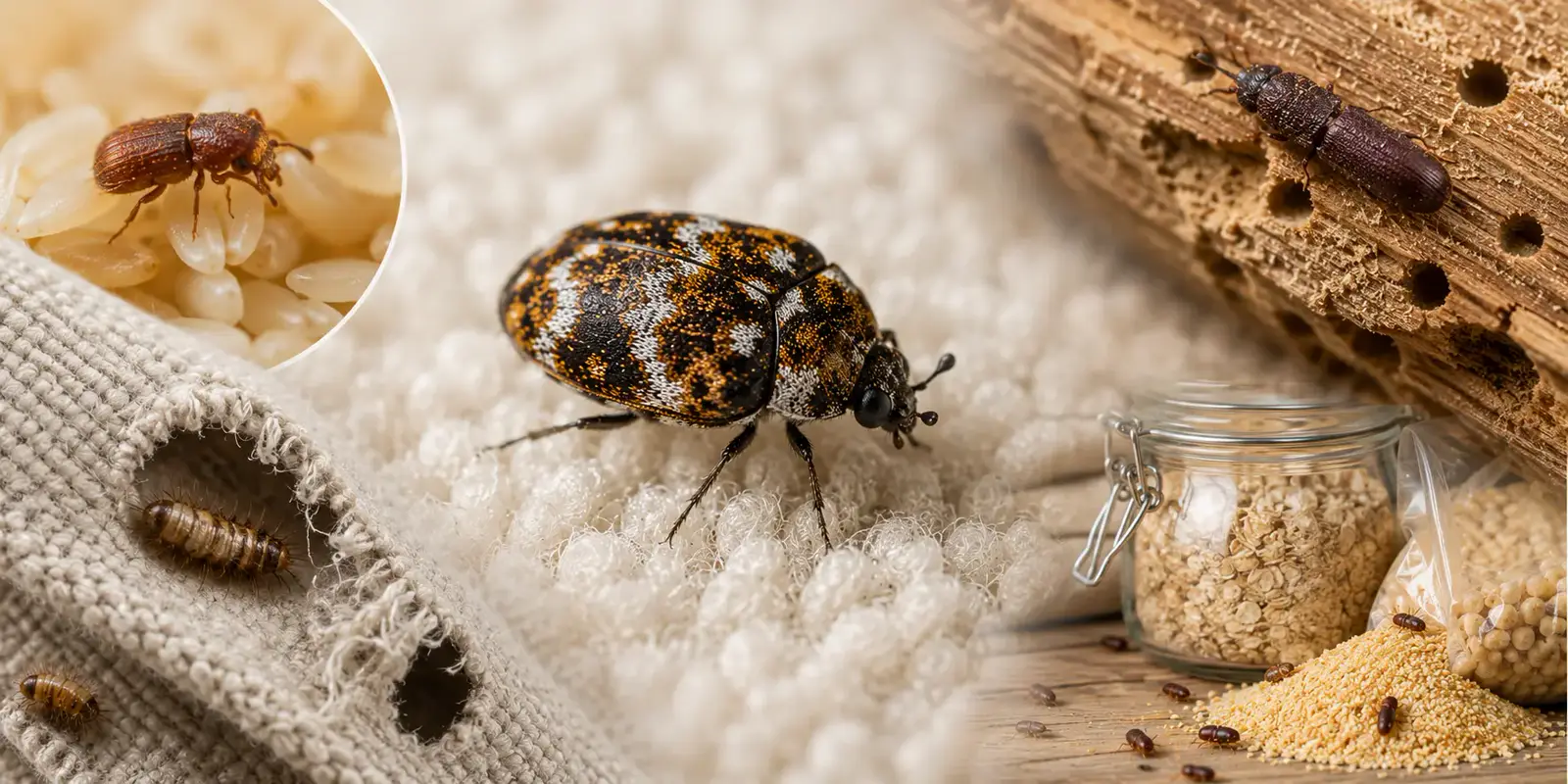
Beetle Control Melbourne
Expert beetle removal across Melbourne — certified technicians, eco-friendly treatment, same-day service.
Beetle Pest Control & Removal in Melbourne
Beetles are Australia's most species-rich insect order, and a number of them are a genuine problem for Melbourne homes and businesses. Carpet beetles quietly destroy natural-fibre furnishings, pantry beetles contaminate dry food stores, and timber-boring species can spend years unseen inside structural timber before the damage becomes apparent.
Because different beetle types attack different materials and require different treatment approaches, correct identification is the starting point for any effective control programme. Protech's technicians have been working across Melbourne since 2001 and are familiar with the species patterns that show up in each season and suburb.
If you have spotted beetles, found unexplained damage to clothing, carpets, pantry goods, or timber, or simply want an inspection to confirm what you are dealing with, call us on 03 9449 4244.
How to Identify a Beetle
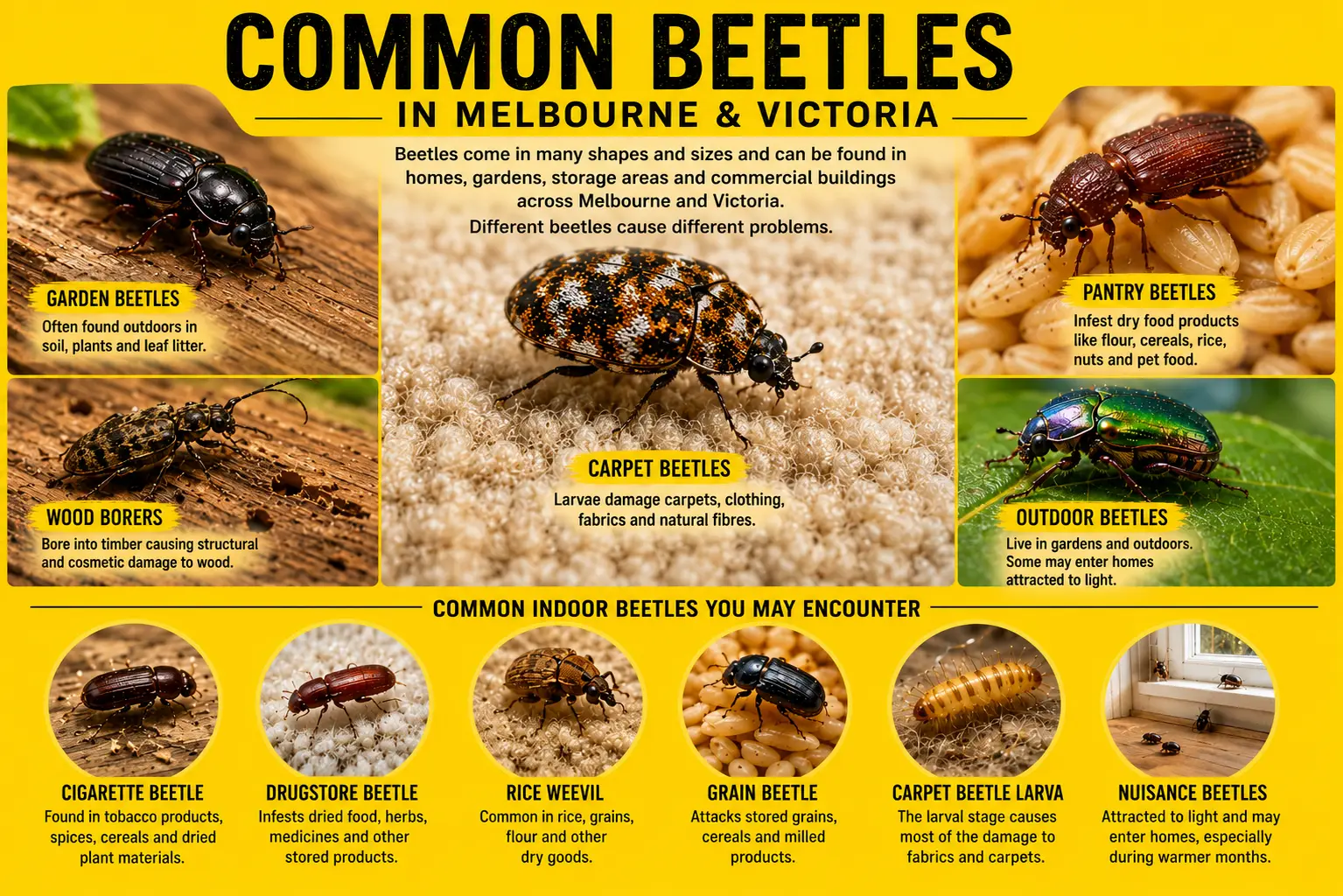
Beetles belong to the order Coleoptera — the largest order of insects on Earth, with more than 350,000 described species worldwide and approximately 30,000 recorded in Australia. The defining feature of all beetles is a pair of hardened front wings called elytra, which fold flat over the abdomen and protect the membranous flight wings beneath. This gives beetles a distinctly armoured appearance.
- Hard, shell-like front wings (elytra) that meet in a straight line along the centre of the back.
- Fully developed chewing mouthparts and a pair of antennae, which vary in form across species.
- Body shape ranges from oval and domed (carpet beetles, lady beetles) to slender and elongated (click beetles, longhorns).
- Colour varies enormously — mottled brown, black, iridescent green, spotted, or patterned depending on the species.
- Size ranges from under 2 mm (carpet and pantry beetles) to over 40 mm (Christmas beetles and longhorns).
- Larvae (grubs) look very different from adults — most are soft-bodied and C-shaped, though some are elongated with well-developed legs.
Beetle Life Cycle
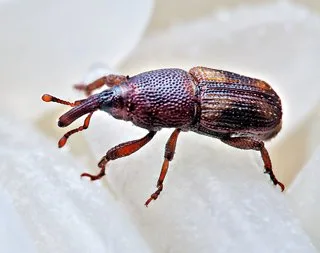
All beetles are holometabolous — they develop through four distinct stages: egg, larva, pupa, and adult. The larval stage is when most structural and material damage occurs, because larvae are voracious feeders working their way through fabric, food, or timber before eventually pupating.
Larvae of different species look very different from one another. Carpet beetle larvae are carrot-shaped and covered in stiff bristle hairs. Timber beetle larvae (woodworm) are pale, legless grubs that bore through wood. Pantry beetle larvae are small, active, and found moving through dry food stores. Scarab grubs are fat, C-shaped, and live in soil.
Life cycle length also varies widely — from weeks for pantry beetles in warm conditions to several years for timber borers such as the powderpost beetle. This variation is one reason correct identification drives everything — the appropriate treatment, timing, and follow-up schedule all depend on the specific species involved.
Common Beetle Types Found in Melbourne Homes & Businesses
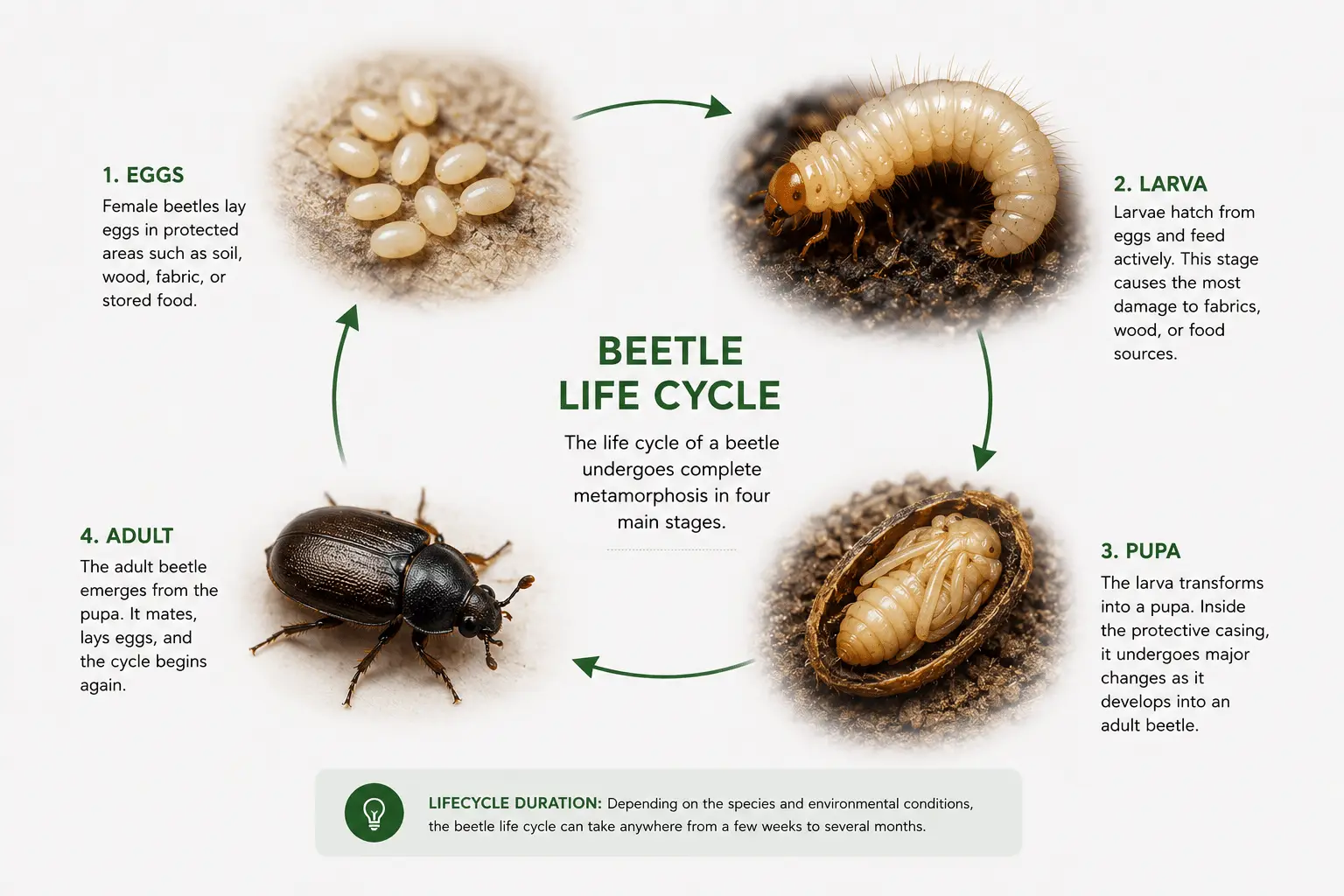
Melbourne's mix of older housing stock, timber-framed buildings, and suburban gardens creates habitat for a range of beetle species. These are the types Protech technicians encounter most often.
Carpet Beetle
One of the most damaging household beetles in Melbourne. The larvae — not the adult — are the destructive stage, feeding on natural fibres including wool, silk, leather, felt, fur, and feathers. Adults are small (2–4 mm), oval, and often patterned with white, brown, and yellow scales.
Pantry / Stored-Product Beetles
A group that includes the Grain Beetle, Flour Beetle, and Rice Weevil. They infest dry food goods — grains, flour, cereals, dried fruit, spices, and pet food. Infestations often go unnoticed until larvae or adult beetles appear in the pantry.
Common Furniture Beetle
Also called woodworm. Larvae bore into soft sapwood and seasoned timber, creating characteristic round exit holes roughly 2 mm wide. Attacks furniture, floorboards, roof timbers, and structural beams. Severe infestations can compromise the internal integrity of timber elements.
Powderpost Beetle
Attacks seasoned hardwood and dry timber, reducing it to a fine powder over time. These beetles typically take several years to complete their life cycle, meaning damage accumulates slowly and is often advanced before it is noticed.
House Longhorn Beetle
Larvae feed on the sapwood of softwood timbers and can destroy floorboards, roof trusses, beams, and doors. Infestations are significant building concerns in some Victorian areas and require professional assessment.
Christmas Beetle
A native Australian scarab beetle common in Melbourne gardens during late spring and summer. Adults feed on eucalyptus foliage; larvae live underground and feed on grass roots. They are attracted to lit windows and can enter homes in large numbers during warm evenings.
Garden / Scarab Beetles
A broad group including curl grubs that live in lawn soil and feed on grass roots, causing brown patches. Adults of various species are attracted to flowering plants. Outbreaks in garden beds are common after wet winters across Melbourne's outer suburbs.
Click Beetle
Slender, elongated beetles that produce a loud clicking sound when righted. Larvae (wireworms) damage vegetable roots and tuber crops in garden beds. Adults are generally harmless to structures.
Beetle Facts
- Carpet beetles feed only on animal-origin materials — wool, silk, leather, felt, feathers, and fur. They do not damage synthetic fabrics.
- For most beetle species, the adult does little or no damage; it is the larval stage that feeds destructively on fabric, food, or timber.
- Carpet beetles are found throughout Australia and can tolerate lower humidity than many other fabric pests, making them more widespread than clothes moths in drier Melbourne conditions.
- Australia has approximately 30,000 beetle species, of which around 20,000 are scientifically described. Globally, over 350,000 species are known.
- Some species, including fireflies and certain click beetles, produce light or sound through internal chemical reactions.
- Ladybirds (lady beetles) are beetles and are beneficial in gardens, preying on aphids. They are generally not a structural pest.
- Christmas beetles are a native species and play a role in eucalyptus forest ecology; populations have declined in some areas due to habitat change.
The Damage Beetles Cause
The type of damage depends entirely on the species present. Carpet beetles destroy natural-fibre textiles — carpets, rugs, upholstered furniture, stored clothing, and museum-quality items. Damage typically appears as irregular patches of thinning or bare fabric, concentrated where larvae can feed undisturbed.
Pantry and stored-product beetles contaminate dry goods, making them unsuitable for consumption. The economic loss from discarding infested stock can be significant in commercial food-handling premises.
Timber-boring species — furniture beetles, house longhorns, and powderpost beetles — attack structural and decorative timber. The visible exit holes they leave are deceptive: the surface can appear sound while the interior is extensively tunnelled. In older Melbourne homes with hardwood floors and exposed roof timbers, an untreated timber pest infestation may require structural repairs.
Garden beetles and curl grubs damage turf and vegetable beds, creating brown patches in lawns and damaging root crops.
Signs of a Beetle Infestation
Because many beetle species are nocturnal or spend their active larval stage hidden inside materials, infestations are often well established before they are found. These are the indicators to look for:
- Irregular fabric damage: Ragged, patchy holes or surface grazing on wool, silk, or fur items — particularly in stored clothing, the backs of rugs, or beneath furniture.
- Shed larval skins: Brownish, bristly husks left behind as carpet beetle larvae moult. These are often found in wardrobes, behind skirting boards, or under undisturbed rugs.
- Round exit holes in timber: Small, clean circular holes (typically 1–3 mm) in floorboards, furniture, joinery, or roof timbers indicate boring beetle activity. Fine powdery frass (bore dust) near the holes confirms recent activity.
- Infested pantry goods: Flour, grain, cereal, or dried fruit that contains live or dead beetles, larvae, or webbing. A floury or musty smell can also indicate a stored-product infestation.
- Live beetles near windows: Adults of several species move toward light when searching for mates or food sources. Spotting adult beetles indoors, particularly near windows, is a prompt to investigate further.
- Garden lawn damage: Irregular brown patches in turf that pull away from the roots, combined with the presence of white C-shaped grubs in the soil beneath, point to a scarab/curl-grub infestation.
Carpet Beetle Prevention
Carpet beetles are the beetle species with the most consistent household impact across Melbourne. These practical measures help keep populations down between professional treatments:
- Vacuum regularly and thoroughly: Pay particular attention to the edges of carpets, under furniture, along skirting boards, and inside wardrobes. Dispose of vacuum contents in a sealed bag immediately.
- Move furniture periodically: Inspect the floor and base of upholstered pieces for larval skins, droppings, or fabric damage. Undisturbed areas beneath heavy furniture are favoured feeding zones.
- Store seasonal clothing correctly: After washing or dry cleaning, store woollen, silk, and fur items in sealed, airtight bags or plastic containers. Avoid storing these materials in cardboard boxes.
- Transfer dry goods to sealed containers: Decant flour, cereals, grains, dried fruit, spices, and pet food into airtight containers. This applies to both pantry beetles and carpet beetles, which will also feed on stored organic materials.
- Fit insect screens: Adult carpet beetles fly and enter homes through windows and doors during spring and early summer. Screens on windows reduce entry points.
- Inspect second-hand furniture and rugs: Items brought into the home from op shops, storage auctions, or deceased estates are a common introduction route for carpet beetles and furniture beetles.
Beetle Pest Control Treatment Methods
- Detailed Inspection: The technician identifies the beetle species, maps affected areas, and assesses the severity and root cause before any treatment is applied. Correct species identification drives every decision that follows.
- Habitat Modification Advice: Conditions that make a property attractive — clutter, moisture, undisturbed stored organic material, timber in contact with soil — are identified and addressed as part of the programme.
- Residual Insecticide Application: Applied to carpets, skirting boards, wardrobe interiors, and other harborage zones. Formulations are chosen to be safe for use around children and pets.
- Insecticidal Dust Treatments: Used in wall cavities, roof spaces, sub-floor areas, and inside timber voids where liquid treatments cannot reach effectively.
- Growth Regulators: Applied to known breeding areas to disrupt larval development and reduce the next generation of adults.
- Exclusion & Sealing: Caulking entry points around pipes, gaps in skirting boards, and other access routes to reduce re-infestation pressure after treatment.
- Follow-Up Assessment: For timber pest treatments or severe infestations, a follow-up visit confirms the treatment has been effective and addresses any areas of ongoing activity.
To arrange an inspection, call Protech on 03 9449 4244.
Why Choose Protech Pest Control for Beetle Removal in Melbourne?
Protech Pest Control has been serving Melbourne homes and businesses since 2001. With a team carrying over 40 years of combined experience, our technicians have encountered the full range of beetle species active across Melbourne's suburbs — from carpet beetles in Fitzroy terraces to timber borers in Dandenong warehouses and Christmas beetle surges in outer-ring garden suburbs.
- 40+ years of combined experience in Melbourne pest management
- Licensed, insured, and accredited technicians (HACCP, NPMA, AEPMA)
- Eco-friendly products safe for children and pets
- Same-day service available across Melbourne
- Free no-obligation quote
- 100% satisfaction guarantee
- 4.8★ from 411 Google reviews
Frequently Asked Questions
How can I tell if I have carpet beetles?
Look for irregular holes or surface grazing on woollen carpets, clothing, fur, or upholstery — damage that looks similar to moth damage but tends to be more random and patchy. You may also find shed larval skins (brownish, bristly husks) in wardrobes, under rugs, or behind furniture. Adult carpet beetles are small and easily missed; they are sometimes spotted near windows as they move toward light.
Are beetles dangerous to people?
Most beetles do not bite or sting humans directly. Carpet beetle larvae produce small bristle hairs that can cause skin irritation or allergic dermatitis in sensitive individuals, and inhaling shed skins may aggravate asthma. Stored-product beetles can contaminate food. The main concern for homeowners is structural and material damage rather than direct health risk.
My pantry has tiny beetles in the flour — what should I do?
Remove and bin all affected dry goods in sealed bags. Clean shelves thoroughly, including cracks and corners. Transfer all remaining dry goods to sealed containers. A professional treatment of the pantry area will eliminate any remaining population and larvae. Protech's technicians can inspect adjacent cupboards and storage areas to trace the full extent of the infestation.
Can I get rid of beetles by washing clothes?
Washing infested clothing or fabric at high temperatures (above 60°C) or dry cleaning will kill larvae and eggs. Steam cleaning carpets is effective for surface populations. However, these DIY measures alone do not address infestations inside wall cavities, roof spaces, or structural timbers — professional treatment is needed for ongoing or structural infestations.
How long does a professional beetle treatment take?
For most residential jobs, an inspection and treatment can be completed in a single visit. Timber pest treatments such as furniture beetle or house longhorn may require follow-up to confirm eradication, particularly in roof spaces. Protech will outline the expected timeline and any follow-up requirements after the initial inspection.
Are the products safe around children and pets?
Yes. Protech Pest Control uses eco-friendly products and treatments that are safe for use around children and pets. Your technician will advise on any brief access restrictions during and immediately after treatment.
Client Testimonials
Just wanted to say fantastic service from start to finish. Great contact from staff and answered all questions I had. Would highly recommend this company to anyone. Thanks heaps. A big thanks to Theresa for putting it all together for me.
– Ben JohnsonLearn More About Pest Solutions
Same-day service, eco-friendly treatments and a pest-free guarantee. Domestic & commercial — all Melbourne suburbs.