
Termite Inspection Melbourne
A thorough, non-invasive termite inspection of your Melbourne property from $220 — with a written report, usually within a day.
Termite Inspection Melbourne — From $220
Termites work out of sight. They travel through soil, up inside piers and wall cavities, and eat timber from the inside out, so a wall that looks perfectly sound can be hollow behind the paint. One in three Australian homes is affected by termite damage at some point, and most basic insurance policies do not cover the repair bill.
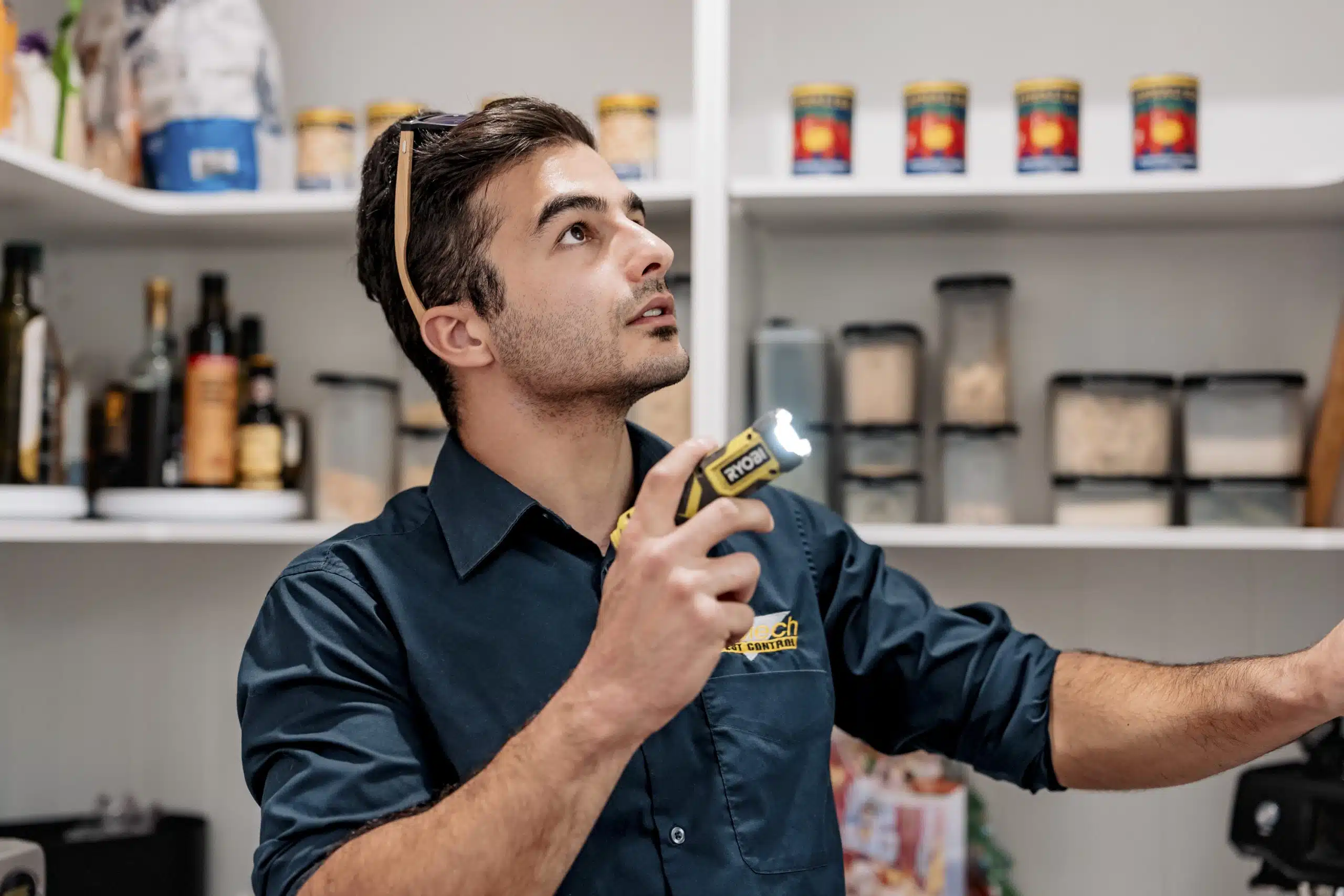
A termite inspection is how you find out where you stand. A Protech technician goes through the interior, the subfloor, the roof void, the perimeter and the grounds, using a Termatrac non-invasive device and moisture meters to check inside ceilings, floors and cavities without cutting into the building. You get a written report, usually within a day, setting out what was found and what we recommend.
Protech has been treating termites in Melbourne since 2001. Our technicians are licensed, insured and accredited, and we work to Australian Standard AS 3660, the national termite management standard. To book, call 03 9449 4244.
What a Termite Inspection Covers
A termite inspection is a search of the whole property, because the building is only half of it. Termites nest in soil, in stumps and in living trees, then forage outwards until they meet timber. Finding the activity in a skirting board tells you there is a problem; finding the nest in the stump by the back fence tells you where it came from.
Every accessible part of the property is checked:
- Interior. Every accessible room, with particular attention to skirtings, architraves, door and window frames, built-in cupboards and any timber that sounds hollow when tapped. Bathrooms, laundries and kitchens come first, because a slow leak behind a wall is the most common reason termites settle where they do.
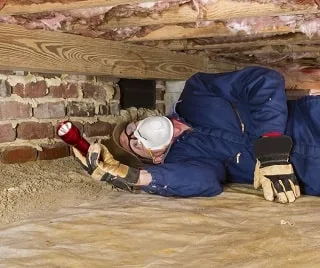
- Subfloor and crawl spaces. Bearers, joists, stumps and the ground beneath the house, checked for mud tunnels running up piers and for the damp, poorly ventilated conditions subterranean termites need. Poor subfloor ventilation is one of the conditions we look for and report on.
- Roof void. Rafters, ceiling joists, valley boards and the ends of timbers where they meet brickwork. Termites reach a roof void through wall cavities without ever showing themselves at ground level.
- Exterior and perimeter. Weep holes, slab edges, expansion joints, service penetrations and any point where soil, garden beds, paving or decking sits above the slab line and gives termites a concealed route in.
- Garden and grounds. Fences, retaining walls, stored timber, stumps, mulch beds and living trees within the property boundary. Nests are frequently found in a stump or a living tree some distance from the house.
Where an area cannot be reached safely — a sealed subfloor, a roof void with no access hatch, a section blocked by stored goods — the report says so plainly and explains what that means for the reliability of the result. An inspection that quietly omits the parts nobody could get to is worth very little.
How We Inspect Without Cutting Into Your Home
Termite detection has moved a long way past tapping skirting boards and hoping. The equipment we carry lets a technician confirm activity behind a surface without opening it up.
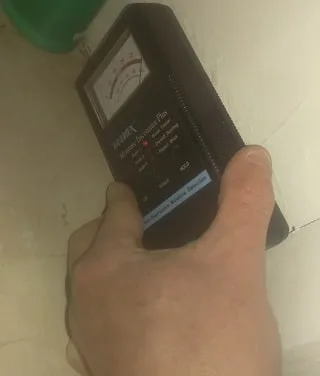
- Termatrac non-invasive device — Used to identify termite activity in ceilings, crawl spaces and floor spaces without cutting into the building. It reads through plaster, brick and timber, so a suspected area can be checked without pulling a wall apart.
- Moisture meters — Termites need moisture. A meter finds the damp patches behind tiles, under sinks and inside wall cavities that show where an infestation is likely to establish, often before there is anything to see.
- Sounding and probing — Tapping timber for the hollow note that means it has been eaten out from inside, and probing where the surface gives. Simple, and still the fastest way to confirm what an instrument has flagged.
- Borescope inspection — Where access is restricted, a small camera lets a technician see inside a cavity or void through a minimal opening, leaving the structure intact.
Signs You Should Book an Inspection Now
Termites give very little away, and the signs that do surface are easy to explain away as something else. Any of these is worth a phone call:
- Mud tunnels. Thin tubes of soil, roughly the width of a straw, running up a pier, a wall or a fence post. This is the clearest sign there is.
- Timber that sounds hollow. Tap a skirting, an architrave or a door frame. A hollow or papery note means the timber has been eaten out behind an intact surface.
- Doors and windows that have started to jam. Frames distort as the timber inside them is damaged, so something that closed cleanly last summer now catches in the frame.
- Blistered or rippled paint and plaster, particularly low on a wall or around a wet area.
- Discarded wings on windowsills or in cobwebs after a warm, humid evening, left behind by alates that have flown from a nest.
- Termite droppings. Small gritty pellets below timber, which point to drywood termites; the subterranean species do not leave them. Our guide to termite droppings and frass explains what to look for.
The absence of all of these is not evidence that a property is clear. Most infestations we attend were invisible until an inspection found them, which is the reason for having one annually on a fixed schedule.
What You Get
Our reports are typically delivered within a day of the inspection. The report covers what was found and where, the risk to the property, the conducive conditions we noticed — poor subfloor ventilation, timber in contact with soil, a leaking pipe — and any areas we could not access.
Where treatment is needed, the report includes a proposal with an estimate and an illustration of the extent of the damage. You are under no obligation to proceed, and the quote itself is free.
If the property is clear, the report says that too, along with what we would keep an eye on and when the next inspection is due. That record is worth keeping: product warranties on termite barriers are conditional on annual inspections, and a baiting system runs under an annual monitoring agreement, so the paperwork protects your cover.
Termite Inspection or Pre-Purchase Building & Pest Inspection?
These are two different services and people often ask for one when they want the other.
A termite inspection, from $220 ex GST, examines the property for termite activity and for the conditions that attract termites, and reports on those. It is the right choice for an annual check on a home you already own, for a property with a known history, or where you have seen something that worries you.
A pre-purchase building and pest inspection at $350 is broader. It covers timber pests and also reports on the condition of the building itself, which is what you need before committing to a purchase. If you are buying, this is usually the one to book. Where termites are found during a pre-purchase inspection we can advise on the clauses to add if you are buying by private treaty, and we will deal with vendors and agents directly so the inspection happens in time.
If you are unsure which applies, call us on 03 9449 4244 and describe the situation.
Annual Inspections and New Construction
An annual termite inspection is the single most useful thing a Melbourne homeowner can do about termites. Our technicians know termite biology and behaviour well enough to pick up activity early, while the damage is still small and the treatment still straightforward. Leaving it two or three years between inspections is how a manageable problem becomes a structural one.
For properties under construction or being renovated, protection is designed in at the build stage. Parts of Melbourne sit within council Declared Zones, where termite protection is a compliance requirement, and plans are approved in accordance with Australian Standard AS 3660.1-2014. Without barriers installed, obtaining an Occupancy Certificate can be difficult. Send us your plans and we will advise on what is required and how to meet it.
Where an inspection does find termites, the treatment depends on what we find. That may be foaming the workings to take the treatment back to the colony, a baiting and monitoring system, or a chemical or physical barrier. Our guide to barriers compared with baiting explains when each is the better fit, and the price list sets out what treatment costs.
What an Inspection Can and Cannot Tell You
It is worth being straight about the limits, because a termite inspection is often sold as more definitive than it can honestly be.
An inspection is a point-in-time assessment of the areas that could be reached on the day. It establishes whether there is termite activity visible or detectable at the time of the visit, whether there is evidence of past activity, and what conditions on the property make an attack more likely. That is genuinely useful, and it is what the Victorian Department of Health recommends householders arrange regularly.
What an inspection cannot do is guarantee that no termite exists anywhere in the structure. Timber sealed inside a wall cavity with no access, a subfloor that cannot be entered, or a section of roof void blocked off during a renovation are all places where activity can sit undetected. This is why the report names the areas we could not access, and why the recommendation is always an annual cycle. A single clear inspection is a snapshot; a run of them is protection.
The species involved in most Melbourne infestations is Coptotermes acinaciformis, a subterranean termite that nests in soil, in stumps and inside living trees, and reaches buildings through concealed routes. Museums Victoria records it across the state, and CSIRO's guidance on managing termites sets out why inspection and management have to account for a nest that may sit well away from the building it is damaging. Our subterranean termite guide covers the biology in more detail.
Why Melbourne Homeowners Use Protech
Protech has been dealing with termites across Melbourne since 2001, and the team carries more than forty years of combined experience. We are fully licensed, insured and accredited, we hold HACCP, NPMA and AEPMA accreditation, and we work to Australian Standard AS 3660. Muzi Tsolakis, who founded the business, is Victoria's official Competency Assessor for Pest Management.
We are rated 4.8 out of 5 from 411 Google reviews. We answer the phone 24 hours a day, seven days a week, including for emergency callouts, and we cover the whole metropolitan area from our base in Campbellfield.
To book a termite inspection, call 03 9449 4244 or send us a message and we will arrange a time that suits.
Sources
- Victorian Department of Health — Pest control: termites
- Standards Australia — Australia's termite management standard (AS 3660) revised
- CSIRO — Managing Termites (research guide, PDF)
- Museums Victoria Collections — Coptotermes acinaciformis (Subterranean Termite)
- Australian Environmental Pest Managers Association (AEPMA)
Learn More About Pest Solutions
Same-day service, eco-friendly treatments and a pest-free guarantee. Domestic & commercial — all Melbourne suburbs.