

Flies in Melbourne
Identification, health risks, and breeding-source control for house flies, blow flies, fruit flies and drain flies.
Written by Muzi Tsolakis, Founder and Competency Assessor, Pest Management Victoria. Last reviewed 18 June 2026.
Flies are among the most common hygiene complaints Protech is called out to across Melbourne homes, cafés, and food businesses. They are not a single pest — a cloud of small flies hovering over a drain is a completely different problem from blow flies circling a bin enclosure or fruit flies gathering around the bar — and the species present determines where the breeding site is and how it needs to be treated. This guide covers the four fly types Melbourne properties encounter most: the house fly, blow fly and bottle fly, fruit fly, and drain fly. It explains how to tell them apart, why their numbers build so quickly, the genuine health risks they carry into a kitchen or food premises, and how Protech locates and treats the source, which is the only intervention that holds.
How to identify the common fly species in Melbourne
All flies belong to the insect order Diptera — the name means 'two wings' — and the Australian Museum notes that flies are distinguished from other insects by having only one functional pair of wings, with the hindwings reduced to small club-shaped structures called halteres that act as gyroscopes during flight. More than 7,000 dipteran species have been described in Australia, though the four below account for nearly all the call-outs to Melbourne buildings.
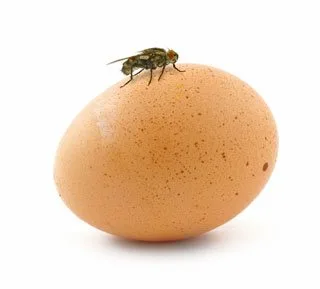
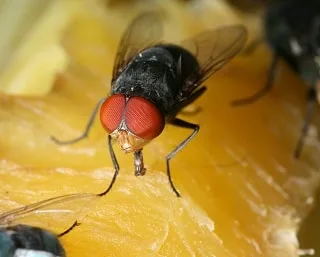
House fly (Musca domestica). The most frequently encountered fly indoors across Melbourne. Museums Victoria records the house fly as grey-brown in colour and up to 6 mm long, with larvae that develop in dung and decomposing organic waste materials. A thorax marked with four dark longitudinal stripes and large reddish compound eyes are the practical field identifiers. House flies feed on virtually anything, regurgitating digestive fluids onto food to liquefy it before ingesting — a behaviour that deposits bacteria from every previous surface they have visited.
Blow fly and bottle fly (family Calliphoridae). Larger than a house fly and immediately recognisable by a metallic blue-green or copper sheen. The lesser brown blowfly (Calliphora augur), one of the most common Melbourne species, reaches up to 1 cm long, and females lay eggs or release live maggots directly onto protein-rich material such as dead animal carcasses or dung. A strong blow fly presence around a fixed point on an external wall or ceiling almost always points to a dead animal in the roof space or wall cavity behind it.
Fruit fly (family Drosophilidae). A small fly around 3 mm long with distinctive red or orange eyes and a tan or yellow-brown body. Fruit flies are drawn to fermenting organic matter — overripe fruit, vegetable scraps, beer, wine, and any liquid that has begun to ferment — and can complete their lifecycle from egg to flying adult in under two weeks under warm Melbourne summer conditions.
Drain fly (family Psychodidae). Also called moth flies, these are small, fuzzy-winged flies 2–5 mm long that look more like tiny moths than typical flies. They breed exclusively in the organic biofilm that lines the inside of drains, floor waste grates, and grease traps. A cloud of small, fluffy flies rising from a sink or floor drain is a reliable sign of drain fly activity and indicates that the biofilm inside that drain needs to be treated, not just the adults above it.
Why fly numbers build so rapidly
Flies reproduce quickly enough that a minor nuisance can become a significant infestation within a few weeks. A house fly female can lay several hundred eggs across multiple batches, and the egg-to-adult development cycle can complete in around ten days under warm Melbourne summer conditions. Because each generation is already capable of breeding within days of emerging, a single overlooked bin or uncovered drain provides enough organic material to sustain a self-replenishing population.
Blow flies are even more efficient at finding new protein sources: females detect the odour of carrion at considerable distances and begin laying within minutes of landing. A dead possum or bird in a roof cavity in the warmer months can produce a blow fly population visible to the occupants downstairs within 24 to 48 hours of the animal dying, which is why a sudden explosion of blow fly activity at a single ceiling point is one of the most reliable indicators of a deceased animal overhead.
Fruit flies, once established in a commercial kitchen or home pantry, benefit from the fact that their preferred breeding sites — the biofilm inside bottle tops, the drip tray under a bar fridge, small amounts of fermented liquid in a recycling bin — are easy to overlook and easy to replenish accidentally. Drain flies are similarly persistent: the biofilm inside a drain is continuously renewed by wastewater, so the breeding substrate is effectively unlimited unless the biofilm itself is broken down.
The practical consequence of all of this is that treating adult flies alone — spraying the visible insects — reduces activity for a matter of days at most. A new generation emerges from surviving breeding sites within a week or two, and the cycle continues. Lasting control begins with locating and eliminating the specific material those flies are breeding in.
Health and food safety risks from fly activity
Flies are mechanical vectors of bacteria, meaning they carry pathogens on their body surface — feet, mouthparts, and body hairs — and deposit them onto each subsequent surface they touch. The house fly, in particular, travels freely between faeces, rubbish, carcasses, and food surfaces, and its habit of regurgitating digestive fluid onto food before feeding means that contamination occurs with every landing. Museums Victoria records that house flies are capable of carrying pathogenic bacteria that cause diseases in humans and domestic animals.
The bacteria most commonly associated with fly activity in domestic and food-handling environments include Salmonella spp. and E. coli — both capable of causing gastroenteritis, and both present in the organic waste and animal faeces that flies breed in and feed on. In a home kitchen the everyday concern is food surface contamination: a fly that has visited the bin and then touches a cutting board or uncovered food has transferred whatever it was carrying. For households with young children, older adults, or anyone with a compromised immune system, that contamination carries a real risk of gastrointestinal illness.
In commercial and food-handling premises the stakes are higher. Under Standard 3.2.2 of the Australia New Zealand Food Standards Code, food businesses are required to take all practicable measures to prevent pests including flies from contaminating food or food contact surfaces. A single fly observed during a council Environmental Health inspection can trigger a compliance notice, and the presence of fly speckling on surfaces or fly activity near food preparation areas is treated as an indicator of systemic hygiene failure. Protech's commercial fly programs are designed around HACCP principles and come with service records suitable for your compliance file.
One less obvious health concern is the flesh fly (Sarcophagidae). Unlike house and blow flies, flesh fly females deposit live larvae rather than eggs, directly onto carrion and organic waste. Museums Victoria notes that a large number of flesh flies inside a building usually indicates a dead animal in the roof space, wall cavity, or under the floor — the same diagnostic indicator as a blow fly cluster, and one that requires source removal rather than surface treatment to resolve.
Signs of a fly infestation in your home or business
The most obvious sign is adult fly activity that persists rather than passes. A few flies entering through an open door in summer is normal; flies consistently circling the same area, clustering around a window on one side of a room, or reappearing in numbers within hours of being dispersed all suggest a breeding site nearby.
Fly speckling — small dark spots on walls, ceilings, window frames, and light fittings — is a reliable sign that resting fly populations are present in significant numbers. Each mark is fly excrement or regurgitate, and a concentration of speckling in a particular area often indicates a preferred resting or feeding spot close to the breeding source.
Maggots in or near waste areas, pet food bowls, or bin enclosures confirm active blow fly or house fly breeding. Finding maggots inside the property — particularly falling from a ceiling in a warm period — is a strong indicator of a carcass in the roof void. A cloud of small, fuzzy-winged flies rising from a drain or floor waste grate confirms drain fly breeding in the internal biofilm. Tiny flies aggregating around the fruit bowl, bar area, or recycling bin indicate fruit fly activity originating from a fermentation source close by.
In commercial kitchens, adhesive monitoring boards in fly-light traps catch and hold adult flies, giving a daily count that reveals both which species are present and whether numbers are rising between service visits — a useful data point for compliance records and for identifying which area of the kitchen is generating the most activity.
Other flies you'll notice around Melbourne homes and gardens
Not every fly indoors is a hygiene problem, and telling the harmless ones apart saves a needless call-out. The crane fly is the large, slow, spindly-legged insect that drifts in around lights on humid autumn evenings and is often mistaken for a giant mosquito — the nickname 'daddy-long-legs fly' comes from those trailing legs. Adult crane flies do not bite and barely feed; their larvae develop in damp lawn thatch and decaying leaf litter, so the useful response to a recurring influx is reducing lawn moisture and clearing leaf build-up rather than spraying the adults.
Fungus gnats are the tiny dark flies that lift off in a small cloud when an indoor pot plant is watered or knocked. They breed in the top layer of constantly damp potting mix, where the larvae feed on fungus and decaying matter in the soil, which makes them a nuisance rather than a health risk. Letting the top few centimetres of soil dry out between waterings and tipping out water that collects in saucers removes the breeding conditions; a heavy indoor population responds to a soil treatment combined with the same moisture and drainage controls that resolve drain flies.
Hover flies — the slender flies banded yellow and black that hang motionless in mid-air near flowering plants before darting off — are harmless pollinators that mimic bees and wasps for protection. They neither sting nor breed in waste, and they earn their place in the garden through the pollination they provide. The small flies hovering around overripe fruit and the recycling bin are vinegar flies, which is simply another common name for the fruit fly described earlier; the source and the fix are the same — find and remove the fermenting material they are breeding in.
How to reduce fly pressure around your property
Most of the practical prevention measures for flies come down to removing or securing the organic material they breed in and feed on. The following steps address the breeding substrates of all four common species.
Keep bins tightly lidded and lined at all times, and empty them before organic waste begins to decompose — house flies and blow flies begin searching for egg-laying sites within hours of a food source becoming available. Rinse recycling containers, particularly glass bottles and cans, before placing them in the recycling bin; the thin film of fermented liquid left in a bottle is enough to sustain a fruit fly population for days.
Clean drains and floor waste grates weekly with an enzyme-based drain cleaner. Enzymatic products break down the organic biofilm that lines the inside of the drain — the sole breeding substrate for drain flies — rather than simply flushing it further along the pipe. A standard chemical drain cleaner does not remove the biofilm and will not resolve a drain fly infestation.
Cover and refrigerate food promptly. Uncovered food left at room temperature attracts house flies and fruit flies within minutes and can become an egg-laying site within the hour in warm conditions. Pet food is a common oversight: an outdoor bowl left filled overnight is both an attractant and a breeding substrate.
Fit fly screens to all windows and doors that are regularly opened in the warmer months. Physical exclusion is the single most durable prevention measure for residential properties and significantly reduces fly entry even when breeding sources exist nearby. Ensure screen mesh is intact and that frames seal fully at the edges — a gap of a few millimetres is sufficient for most fly species to pass through.
If blow flies or flesh flies are clustering persistently at a specific indoor spot, investigate the possibility of a dead animal in the roof, wall cavity, or subfloor. The cluster indicates a breeding source in or behind that surface, and controlling the adult flies without removing the carcass will not resolve the problem. Our pest library includes guides on possums and roof rats, two of the animals most commonly found deceased in Melbourne roof spaces.
Why surface sprays alone do not hold
A residual surface spray applied to resting areas will knock back the adult fly population visibly and quickly — most people notice a reduction within hours. The problem is that the breeding material sustaining the population remains untreated, and a new generation of adults emerges from it within a week or two regardless of how many adults were killed. For house flies and blow flies, this means the rubbish, carcass, or accumulation of organic waste is still producing larvae; for fruit flies and drain flies, the fermentation source or drain biofilm is still intact.
DIY fly sprays and plug-in vaporisers manage symptoms rather than causes. They are a reasonable short-term measure when flies have entered the property from outside and no active breeding site exists indoors, but they cannot deliver the sustained reduction that follows source identification and treatment. In a commercial food premises they are also insufficient to meet the Standard 3.2.2 requirement for taking all practicable measures to prevent pest contamination, because the standard requires systematic management rather than reactive spraying.
The practical difficulty for a householder or business owner is that the breeding site is not always obvious. Drain fly breeding happens entirely inside the drain; blow fly and flesh fly breeding happens in a carcass that may be concealed in a roof void or wall cavity; fruit fly breeding is often traced to a hidden spill or a forgotten bottle in a recycling area. A trained inspection locates the source by reading the fly species, behaviour, and distribution pattern — information that guides exactly where treatment needs to go.
How Protech treats flies in Melbourne
Every fly treatment starts with an inspection to confirm which species are present and where the breeding source is located. The species determines the treatment: drain flies need a drain biofilm treatment; blow flies around a ceiling point need a roof void inspection and carcass removal; fruit flies in a commercial bar need a source-elimination protocol targeting fermentation points, not a surface spray. Getting this identification wrong means treating the wrong thing and seeing flies return within days.
For house flies and blow flies in residential properties, Protech's treatment typically combines a residual surface spray to the key resting areas — external walls, eaves, window frames, bin enclosures — with source identification and, where a carcass is involved, its removal and disinfection of the affected area. Where the breeding site is organic waste or an exposed food source, the technician will walk through the specific sanitation steps the property needs, because those steps are more durable than any chemical treatment.
For drain flies and fruit flies, treatment targets the biofilm or fermentation source directly. This may involve an enzymatic or insecticidal application into the drain itself, cleaning protocols for specific drain and trap types, or the identification and removal of hidden fermentation sources in a bar or kitchen fit-out.
Commercial properties — cafés, restaurants, food processing facilities, aged care homes — receive a program designed around their compliance obligations. UV fly-light traps provide ongoing passive monitoring and interception in food preparation areas where chemical sprays cannot be used near open food. We provide HACCP-compliant service records and can work with your Environmental Health Officer requirements. For a kitchen or food premises with a recurring fly problem, a scheduled quarterly or monthly program keeps activity within compliance thresholds year-round.
All Protech fly treatments are backed by our pest-free guarantee: if flies return within the guarantee period because of the original breeding source, we come back and retreat at no charge. The guarantee period is confirmed in writing with your quote. To arrange a same-day inspection across greater Melbourne, call us on 03 9449 4244 or visit our fly control service page to request a free quote. You can also read related guides in our pest library.
Flies in Melbourne FAQs
Why do I suddenly have a large number of flies inside?
A rapid increase usually points to a breeding source that has developed nearby or inside the building. The most common causes are an uncovered or overflowing bin, a build-up of organic material in a drain, uncovered food or pet food left out in warm weather, or a dead animal in the roof space or wall cavity. A blow fly cluster forming around a specific ceiling point is a reliable indicator of a carcass overhead. Our technicians locate and treat the breeding source, which is what produces a lasting result.
Are flies a health risk in my home or business?
Yes. House flies carry pathogenic bacteria on their body surface and deposit them on food surfaces, utensils, and food with every landing — Museums Victoria records the house fly as capable of carrying bacteria that cause disease in humans and domestic animals. In a home the practical concern is gastroenteritis risk, particularly for young children and older adults. In a commercial food premises, fly activity is also a compliance matter under the Australia New Zealand Food Standards Code.
Can flies breed inside my drains?
Drain flies breed specifically inside the organic biofilm that coats the inside of drains, floor waste grates, and grease traps. The adult flies you see above the drain are emerging from larvae developing in that biofilm. Standard chemical drain cleaners do not remove biofilm effectively; an enzymatic product or a direct insecticidal treatment of the drain interior is needed. A significant infestation usually requires professional treatment to break the cycle.
How quickly do flies breed?
House flies can complete their lifecycle — egg, larva, pupa, adult — in around ten days in warm Melbourne summer conditions, and a single female lays several hundred eggs across multiple batches. Fruit flies develop from egg to adult in under two weeks under the same conditions. This rapid turnover is why a small fly problem can appear to explode in a short period, and why eliminating the breeding source is the intervention that holds.
What is the difference between a blow fly and a house fly?
The most reliable visual indicator is colour: house flies are grey-brown with dark thorax stripes, while blow flies and bottle flies are metallic — blue-green or copper. Blow flies are also larger, with the lesser brown blowfly reaching up to 1 cm compared to the house fly's 6 mm. Behaviourally, blow flies are drawn primarily to protein — meat, fish, carcasses, and dung — while house flies will feed on almost any organic material. Both carry bacteria, but blow flies are specifically associated with a nearby carrion or protein source when they appear in numbers indoors.
What are the tiny flies around my indoor pot plants?
Those are almost certainly fungus gnats. They breed in the top layer of constantly damp potting mix, where their larvae feed on fungus and decaying matter, so they turn up around overwatered indoor plants. They do not bite or carry the hygiene risk of house flies. Letting the top few centimetres of soil dry between waterings and emptying water from saucers removes the breeding conditions; a persistent indoor population usually needs a soil treatment to break the cycle.
What is the large, leggy fly that looks like a giant mosquito?
That is a crane fly, sometimes called a daddy-long-legs fly. Despite the resemblance it does not bite and is completely harmless — the adults barely feed, and the larvae develop in damp lawns and leaf litter. They appear indoors around lights on humid autumn nights. No treatment is needed beyond reducing lawn dampness and leaf build-up if the numbers become a nuisance.
How much does professional fly control cost in Melbourne?
Cost depends on the property type, fly species, and extent of the infestation. A residential treatment targeting a specific breeding source will sit at a different price to an ongoing commercial fly management program. We provide a fixed price after inspection, before any work begins — call us on 03 9449 4244 or request a free quote online, and we can usually arrange a same-day visit.
Do you guarantee fly treatments?
Yes. Our fly treatments are backed by a pest-free guarantee. If flies return within the guarantee period as a result of the original breeding source, we return and retreat at no extra charge. The exact guarantee period is confirmed in writing with your quote, because it varies depending on the species and the nature of the source treatment.
Protecting Melbourne homes and businesses since 2001 — HACCP, AEPMA and NPMA accredited, rated 4.8★ from 411 Google reviews.



Learn More About Pest Solutions
Same-day service, eco-friendly treatments and a pest-free guarantee. Domestic & commercial — all Melbourne suburbs.