

Moth Control Melbourne
Guaranteed moth removal for Melbourne homes and businesses — certified technicians, eco-friendly treatments, same-day service.
Moth Pest Control & Removal Services in Melbourne
Moth infestations are a common problem in Melbourne homes and businesses — particularly during autumn and winter when people store seasonal clothing and bulk dry goods. While adult moths are largely harmless, their larvae are the destructive stage: clothes moth larvae cut through wool, silk, and cashmere, and pantry moth larvae contaminate stored food with webbing, eggs, and droppings.
Melbourne's cool, humid climate suits the species that cause the most damage indoors. An infestation can establish in a dark wardrobe or pantry shelf for weeks before you notice the signs, by which point the larvae may have caused considerable damage to clothing, carpets, or food stores.
Protech Pest Control has been treating moth infestations across Melbourne since 2001. A thorough inspection, a correctly identified species, and targeted treatment together produce far better results than DIY traps alone. Call 03 9449 4244 for a free quote.
How to Identify a Moth Infestation
Because moths are most active at night and larvae hide in dark, undisturbed areas, many infestations go undetected until damage has already occurred. These are the signs Protech technicians look for during an inspection.
- Irregular holes in natural-fibre clothing: Jagged, uneven holes in wool, silk, cashmere, or fur are the primary indicator of clothes moth larvae. Synthetic fabrics are largely unaffected.
- Silken webbing in food packaging or wardrobes: Pantry moth larvae spin fine, sticky webbing through dry goods. In clothing storage, case-making moths leave silken tubes or cases on fabric surfaces.
- Frass (droppings) and shed skins: Small, sand-like droppings and cast larval skins in the corners of shelves, inside packaging, or on carpet backing are reliable signs of active larvae.
- Half-eaten feathers, leather, or carpet fibres: Brown house moths and clothes moths will also attack natural-fibre carpets, upholstery, feather pillows, and leather goods in addition to clothing.
- Flying adults near lights: Adult moths emerging at night and flying toward light sources — particularly in the kitchen or near wardrobes — suggest a breeding population is already established nearby.
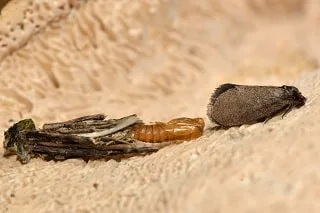
- Insect carcasses and pupae cases: Empty, papery pupal cases tucked into clothing folds, carpet pile, or shelf corners confirm moths have already completed at least one generation on your property.
Where Moths Live and How Infestations Start
The two main groups of household moths in Melbourne target completely different areas. Clothes moths — the case-making and common clothes moth — live in dark, undisturbed spots wherever natural fibres are stored: wardrobes, linen chests, under beds, inside drawers, and beneath carpets at skirting-board edges. They are strongly photophobic and will run rather than fly when a light comes on.
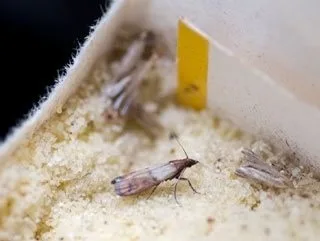
Pantry moths (Indian meal moths) establish in the food storage areas of kitchens, pantries, and commercial food businesses. A single contaminated packet of flour, dried fruit, or birdseed brought in from a supermarket is enough to seed an infestation. Larvae migrate freely between packets, contaminating adjacent dry goods, and pupate in cracks around shelving or in the folds of packaging.
Brown house moths occupy a middle ground — their larvae eat both food materials and textile fibres, making them a significant pest in supermarkets, warehouses, and older residential properties with large food or fabric stores. All three types prefer cool to mild temperatures, which suits Melbourne's climate well, and breed year-round indoors even through winter.
Types of Moths Found in Melbourne Homes & Businesses
Five species account for almost all indoor moth problems in the Melbourne area. Correct identification matters — clothes moths and pantry moths require different treatment approaches.
Pantry Moths (Indian Meal Moth)
The most common culprit in Melbourne kitchens and food storage areas. Larvae spin a fine silken webbing through dry goods — cereals, flour, rice, nuts, and dried fruit. Adults are easily recognised by their two-tone forewings: pale grey at the base, copper-brown toward the tip.
Case-making Clothes Moths
Also called webbing clothes moths, and the moth most people mean by carpet moth — the larvae feed on wool carpets at skirting edges as readily as on stored clothing. Small, golden-buff coloured, and rarely seen in flight — they run when disturbed rather than fly. Larvae feed on natural fibres including wool, silk, cashmere, and fur, spinning a protective silken case as they feed. A single larva can cause significant damage before pupation.
Common Clothes Moths
Pale golden in colour, typically 6–8 mm with a wingspan around 14 mm. Found crawling on floors and walls near stored clothing and carpets. They strongly avoid light, which is why infestations often go unnoticed in dark wardrobes and under furniture until damage is already done.
Brown House Moths
Larger than clothes moths and more likely to be spotted flying at night near dim lights. Bronze-brown wings with darker flecks. Larvae are less fussy eaters — they attack wool and feathers but also cereals, dried food, and pet food in commercial and residential premises.
White-shouldered House Moths
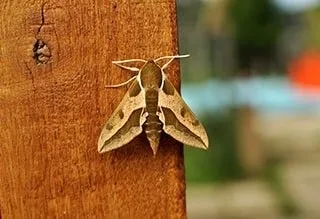
Identified by the distinctive white head and shoulder region against mottled brown wings. Primarily an outdoor feeder on plant material, but will enter homes and businesses to breed in sheltered spots. Far less destructive to clothing and food than the other types found indoors.
The Damage Moths Cause
Moths do not bite, and adult moths generally cause no direct harm to people. The destruction is done by larvae, and it tends to compound quickly — a small founding population can produce thousands of larvae across multiple generations within a single season.
- Clothing and textiles: Clothes moth larvae feed exclusively on keratin, the protein in natural fibres. A single larva can damage a wool garment before it has finished its first feeding cycle. Expensive items — cashmere, vintage wool, silk, leather, and fur — are at particular risk.
- Carpets and upholstery: Carpet moth larvae feeding beneath furniture or along skirting boards create bare patches in wool-blend carpets and can damage upholstered pieces stuffed with natural materials. The damage often goes unnoticed until furniture is moved.
- Stored food: Pantry moth webbing contaminates entire pantry sections. Even food that appears intact may contain eggs or larvae already. The financial and hygiene cost of discarding contaminated stock in a commercial kitchen or food business can be considerable.
- Health effects: Caterpillar-stage larvae of some species carry fine hairs that can irritate skin and trigger asthma responses in sensitive individuals. Droppings from pantry moths in contaminated food can cause gastric upset. Flying adults can also cause distress in a food-service or hospitality setting, driving away customers and attracting compliance issues.
Moth Facts
- Adult clothes moths live only a few weeks — their sole purpose is to mate and lay eggs. They do not feed at all as adults and are not attracted to light. It is the larval stage, not the adult, that does all the damage.
- Female clothes moths lay between 40 and 50 eggs over two to three weeks, attaching them to fabric fibres with a sticky secretion. Eggs hatch within a week under warm conditions, and larvae can feed for months before pupating.
- Moths navigate using the Earth's magnetic field on overcast nights and use their antennae — not a nose — for scent detection. Their chemical sensitivity is extraordinary for such a small insect.
- Some moth species have evolved to mimic wasps, spiders, and mantis to deter predators. The species found in Melbourne homes are far more secretive, relying on darkness and stillness to avoid detection.
- Pantry moths (Indian meal moths) are among the most widespread stored-product pests in Australia. They were originally introduced via contaminated grain and have been established in Australian homes for well over a century.
Prevention Tips for Melbourne Homes & Businesses
Consistent housekeeping habits reduce the conditions that allow moths to breed. These are the steps that make the greatest practical difference.
- Transfer dry goods to hard-sided sealed containers: Glass jars or rigid plastic canisters prevent pantry moths from chewing through packaging or entering through seams. Do this on delivery, before anything goes on the shelf.
- Store seasonal clothing properly: Before packing away woollen or natural-fibre garments, wash or dry-clean them — larvae are attracted to body oils and food residues on fabric. Store in sealed, airtight bags or cedar-lined boxes. Hanging cedar blocks in wardrobes provides some deterrence but will not eliminate an active infestation.
- Vacuum carpets and upholstery thoroughly and regularly: Pay particular attention to edges at skirting boards, under furniture, and in carpet corners where clothes moth larvae prefer to feed undisturbed. Dispose of the vacuum bag after each session.
- Keep food storage areas clean and dry: Wipe down pantry shelves regularly, clear spilled flour or grain immediately, and check older stock before adding new purchases. Moths can establish quickly in a pantry that has accumulated undisturbed food residue.
- Inspect second-hand clothing and vintage textiles: Clothes moths frequently arrive in Melbourne homes through op-shop purchases, inherited garments, or antique rugs. Freeze or dry-clean any second-hand natural-fibre item before bringing it into the house.
- Arrange periodic professional inspections: A technician can identify early-stage activity — eggs, larvae, cast skins — before an infestation becomes established. This is particularly valuable for commercial food businesses and heritage property owners with wool carpets or antique textiles.
Moth Treatment — How Protech Approaches It
Effective moth control requires treating the larval stage, not just the visible adults. Our approach follows a four-step process.
- Inspection: A certified technician will inspect wardrobes, pantries, carpet edges, and storage areas, identify the species involved, and assess the extent of the infestation. Different species need different product choices and application zones.
- Treatment plan: Based on the inspection, we prepare a written treatment plan covering the products to be used, the areas to be treated, and any preparation steps required of you before treatment — such as removing food from pantry shelves or bagging clothing.
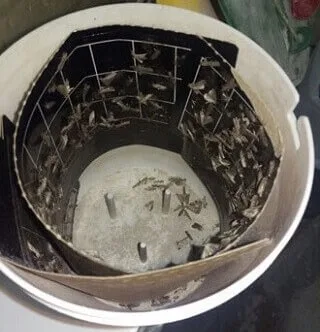
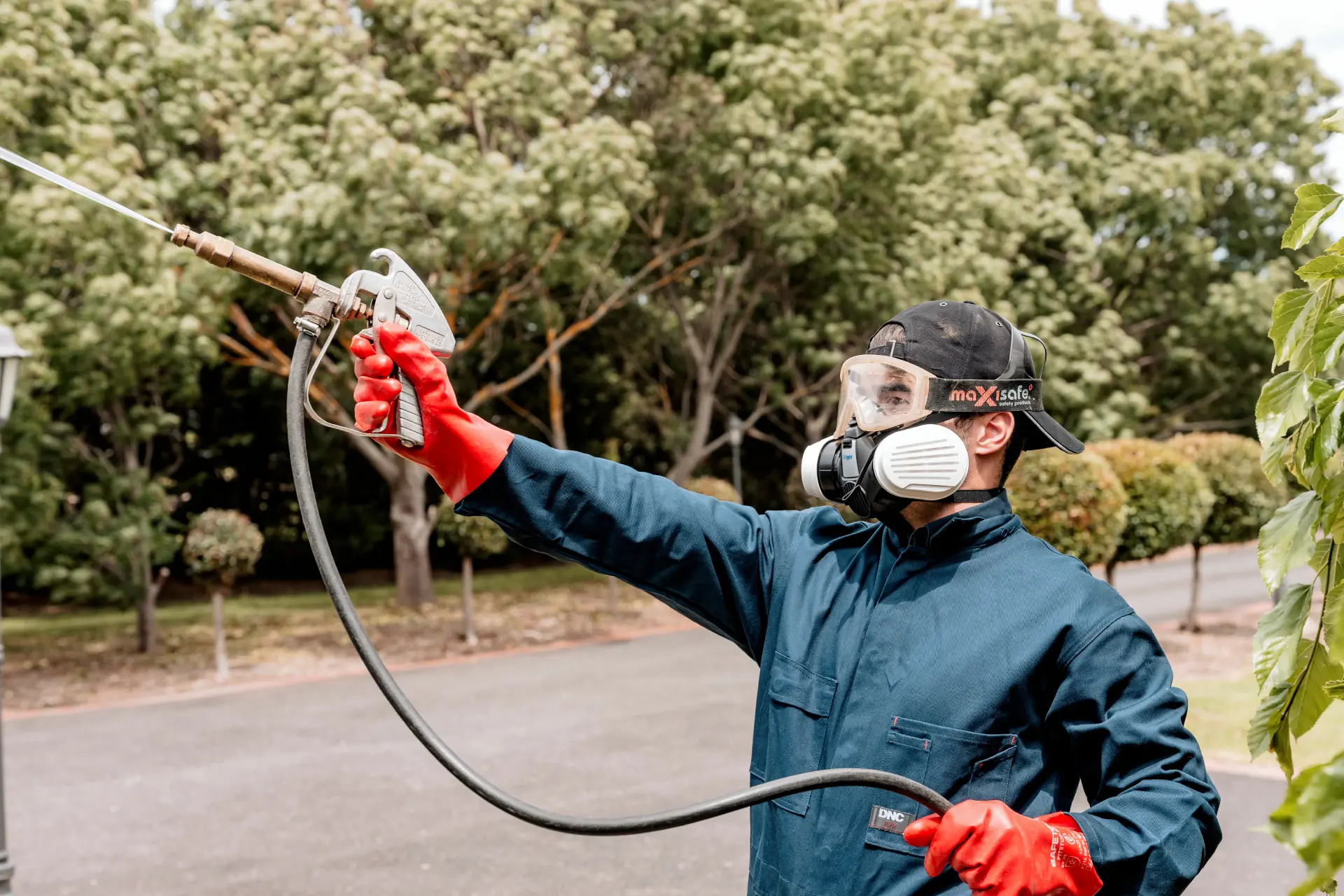
- Treatment application: APVMA-registered insecticide sprays are applied to the surfaces larvae contact — inside cupboards and wardrobes (on the surfaces, not on clothing), carpet edges, skirting boards, and shelf linings. Organic-formulation options are available. Pheromone traps may be deployed for pantry moths to monitor residual activity post-treatment.
- Ongoing prevention: After treatment, we provide specific advice tailored to your property — storage adjustments, hygiene measures, and follow-up timing. A single treatment rarely eliminates all eggs; follow-up may be recommended depending on species and infestation severity.
Call 03 9449 4244 for a free no-obligation quote.
Why Choose Protech Pest Control Melbourne?
Protech has been protecting Melbourne homes and businesses from pest infestations since 2001. Our technicians carry the training and accreditation to correctly identify species and select the most effective treatment — getting the job done without unnecessary repeat visits.
- 40+ years of combined team experience in pest management
- Licensed, insured, and accredited technicians (HACCP / NPMA / AEPMA)
- Eco-friendly APVMA-registered products safe for children and pets
- Same-day service available across Melbourne
- 100% satisfaction guarantee — follow-up at no charge if needed
- Free, no-obligation quotes with transparent written treatment plans
- 4.8★ rating from 411 verified Google reviews
What Moth Treatment Costs in Melbourne
Moth treatments with Protech start from $154 and run up to around $660, depending on the size of the property and the extent of the treatment needed. The species involved affects the price too, along with whether the problem sits in stored food, in wardrobes and fabrics, or both. We give you a fixed price before any work starts, so the number you agree to is the number you pay. Our published price list for other treatments is on the pest control prices in Melbourne page.
The three-month guarantee
Clothes moth and carpet moth treatments carry a three-month guarantee. If moths return within that period, we come back and re-treat the affected areas at no charge, with no call-out fee for the return visit. Preparing the property is a condition of the guarantee, and your technician explains what to do before the visit. Pantry moth work is stored-product treatment and is quoted as a one-off visit. The terms for your job go on your paperwork at the time of booking, and the full schedule of guarantee periods across all our treatments is published on our guarantee page.
Frequently Asked Questions
What should I do with moth-damaged clothes and blankets?
Wash affected items at the highest temperature safe for the fabric, then dry them in direct sunlight if possible. For delicate garments that can't be hot-washed, seal them in an airtight bag and freeze for at least 72 hours — moth eggs and larvae cannot survive freezing temperatures. Dispose of any items too heavily damaged to save, and inspect neighbouring storage before returning clean items.
Is moth-infested food safe to eat?
Dispose of any food that shows webbing, larvae, or eggs — even if only a portion of the packet is affected. The food itself is not toxic, but consuming larvae or their droppings carries a contamination risk. Move all remaining dry goods into sealed, hard-sided containers immediately to contain the infestation while you wait for treatment.
Are Australian moths dangerous to people and pets?
Moths do not bite. However, caterpillar-stage larvae of some species carry fine hairs that can trigger asthma attacks or skin irritation in sensitive individuals. Droppings from an active pantry moth infestation can contaminate food and cause gastrointestinal upset if consumed. Early treatment limits exposure for both people and pets.
Is the treatment service safe around children and pets?
Yes. Protech uses eco-friendly products registered with the APVMA (Australian Pesticides and Veterinary Medicines Authority) that are formulated to be safe around families. We apply treatments to surfaces moths contact — cupboard interiors, skirting boards, and carpet edges — and will advise you on the short ventilation period required before re-entering treated areas.
Is the treatment guaranteed?
Yes. Once treatment is complete, we provide a satisfaction guarantee. If signs of activity return within the treatment period, contact us and we will conduct a follow-up inspection and retreatment at no additional charge.
How do moths get into sealed packaging?
Pantry moths can chew through thin plastic film, cardboard, and foil-backed packaging. They also enter packets through manufacturing seams. An infestation often arrives in a single contaminated grocery item — once inside the pantry, larvae migrate freely to adjacent packets. Transferring all dry goods to hard glass or rigid plastic containers on delivery is the most reliable prevention step.
Client Testimonials
Protech Pest Control thank you for the great customer service I received. When the technician arrived to my home he was pleasant and explained the treatment process in detail. His manner and knowledge in his field was excellent and comforting in leaving him in my home. I highly recommend your company and will use Protech again. Thank you.
– Dimitrios TLearn More About Pest Solutions
Same-day service, eco-friendly treatments and a pest-free guarantee. Domestic & commercial — all Melbourne suburbs.