
Pest Control Cranbourne
Termite-focused pest control for new-estate homes and businesses across Cranbourne and the City of Casey.
Pest Control in Cranbourne
Built for the south-east growth corridor
Cranbourne is one of the fastest-changing parts of Melbourne. Sitting in the heart of the City of Casey, it has grown from a market-garden and farming district into a band of large new estates — Cranbourne East, Cranbourne West and Cranbourne North — spilling out towards Clyde, Clyde North and Botanic Ridge. Much of that housing now sits on former market-garden soil and sandbelt ground, and that history shapes exactly which pests turn up indoors.
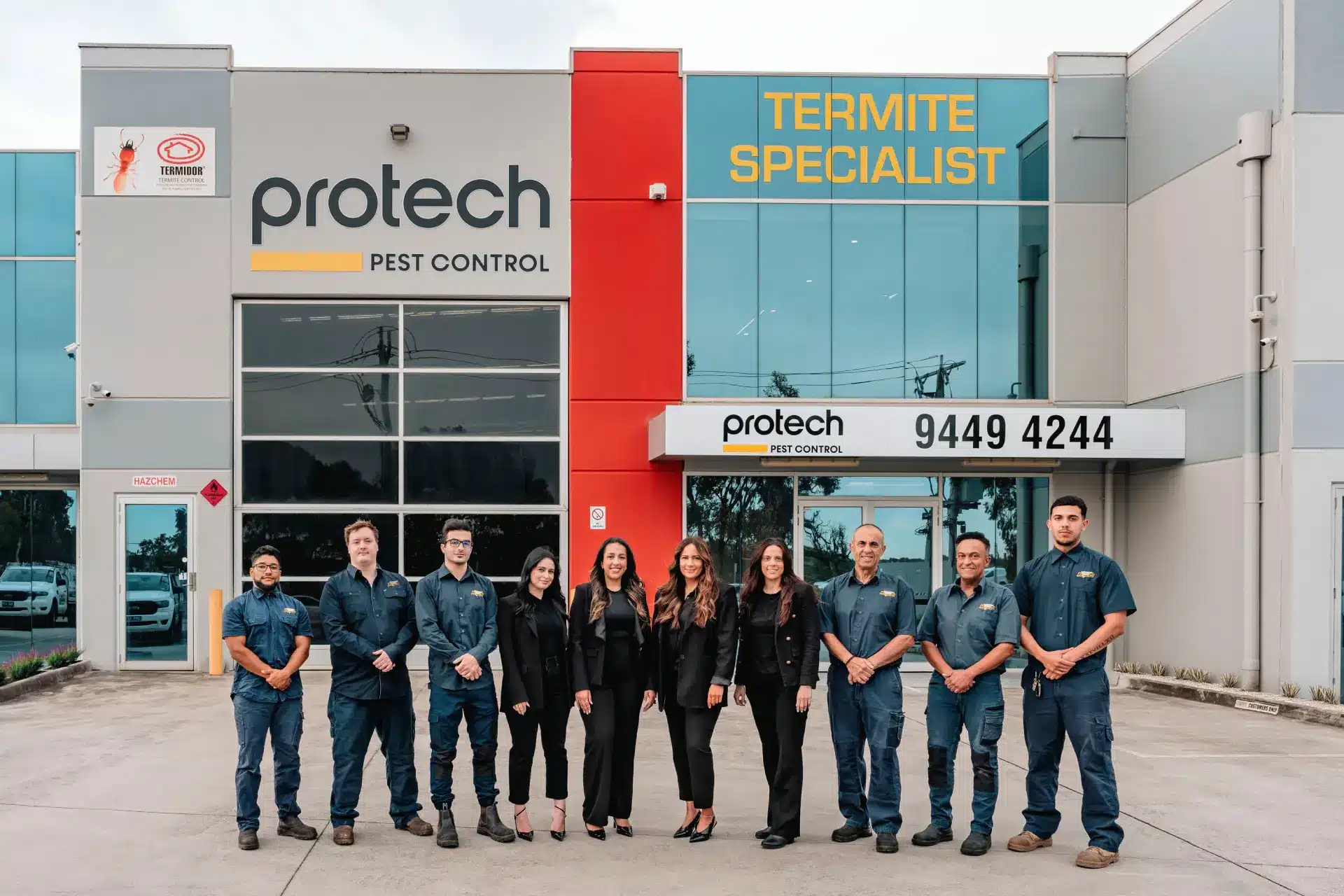
Protech Pest Control has worked across Melbourne since 2001, with more than 40 years of combined hands-on experience on the team. We dispatch from our Campbellfield base to Cranbourne regularly, and we treat the suburb’s new-build estates very differently from established inner suburbs — because the pressures here, led by subterranean termites, are different too.
Rated 4.8 stars, with 400+ five-star Google reviews and accredited with HACCP, AEPMA and NPMA, we’re the team Cranbourne households and local businesses call when they want the job done thoroughly the first time.
Termites: Cranbourne’s Number-One Risk
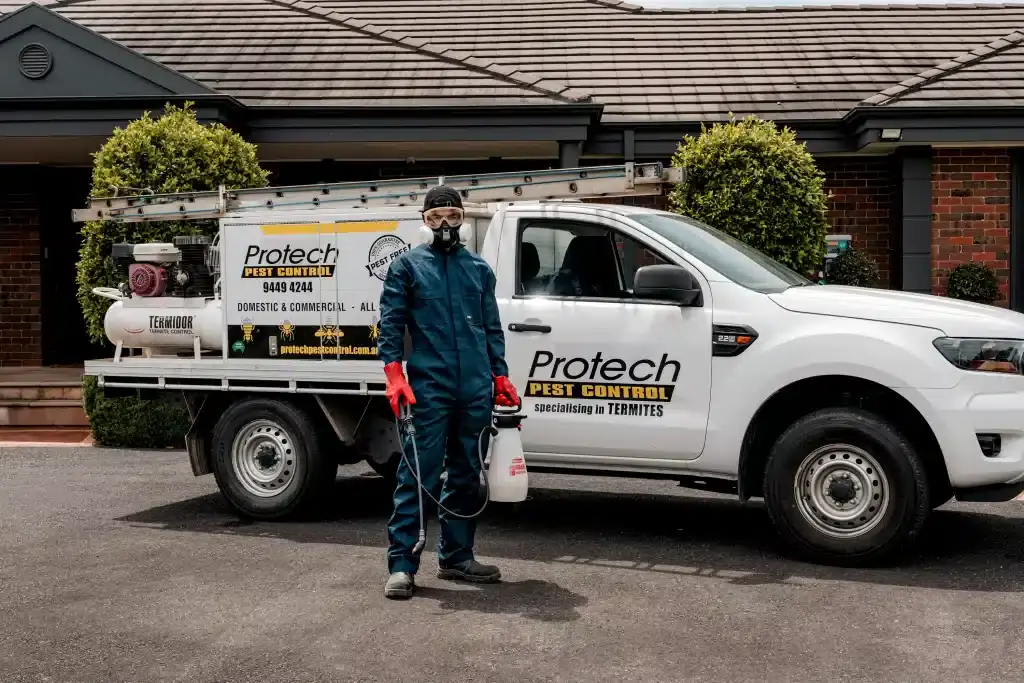
If you own a home in Cranbourne, subterranean termites are the pest worth losing sleep over — not because they’re common to see, but because of the damage they do before anyone notices them. And the local ground is part of the reason the risk runs high here.
Cranbourne’s estates have largely been built on former market-garden land and low, moisture-holding sandbelt soils. When a paddock is cleared, levelled and built over with concrete slabs, the disturbed earth tends to trap moisture against and around the slab — precisely the warm, damp conditions subterranean termites travel through. New slab-on-ground homes can give termites a concealed path from the soil straight to the timber framing, often behind plaster where you’ll never spot them from inside.
A new build is not a safe build. The construction-stage termite protection installed on a home has a service life, can be bridged by later landscaping, paths or pergolas, and won’t flag a problem on its own. That’s why we recommend an annual termite inspection for every Cranbourne property — and a properly installed chemical or physical termite barrier or baiting system where the risk warrants it. Catching activity early is the difference between a treatment and a structural-repair bill.
Buying or selling in Cranbourne East, Clyde North or Botanic Ridge? A timber pest inspection before you sign is one of the cheapest forms of protection you can buy.
Rodents From the Surrounding Paddocks
The second pressure that comes with estate living in Cranbourne is rodents. The new streets here back onto, or have replaced, open paddocks, market gardens and reserves — and rats and mice don’t leave when the bulldozers arrive. As surrounding land is developed and the weather cools, they push in from that open ground towards the warmth and food of nearby homes, finding their way into roof voids, wall cavities, garages and sheds.
Half-built and freshly occupied estates are especially easy for rodents to exploit: gaps around new pipework, weep holes, roller-door seals and unsealed eaves all make convenient entry points. Beyond the noise and the gnawing, rodents chew through electrical wiring and insulation and contaminate stored food. Our rodent control programs combine a thorough inspection, targeted baiting in safe, tamper-resistant stations, and — just as importantly — advice on sealing the entry points so they don’t simply return next autumn.
Ants, Spiders and Warm-Weather Pests
Young estates with fresh landscaping, new garden beds and disturbed soil are magnets for ants and spiders, particularly through Cranbourne’s warm summers. Ants stream in along slab edges and into kitchens looking for moisture and food; ant control treats the trails and nests rather than just the few you can see. Spiders settle into eaves, fence lines, garages and around outdoor entertaining areas — our spider treatments cover both nuisance webbers and the dangerous species Melbourne homeowners worry about.
Warmer months also bring wasps building nests under eaves and in pergolas across the area — best removed quickly and professionally with our wasp and bee removal. And the low-lying, moisture-retaining ground around parts of Cranbourne can encourage cockroaches in subfloors, kitchens and bathrooms, where our cockroach control breaks the breeding cycle rather than knocking back the odd visible roach.
Our Cranbourne Services at a Glance
We handle complete residential and commercial pest management for Cranbourne, from a single targeted treatment to ongoing year-round protection. The services local property owners ask for most:
- Termite inspections, barriers and baiting — the priority for any slab-on-ground home in Cranbourne’s estates, and any property not checked in the last 12 months
- Rodent control for rats and mice in roof voids, garages and sheds
- Cockroach control for kitchens, bathrooms and subfloors
- Ant control for homes and outdoor entertaining areas
- Spider control, including dangerous species
- Wasp and bee removal through the warmer months
- Flea treatments for homes with pets
- End-of-lease pest control for Cranbourne renters and property managers — useful in a suburb with so many newer rentals
- Commercial pest control for local cafes, retail, warehousing and food premises, including HACCP-aligned programs
Not sure what you’re dealing with? Send us a photo or a quick description and our technicians will tell you what it is and what it needs.
Local, and Quick to Get Here
Our technicians run out to Cranbourne from our Campbellfield headquarters and cover the wider south-east at the same time — including Clyde, Clyde North, Botanic Ridge, Lyndhurst, Lynbrook and across Cranbourne East, North and West. Just over the freeway we also look after nearby Berwick and the bayside city of Frankston, and we service homes and businesses right across greater Melbourne.
Cranbourne Pest Control Questions
I’ve just moved into a brand-new estate home — do I really need a termite inspection?
Yes. New homes in Cranbourne are built on former market-garden and sandbelt soils that hold moisture against the slab, and the construction-stage termite protection has a limited service life and can be bridged by later paths, decks or garden beds. An annual inspection is the only reliable way to catch subterranean termite activity early, while it’s still a treatment and not a structural repair.
How quickly can you get to Cranbourne?
We service Cranbourne and the surrounding Casey suburbs regularly from our Campbellfield base, so we can usually book you in promptly. Call our team on 03 9449 4244, 7 days a week including after-hours emergencies, and we’ll arrange the right technician and treatment for your property.
Pest Pressure Across Cranbourne Through the Year
Spring. Ants lead, nesting in sandy heathland soil, slab edges, paving and new garden beds, and the sand profile lets a colony re-nest quickly when a trail is treated in isolation. Spiders follow from October on window frames and under eaves, with redbacks in fence rails, meter boxes and retaining-wall voids.
Summer. European wasps nest in ground cavities and wall voids and peak through February. Mosquitoes lift after rain across the low-lying ground and the drainage reserves through the corridor. Termite activity is at its peak, and the sandy soils around Cranbourne behave differently from clay when a barrier goes in, which is why the treatment is quoted once the inspection is done.
Autumn and winter. Rodents come in off the remaining market gardens, paddocks and reserve edges as the nights cool. Older Cranbourne stock gives them subfloor access; the newer estates at Cranbourne East, West and North give them the garage, the weep holes and the service penetrations instead.
What Cranbourne’s Housing Stock Means for Treatment
Cranbourne covers a lot of ground and the housing changes markedly across it. The original township holds older brick and weatherboard, often stumped with an accessible subfloor; Cranbourne North, East and West are large newer estates of slab-on-ground brick veneer; and the fringes still hold market garden and semi-rural land. The soil is the common thread — much of the area is sandy heathland, where Melbourne's west is clay — and that affects both ant behaviour and how a termite barrier is designed.
Cranbourne East, Cranbourne West and Cranbourne North
We cover all of them on the same run, and the practical difference between them is the age of the housing, which the postcode does not tell you. Cranbourne East and the newer West stages are predominantly estate housing built from the 2000s on, where the work is a ground-level perimeter job: slab edge, weep holes, garage, pipe penetrations, plus the external harbourage along new fence lines and retaining walls. Cranbourne North mixes estate housing with older pockets. The original township and the semi-rural fringe have accessible subfloors, outbuildings and mature garden timber, which brings subfloor rodents, possums and termite risk into the picture. Tell us the street when you call and we will know which of the two pictures to expect.
More Cranbourne Pest Control Questions
Do you cover Cranbourne East, West and North?
Yes, all of them, on the same run out of our Campbellfield base. What changes the job is the age of the housing, not the area: Cranbourne East and the newer West stages are mostly slab-on-ground estate homes where the work sits at ground level — slab edge, weep holes, garage and service penetrations. The original township and the semi-rural fringe have accessible subfloors, outbuildings and mature garden timber, which brings subfloor rodents, possums and termite risk in. Tell us the street and we will know what to expect.
Does Cranbourne's sandy soil change termite treatment?
It changes how a barrier is designed. Much of the Cranbourne area is sandy heathland, where most of Melbourne's west is heavy clay, and a sand profile behaves differently when a chemical barrier is installed — which is one of the reasons we quote termite treatment after the inspection. Sandy soil also lets ant colonies move and re-nest more easily, which is why treating a visible trail rarely holds here. Termite inspections start from $220 ex GST.
Book Your Cranbourne Treatment
Protect your Cranbourne home or business the right way. Call 03 9449 4244 or request a free quote, and our local team will get you sorted — thorough, friendly and fully guaranteed.
Last reviewed: October 2026
Learn More About Pest Solutions
Same-day service, eco-friendly treatments and a pest-free guarantee. Domestic & commercial — all Melbourne suburbs.