
Subfloor Ventilation Melbourne
Reduce moisture, protect your timbers, and lower termite risk — professional installation across Melbourne.
Subfloor Ventilation Services in Melbourne
The condition of your home's subfloor has a greater effect on the rest of the property than most homeowners expect. Poor air circulation beneath a timber floor creates the kind of persistent, trapped dampness that weakens structural timbers, promotes mould growth, and creates conditions that termites actively seek out. Melbourne's older brick homes — most of them built on unencapsulated soil over timber bearers and joists — are particularly vulnerable.
Protech Pest Control has been assessing and improving subfloor conditions across Melbourne since 2001, and we hold HACCP, NPMA and AEPMA accreditation with a 4.8-star rating from 411 Google reviews. Our technicians inspect the crawl space, measure moisture levels before and after treatment, and install ventilation systems sized to the specific cubic meterage of your subfloor — not an off-the-shelf guess.
If you have noticed a musty smell, condensation on windows, or floors that have started to feel springy or cup, a subfloor moisture problem is often the cause. Call 03 9449 4244 to arrange a quote.
What Is Subfloor Ventilation?
Subfloor ventilation is a system that circulates fresh, dry air through the cavity beneath your floors while expelling the damp, stale air that accumulates there. It comes in two forms.
Passive ventilation uses perimeter vents set into the brickwork or piers to allow natural airflow. This approach works where there is genuine cross-ventilation across the subfloor and no structural obstructions blocking the air path.
Fan-forced (mechanical) ventilation uses low-voltage or solar-powered extraction fans to actively pull damp air out of the cavity. This is the appropriate solution where passive vents are insufficient, where extensions or decking have blocked natural airflow paths, or where the subfloor is deep enough that passive movement cannot cover the whole space. Protech also installs high-flow Aleta vents to replace standard brickwork vents where the existing openings have become blocked or are too shallow to allow adequate air movement.
Signs Your Melbourne Home Needs Better Subfloor Ventilation
Subfloor moisture problems often go undetected for years because the damage starts where it cannot be seen. By the time visible symptoms appear inside the home, the structural timbers have usually been deteriorating for some time. Watch for these indicators.
- Musty or earthy smell inside the home: A persistent damp odour — particularly noticeable on cool mornings or after rain — points to moisture trapped below floor level.
- Condensation on windows and internal walls: When subfloor humidity migrates upward, it raises the moisture content of the air inside the home, producing condensation on cooler surfaces.
- Cupping, warping, or springy timber floors: Timber absorbs moisture unevenly. Cupping (edges higher than the centre) and a soft or bouncy underfoot feel are classic signs of prolonged exposure to high subfloor humidity.
- Mould near skirting boards or floor vents: Mould growth at floor level, especially along the perimeter walls, indicates that moist subfloor air is breaking through into the living space.
- Increased termite and timber-pest risk: Termites require moisture to survive. A damp subfloor dramatically increases the attractiveness of your property's timbers to termite colonies and to wood-boring beetles — any subfloor moisture problem should be considered a termite risk factor and treated as such.
- High indoor humidity in winter: If your home feels persistently damp during cooler months with no obvious cause, the subfloor is a primary suspect.
Subfloor Ventilation and Termite Prevention
Subterranean termites need three things to establish a colony inside a building: a food source, a way in, and moisture. A poorly ventilated subfloor supplies the last two at once. The damp soil and humid air hold the moisture termites depend on, and the untreated timber bearers and joists sitting directly above give them the food and the access. This is why our timber-pest technicians treat a wet subfloor as an active structural risk that warrants attention in its own right.
The link is recognised in the building standards. The Australian Standard for termite management, AS 3660, calls for adequate subfloor ventilation as part of the non-chemical measures that keep a property unattractive to termites, and it requires a minimum ground clearance so that timbers can be inspected and stay dry. A subfloor that meets the standard is far harder for a colony to colonise than one where the air sits still and the timbers stay damp.
Because Protech is a licensed timber-pest inspector as well as a ventilation installer, the recommendation you receive is grounded in a genuine inspection of the risk to the building. Where an inspection turns up an existing problem, we can move straight to a termite treatment or a full building and pest inspection, and improving the ventilation then becomes part of protecting the property for the long term. The same damp conditions also invite wood-boring beetles and the fungal decay that rots structural timber, so a drier subfloor addresses several timber threats together.
What the Building Standards Require
Subfloor ventilation is governed by the National Construction Code and the relevant Australian Standards, and understanding the requirements helps explain why so many older Melbourne homes fall short. The figures below are the benchmarks our technicians assess a subfloor against during an inspection.
- Ventilation opening area: The National Construction Code (Part 6.2 of the Housing Provisions) sets a minimum area of ventilation opening for each metre of external wall, scaled to the climate. In Melbourne's temperate zone the requirement works out to several thousand square millimetres of clear vent per lineal metre, and it can be halved where an impervious ground membrane is laid to cut off rising moisture at the source.
- Ground clearance: The Code calls for a minimum clearance between the ground and the underside of the floor. Where the subfloor must be inspectable for termites, that clearance rises to 400 mm, easing back toward 150 mm within two metres of the external walls on sloping sites. Homes built tight to the ground are among the most difficult to ventilate naturally.
- Vent placement: Openings are meant to be spaced evenly around the perimeter and set no more than 600 mm in from each corner, so that air genuinely crosses the whole cavity rather than short-circuiting near one wall.
- Damp sites: Where a site is prone to standing water or excessive dampness, the Code requires the ventilation to be increased by around half again, a sealed ground membrane, or durable timber — often a combination of all three.
- Termite management (AS 3660): The termite standard reinforces the same point from the pest angle, requiring ventilation to be maintained and upgraded so that non-chemical termite protection can work as intended.
Many Melbourne homes were built before these provisions applied, or have since had their original vents blocked by garden beds, paving, extensions, or decking. Where the existing openings no longer meet the mark, a fan-forced system makes up the shortfall that passive vents alone cannot.
How Subfloor Ventilation Works
Moisture enters the subfloor from multiple sources: ground evaporation (even from soil that appears dry on the surface), rain saturation through the perimeter, and condensation from warm indoor air meeting the cooler subfloor space. Natural perimeter vents are designed to let this moisture escape, but they fail to do so when vents are blocked by brick bearers, when extensions or decking have sealed off the airflow path, or when there are simply not enough of them for the floor area.
A fan-forced system corrects this by creating a deliberate airflow pattern across the subfloor cavity. Extraction fans draw the damp air out through the external wall while fresh outside air enters through supply vents or other openings. The fans are sized to achieve a target number of air changes per hour, which we work out from the volume of your subfloor. As a rule of thumb we size for a minimum of three to five complete air changes an hour, and a crawl space with a genuine standing-moisture problem is pushed higher still. For an average Melbourne home that means moving well over a thousand litres of damp air out of the cavity every minute.
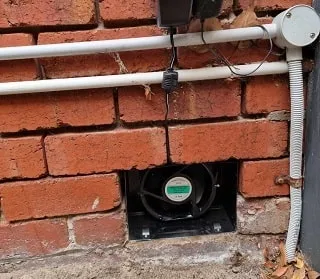
Modern fan units — including the Envirofan range installed by Protech — operate on solar power or 12V low-voltage supply and run at 27 dB, which is effectively inaudible. Most units are fitted with a hygrometer or timer that activates the fan when humidity reaches a set threshold and switches it off once conditions return to normal, so they run only when needed.
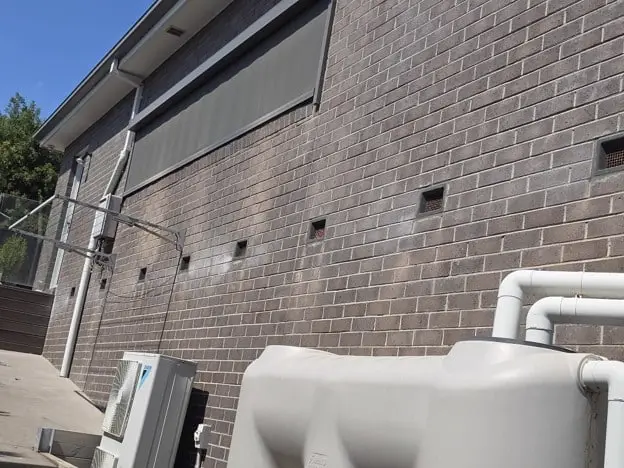
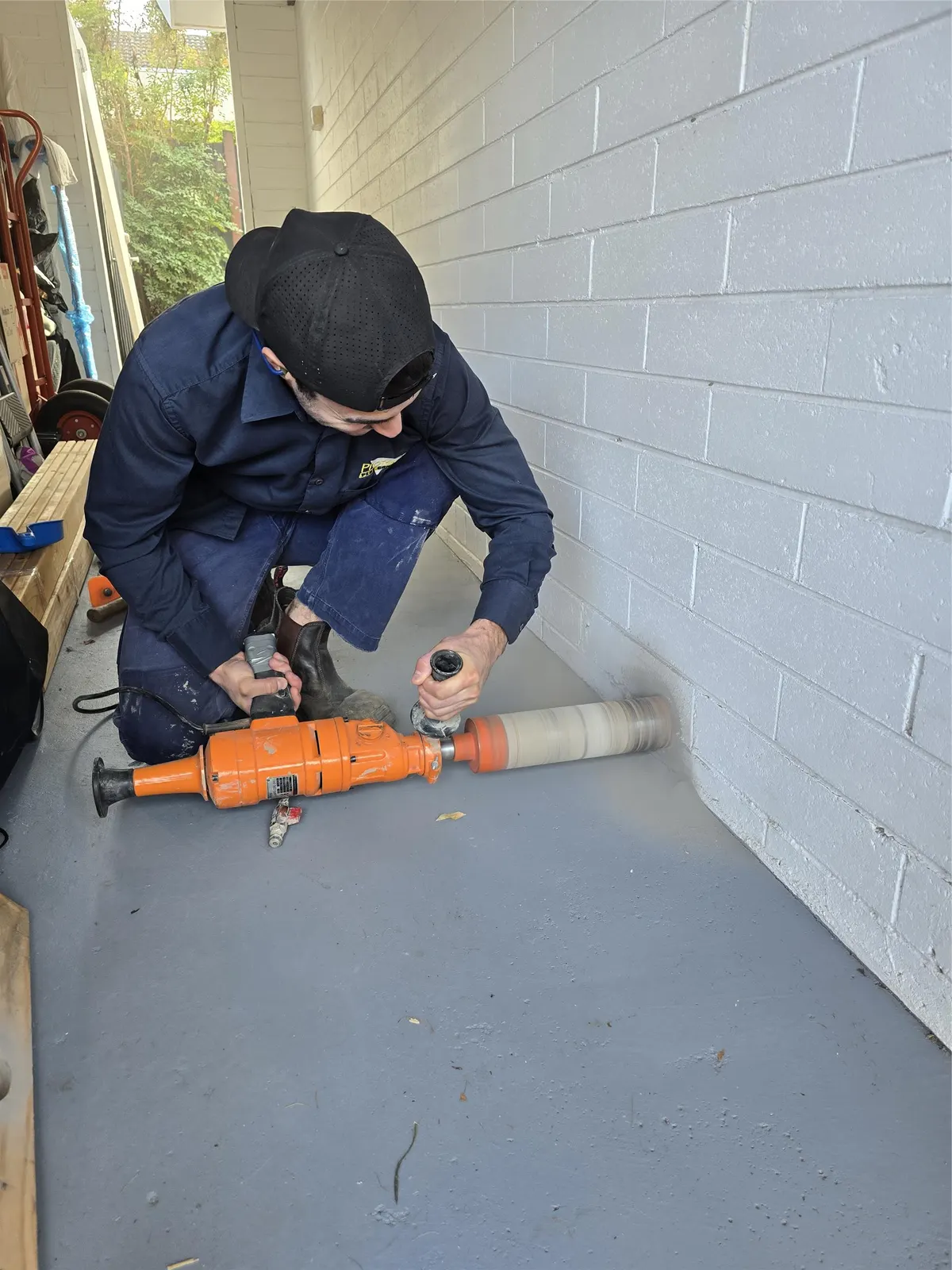
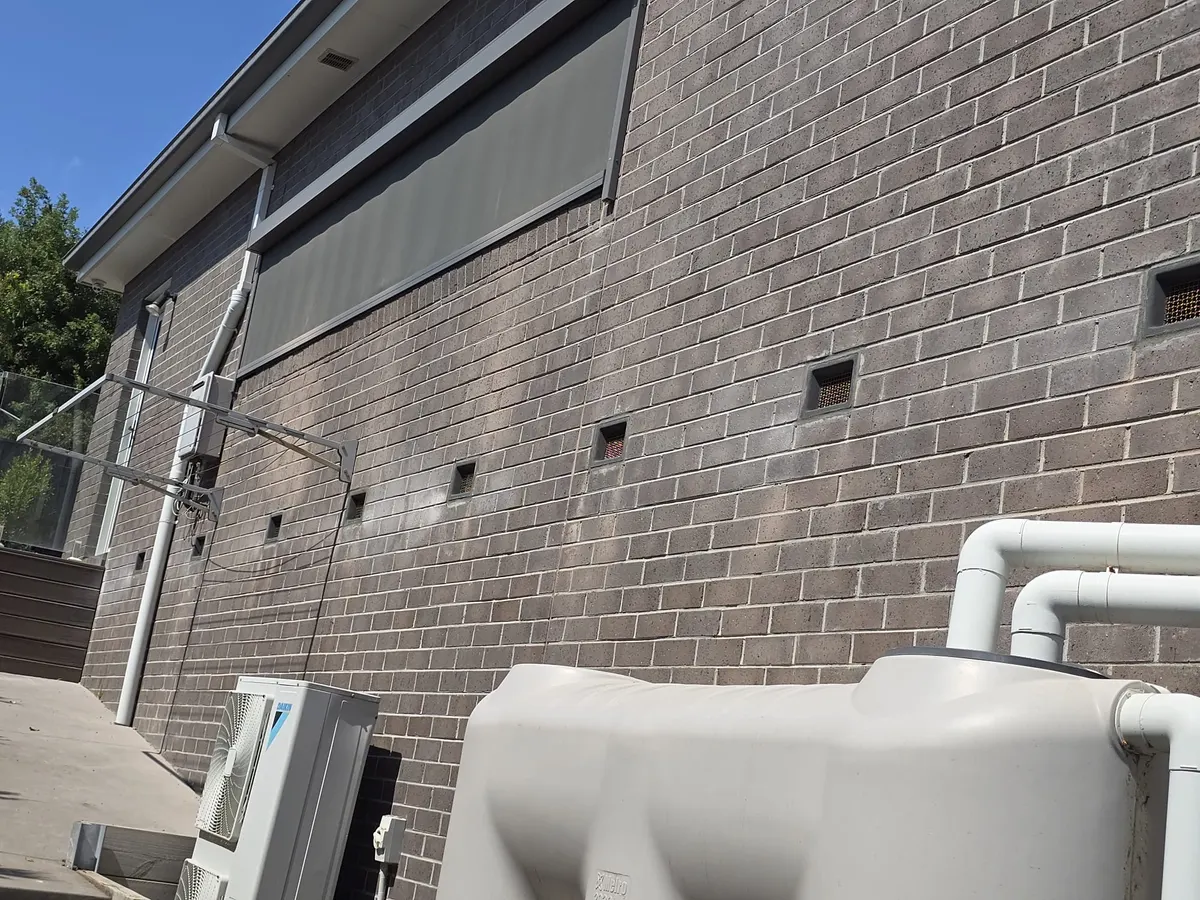
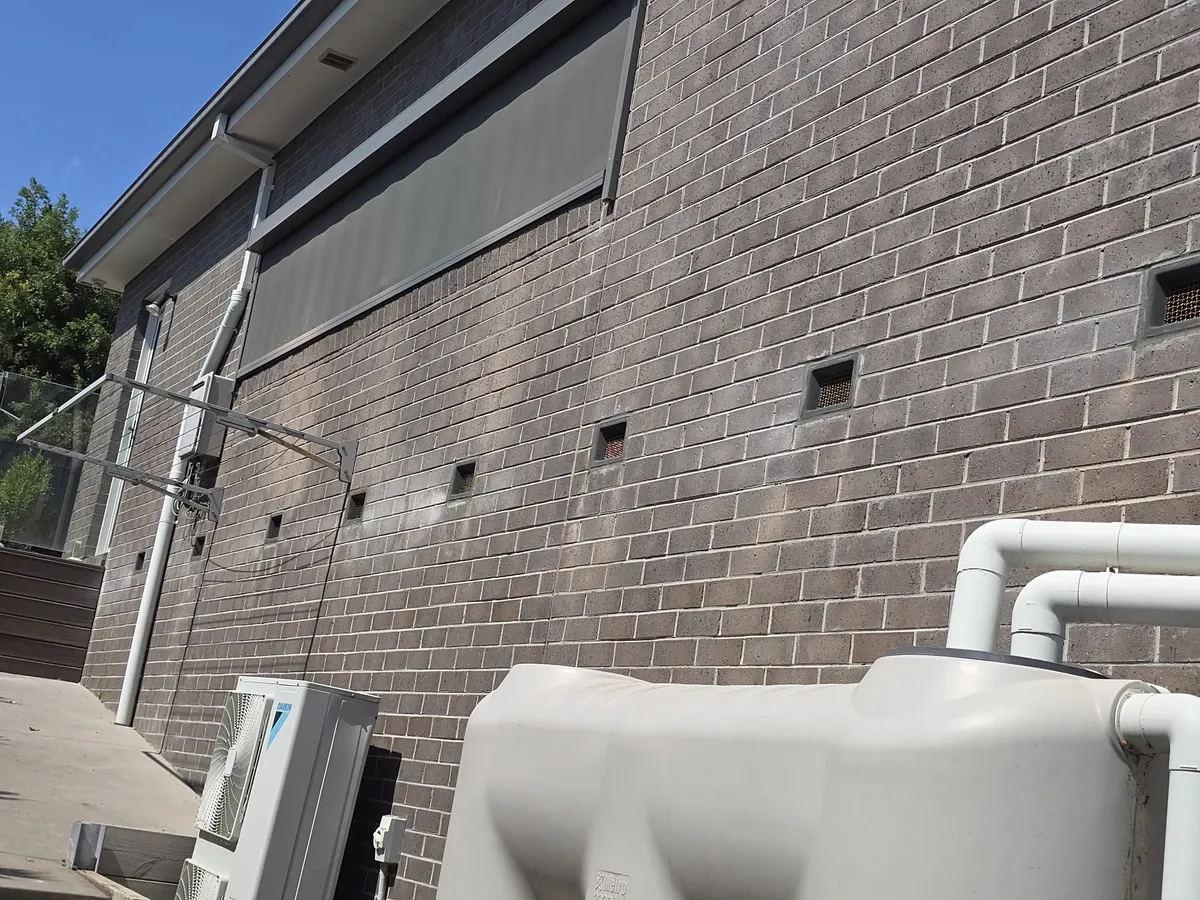
Recent Subfloor Ventilation Installations
Benefits of a Properly Ventilated Subfloor
- Drier subfloor and protected structural timbers: Keeping moisture below the threshold that promotes fungal decay preserves your bearers, joists, and flooring boards. This is significantly cheaper than repairing or replacing structural timbers after the fact.
- Healthier indoor air: Subfloor mould and mildew release spores that migrate upward into the living areas. Occupants with asthma or respiratory sensitivities are particularly affected. Adequate ventilation cuts off this source at the origin.
- Reduced termite and timber-pest risk: Termites need moisture to establish and maintain their colonies. A dry subfloor is a far less hospitable environment for them, and it reduces the conditions that encourage wood borers as well. Subfloor ventilation works as a genuine structural termite-prevention measure, well beyond the comfort it brings underfoot.
- Stable timber floors: Timber that maintains a consistent moisture content does not cup, warp, or develop gaps between boards. Floors stay flat and feel firm underfoot.
- Reduced condensation and humidity indoors: Lower subfloor moisture means less water vapour migrating into the living space, which reduces condensation on walls and windows during winter.
- Low maintenance, long service life: Fan-forced systems — particularly solar-powered units — have few moving parts, operate without ongoing energy costs, and are designed for decades of service.
What Subfloor Ventilation Costs
Every subfloor is different, so an honest quote can only follow an inspection. The final figure depends on the size of the cavity, how easy it is to access, whether the existing perimeter vents can be cleared and reused, and the type of system the subfloor actually needs. That said, most homeowners want a sense of the range before they book, so here is how the work tends to break down.
- Clearing or replacing blocked vents: the least expensive option, appropriate where the subfloor has enough openings but they have been obstructed or have silted up.
- Adding high-flow passive vents: replacing standard terracotta vents with high-flow units such as Aleta, which move several times the air of the vent they replace, where natural cross-flow is the missing piece.
- A fan-forced extraction system: the solution for cavities where passive airflow cannot cope, priced according to the number and type of fans the volume calculation calls for.
The running cost of a modern system is genuinely small. The low-voltage and solar Envirofan units we install draw a fraction of the power of a mains system and are typically set to run only through the drier daylight hours, so the ongoing electricity cost lands at a few dollars a year per fan. A fixed-price quote is provided after the inspection, and there are no surprises once the work begins. Call 03 9449 4244 to arrange a quote.
The Protech Process — From Inspection to Installation
1. Moisture testing and subfloor assessment
The first visit is a full inspection of the crawl space. Our technicians measure moisture levels in the subfloor before any work begins, assess the condition of structural timbers, identify any existing vent obstructions or airflow blockages, and determine whether passive vents, fan-forced extraction, or high-flow vent replacements are the appropriate solution for your property.
2. Measuring the subfloor and sizing the system
A ventilation system that is under-sized for the space will not bring moisture under control. We calculate the cubic meterage of your subfloor (width × length × height) and divide by the fan's rated output to confirm that the selected system will achieve the target of at least three to five air changes per hour for your cavity. Where the subfloor has limited or no access, fans are installed through external wall openings so an access hatch is not needed.
3. Choosing and installing the right fans
Protech installs Envirofan units — Australian-designed and manufactured fans with over three decades of use in subfloor applications. Fan selection is based on the access configuration and the volume of air to be moved — not a one-size preference:
- Quad-fan system: 275 × 215 mm external footprint, terracotta-vent sizing, 27 dB, solar or 12V — the multi-fan unit for larger subfloors.
- Dual-fan unit: brick-sized, 27 dB, solar or 12V, extracting around 2,750 litres of damp air per minute.
- Roof fan system: for properties where the roof space also needs attention, moving up to 7,000 litres of air per minute. Controlled by a thermostat, so there is no heat loss during winter, and finished in a choice of roof colours — Manor Red, Headland, Shale Gray, Woodland Gray, Windspray, Pale Eucalypt, Cottage Green, Wilderness, Deep Ocean, Silver, Night Sky and Mission Brown.
Fans are mounted on a 20 mm rubber base to isolate vibration, and positioned to ensure even air distribution across the full subfloor.
4. Commissioning and moisture verification
Once installed, fans are programmed via their built-in hygrometer or timer to operate at the required humidity threshold. Our technicians take moisture readings after installation to verify the system is performing correctly before they leave.
5. Follow-up inspection
We return approximately one month after installation to conduct a post-installation moisture check, inspect the system, and make any adjustments needed. The aim is to confirm that the subfloor has stabilised and that the ventilation is achieving the intended result across all areas of the crawl space.
Why Choose Protech Pest Control for Subfloor Ventilation?
Protech has been working in Melbourne homes since 2001. Our subfloor ventilation service sits alongside our termite inspection and treatment work because the two issues are closely linked — a damp subfloor is one of the primary conditions that makes a property attractive to termites, and our technicians are trained to assess both simultaneously. It forms part of our wider residential pest control service across Melbourne.
- 40+ years of combined team experience in pest and moisture management
- Licensed, insured, and accredited technicians — HACCP / NPMA / AEPMA
- Moisture testing before and after every installation, with written readings
- Envirofan systems — Australian-made, solar or 12V, designed for Melbourne conditions
- Custom solutions for low-clearance and difficult-access subfloors
- One-month follow-up inspection included
- 100% satisfaction guarantee
- Same-day inspections available across Melbourne
- Fixed-price quote — confirmed in writing before work begins
Call 03 9449 4244 to arrange your subfloor quote.
Frequently Asked Questions
Why is subfloor ventilation important?
The air beneath your floors has a direct effect on the air your family breathes inside the home. When a subfloor has poor circulation, moisture builds up, mould and mildew grow on structural timbers, and the damp conditions become attractive to termites. Over time, untreated subfloor moisture can lead to rotting joists and bearers, cupping or warping of timber floors, and worsening respiratory symptoms for occupants prone to asthma or allergies.
What warning signs should I look out for?
Homeowners often notice the problem only once it has progressed into the living areas. Early warning signs include a musty or earthy smell that lingers indoors, condensation on windows or internal walls, floors that feel springy or have begun to cup, and visible mould patches near skirting boards or floor vents. A persistently humid interior during cooler months is another common indicator.
Where does subfloor moisture come from?
Even when there is no obvious leak or plumbing fault, moisture migrates upward from the soil through a process of evaporation. Older homes built on unencapsulated soil are particularly exposed to this. Rain saturation, stormwater pooling near the perimeter, and blocked or inadequate perimeter vents all contribute to trapped dampness beneath the floor.
What is the difference between passive vents and a fan-forced system?
Passive perimeter vents rely on natural air movement through openings in the brickwork or piers. They work well when the property has good cross-ventilation and no obstructions. Fan-forced systems use low-voltage or solar-powered fans to actively draw damp air out and pull fresh air in — the right choice when the subfloor is large, has obstructed airflow paths, or is beneath an extension or deck that blocks natural movement.
How much does subfloor ventilation installation cost?
The cost varies depending on the size of the subfloor, access conditions, whether the existing vents can be cleared and reused, and the type of system recommended after inspection. Clearing blocked vents is the least expensive option; adding high-flow passive vents sits in the middle; a fan-forced extraction system is priced by the number and type of fans the volume calculation calls for. Protech provides a fixed-price quote after the initial inspection — there are no surprises once work begins. Call 03 9449 4244 to arrange a quote.
How much does a subfloor fan cost to run?
Very little. The low-voltage and solar Envirofan units we install draw a fraction of the power of a 240V system and are usually set to run only through the drier daylight hours. In practice the ongoing electricity cost comes to a few dollars a year per fan, and solar units add nothing to the power bill at all.
How many air changes per hour does a subfloor need?
As a working guide we size a system for a minimum of three to five complete changes of the subfloor air every hour, and a cavity with a standing-moisture problem is pushed higher again. We calculate the exact figure from the volume of your subfloor — its length, width, and height — so the fans are matched to the space rather than guessed at.
Does subfloor ventilation help meet the building standards?
Yes. The National Construction Code sets a minimum ventilation opening area for each metre of external wall and a minimum ground clearance, and the termite standard AS 3660 calls for that ventilation to be maintained so non-chemical termite protection can work. Many older Melbourne homes no longer meet these figures because their original vents have been blocked by paving, garden beds, or extensions. A fan-forced system makes up the shortfall that passive vents alone cannot.
Is the work disruptive to the home?
Fan-forced systems are installed from outside or through existing vent openings in most cases, and fans operate quietly — the Envirofan quad unit, for example, runs at 27 dB. Interior finishes and flooring are not disturbed in the majority of installations.
Do you offer a follow-up after installation?
Yes. Our technicians return approximately one month after installation to take moisture readings, inspect the system, and make any adjustments needed to ensure it is performing as intended.
Client Testimonials
The team assessed our subfloor, took moisture readings, and talked us through exactly what was causing the damp before recommending anything. The fans have made a real difference to the musty smell we had every winter, and they came back a month later to check the readings had dropped. Genuinely professional from start to finish.
– Verified Google review, Protech Pest Control (4.8★ from 411 reviews)Learn More About Pest Solutions
Same-day service, eco-friendly treatments and a pest-free guarantee. Domestic & commercial — all Melbourne suburbs.