

Bee Hive & Swarm Removal Melbourne
Safe, professional bee removal from your home or business — wall cavities, roofs, chimneys and gardens across Melbourne.
Bee Hive & Swarm Removal Services in Melbourne
Bees are a vital part of the Australian environment, but a hive growing inside your wall cavity, roof space or chimney is a serious problem that gets worse the longer it is left. A colony that has been established for a full season can contain tens of thousands of workers, kilograms of honey, and an extensive wax comb — all of which cause structural damage if the bees die or are left in place.
At Protech Pest Control we handle bee situations with that balance in mind: protecting your family and your property while treating the insects as responsibly as the circumstances allow. Our technicians are licensed, insured, and experienced in accessing hives from roofs, wall voids and cavities that are difficult to reach safely without the right equipment.
If you have a swarm on your property or suspect an established hive, call us now on 03 9449 4244 for a free, no-obligation quote.
Swarm, Nest or Hive — What Do You Have?
Understanding what you are dealing with affects how urgently you need to act and what treatment is needed.
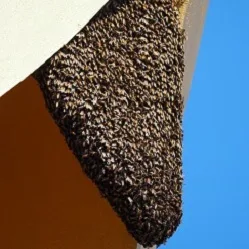
- Swarm: A cluster of adult bees resting on a branch, fence or wall while scouts search for a permanent home. A swarm carries no comb or honey and the bees are usually calm. Most swarms move on within 24–48 hours, but those that linger or enter a cavity quickly become an established nest.
- Nest: Bees that have moved into a sheltered void — a wall cavity, tree hollow, roof space or chimney — and begun building comb. At this stage the colony is growing and will actively defend the entrance. A nest requires professional removal.
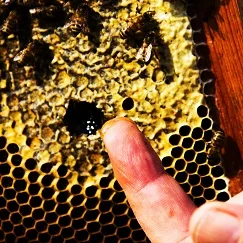
- Established hive: A mature colony with a full wax comb containing brood, stored pollen and honey. The colony is well-established and can number in the tens of thousands. Hives inside building structures cause the most damage and are the most challenging to treat safely.
Identifying Bees — and Telling Them Apart from Wasps
Correctly identifying the pest matters because bees and wasps call for different treatment approaches.
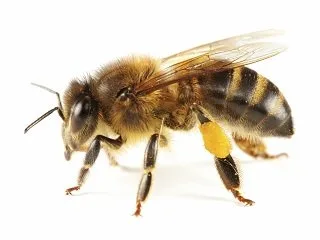
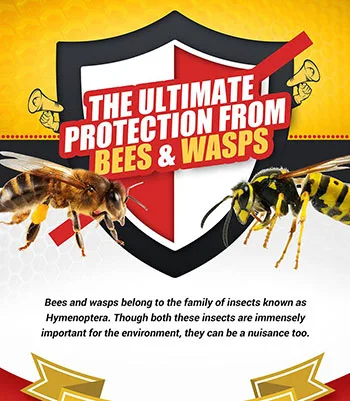
- European honey bee: The most common species found in Melbourne structures. Amber-brown with light banding, rounded and furry, 12–15 mm long. Worker bees carry pollen in flattened leg pouches. Their sting is barbed — it lodges in skin and the bee dies after stinging.
- Native bees: Australia has over 1,500 native bee species ranging from 2–24 mm. Most are solitary and non-aggressive, with small nests. Around ten species are social and form larger colonies. Many native bees are protected — your technician will identify the species before recommending a course of action.
- Wasps (European wasp / paper wasp): Slender waist, smooth shiny body, bright yellow and black banding. They build paper nests in eaves, wall cavities and under decking. Unlike bees, wasps can sting multiple times. See our wasp removal page for wasp-specific treatment.
Bee Facts
- A honey bee colony depends on a single queen, and through the warmer months she can lay up to roughly two thousand eggs in a single day to keep the colony's numbers up.
- Worker bees pass on the location of nectar by performing a "waggle dance" across the comb: the angle of the dance points the way to the flowers and its length tells the rest of the hive how far they need to fly.
- Only female bees can sting. The workers and the queen carry a sting, while the male drones have none and live only to mate with a young queen.
- Alongside the introduced European honey bee, Australia has a large family of native bees, including social stingless bees whose tangy "sugarbag" honey has been gathered by Aboriginal communities for thousands of years.
- Honey keeps almost indefinitely — sealed in the comb at low moisture and naturally acidic, it resists spoiling for years, which is part of why an abandoned hive inside a wall keeps drawing ants, beetles and rodents long after the bees themselves have gone.
Where Bees Build Nests in Melbourne Homes and Buildings
European honey bees are opportunistic — any sheltered void with a small entrance and protection from direct weather is a candidate. In Melbourne homes and commercial properties, Protech technicians most commonly find established hives in:
- Wall cavities: Bees enter through a gap in weatherboards, brickwork mortar joints or around window frames. The cavity fills with comb from the top down and can span multiple wall cavities over time.
- Roof spaces and ceiling voids: Entry points around roof tiles, eave gaps, and penetrations for pipes or cables. A roof-space colony that goes untreated through summer can produce significant quantities of honey that liquefies in heat and damages plaster ceilings.
- Chimneys: Unused chimneys provide ideal conditions — dark, still air and a protected void. The colony is often well established before it is noticed.
- Tree hollows: Common in established suburban gardens. Removal from trees is assessed on a case-by-case basis, with relocation to a beekeeper considered where practical.
- Subfloor and compost areas: Less common but occasionally found under timber floors or in garden compost bays. Any sheltered void with a suitable entrance can be used.
The longer a colony has been in place, the more extensive the comb and honey stores, and the more involved the removal. Early treatment — when you first notice activity at an entry point — is always easier and less costly.
The Risks of Leaving a Hive Untreated
A bee colony that is left to grow through a Melbourne summer can cause problems well beyond the initial inconvenience of a buzzing entry point.
- Sting risk: Worker bees become increasingly defensive as a colony matures and its honey stores grow. People and pets approaching the entry point, or vibrations from machinery or mowing, can trigger a defensive response. For anyone with a bee-sting allergy, even a single sting can cause anaphylaxis requiring emergency medical treatment.
- Structural damage: Wax comb and honey stores absorb moisture and can weigh several kilograms. In summer heat, honey liquefies and seeps through plasterboard and timber, staining surfaces and causing rot. The damage is often invisible until it has progressed significantly.
- Secondary pest attraction: Dead bees and honey residue inside a wall attract wax moths, small hive beetles, ants and rodents, compounding the original problem.
- Re-infestation: The scent of wax and honey in a cavity attracts future swarms to the same location season after season. Effective treatment includes sealing the entry point once the colony has been removed.
Signs of a Bee Infestation on Your Property
- Persistent bee activity at a single point: A steady stream of bees entering and exiting through a gap in brickwork, a gap under a tile or around a window frame is the clearest indicator of an established nest rather than passing foragers.
- Buzzing inside walls or ceilings: A low, vibrating hum heard from inside a room — particularly on warm afternoons when the colony is active — points to a colony inside the building structure.
- Dark staining on walls or ceilings: Honey seeping through plasterboard or a dark patch spreading from a cornice often indicates a mature hive that has been in place for at least one season.
- Unusual odour: A sweet, waxy or fermented smell coming from a wall or ceiling can indicate a large or old colony, or one that has recently died and left honey and brood to decompose.
- Increased bee activity in the garden: A visible swarm clustered on a branch or fence, or a sudden increase in bee numbers around your eaves, is worth having assessed before they find a cavity entry point.
Preventing Bees from Nesting on Your Property
While you cannot prevent foraging bees from visiting a flowering garden — nor would you want to — there are practical measures that reduce the chance of a colony establishing inside your home.
- Seal entry points: Inspect the exterior of your property for gaps in mortar, cracks in weatherboards, openings around pipes, and unsealed eave vents. Any gap large enough to pass a pencil is large enough for a scout bee. Fill gaps with mortar, exterior caulk or metal mesh as appropriate to the material.
- Check and cap chimneys: Unused chimneys should be capped with a mesh or cowl that allows ventilation but prevents entry.
- Maintain roof condition: Loose or cracked tiles and deteriorated eave linings create easy access points. A regular roof inspection in early spring — before swarm season — is worthwhile.
- Act on swarms promptly: A swarm that has landed on your fence is not yet a problem. A swarm that has found a gap and moved into a wall cavity is. Call us as soon as you see ongoing entry activity.
How Protech Removes Bee Hives Safely
- Inspection and assessment: Your technician will locate the colony, identify the species, and assess whether the hive is accessible, how established it is, and whether relocation is a practical option. You will receive a clear explanation of the recommended treatment before any work begins.
- Swarm collection: A fresh swarm that has not yet built comb can often be collected into a box and transferred to an apiarist. This is the most environmentally responsible outcome where it is safely achievable.
- Hive removal from structures: Access panels or sections of cladding are opened to expose the comb. The colony, comb, and all honey are removed, the void is cleaned to eliminate scent attractants, and the opening is sealed to prevent re-infestation. This is a skilled task — poorly executed removal leaves honey residue that causes ongoing structural damage and re-attraction.
- Bee proofing: After removal, entry points are sealed with metal flashing, mortar or durable materials that bees cannot chew through. This is an essential step that is often skipped in cheaper treatments.
- Bee repellents (preventative): In some situations, registered repellent products are applied around likely entry points to deter scout bees from investigating a property. These products are selected to avoid harm to foraging bees on nearby plants.
Call 03 9449 4244 to book a same-day inspection.
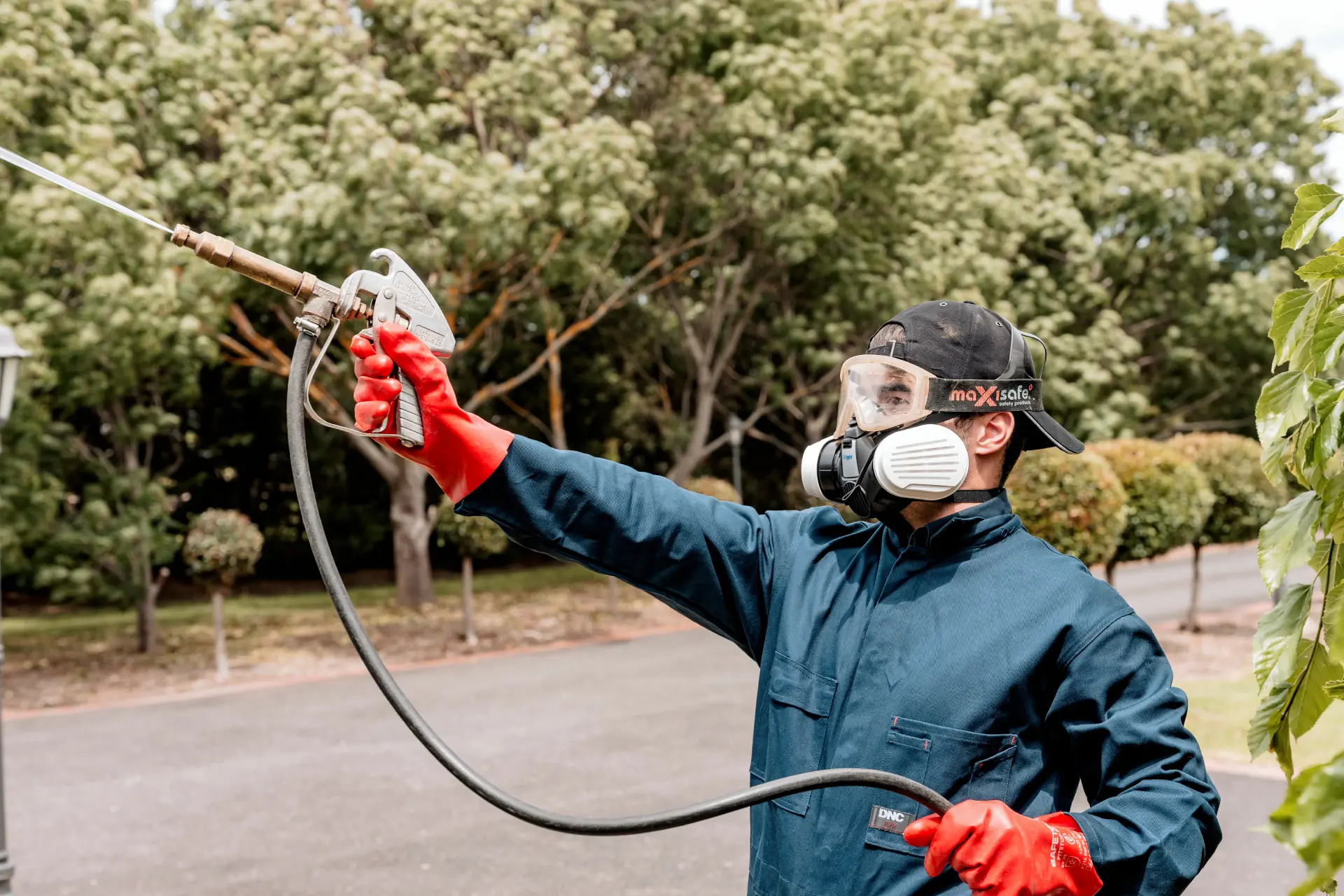
Why Melbourne Chooses Protech for Bee Removal
Protech Pest Control has been serving Melbourne homes and businesses since 2001. Our technicians bring more than 40 years of combined experience to every job and are licensed, insured, and accredited with HACCP, NPMA, and AEPMA.
- 40+ years of combined pest management experience
- Licensed, insured, and fully accredited technicians
- Eco-friendly products safe around children and pets
- Same-day service available across Melbourne
- 100% satisfaction guarantee
- Free no-obligation quotes — fixed-price after inspection
- 4.8★ rating from 411 Google reviews
Frequently Asked Questions
What is the difference between a swarm and an established hive?
A swarm is a temporary cluster of adult bees — they have left their previous colony and are resting while scouts look for a permanent home. Swarms are usually docile and often move on within a day or two. An established hive has a comb, stored honey and pollen, and a resident colony that has been there long enough to defend its home. Established hives need professional removal; a swarm that lingers more than 48 hours is best handled by a technician too.
How can I tell the difference between bees and wasps?
Bees are generally rounder and furrier than wasps, with flattened rear legs used to carry pollen. European honey bees are amber-brown with light banding; native bees vary widely in size and colour. Wasps tend to have a slender waist, smooth shiny bodies, and hang their paper nests in sheltered spots. If you are unsure, keep your distance and call a professional — wasps are more aggressive when disturbed and can sting repeatedly.
Why is it dangerous to try removing a hive yourself?
Disturbing a colony without proper protective equipment and the right technique almost always provokes a defensive response. A single sting is painful and causes localised swelling; multiple stings or a sting in a sensitive area can cause a severe allergic reaction (anaphylaxis) that requires emergency medical attention. Bee venom can also trigger reactions in people who have never been stung before. Attempting to spray a hive with household insecticides rarely eliminates the colony and usually provokes an attack.
What happens if a hive inside a wall or roof is left untreated?
An untreated hive in a wall cavity or ceiling space will grow through summer and can reach tens of thousands of workers. Dead bees, wax and honey left behind after an incomplete treatment — or after bees die off naturally in winter — can liquefy and seep through walls, cause structural damage to timbers, and attract secondary pests including rodents, beetles and ants. The honey scent also draws new swarms to the same cavity the following season.
Do you relocate bees rather than destroy them?
Where possible, Protech technicians assess whether relocation is practical. Swarms that have not yet established a comb can often be collected and transferred to a beekeeper. Established hives inside structures typically cannot be safely relocated intact — full removal of the comb and sealing of the cavity is the responsible treatment. Our technicians will explain the most appropriate approach after inspection.
Is the treatment safe around children and pets?
Yes. Protech uses eco-friendly products registered with the Australian Pesticides and Veterinary Medicines Authority (APVMA) that are safe around children and pets when applied as directed. Your technician will advise you on any re-entry period after treatment.
Client Testimonials
Protech I had to make a few times phone call to make a deal with them but after I booked an appointment, everything was going smooth. Customer service was friendly and technician was very quick, tidy and effective. Would recommend!
– Victoria Quality ButcherLearn More About Pest Solutions
Same-day service, eco-friendly treatments and a pest-free guarantee. Domestic & commercial — all Melbourne suburbs.