
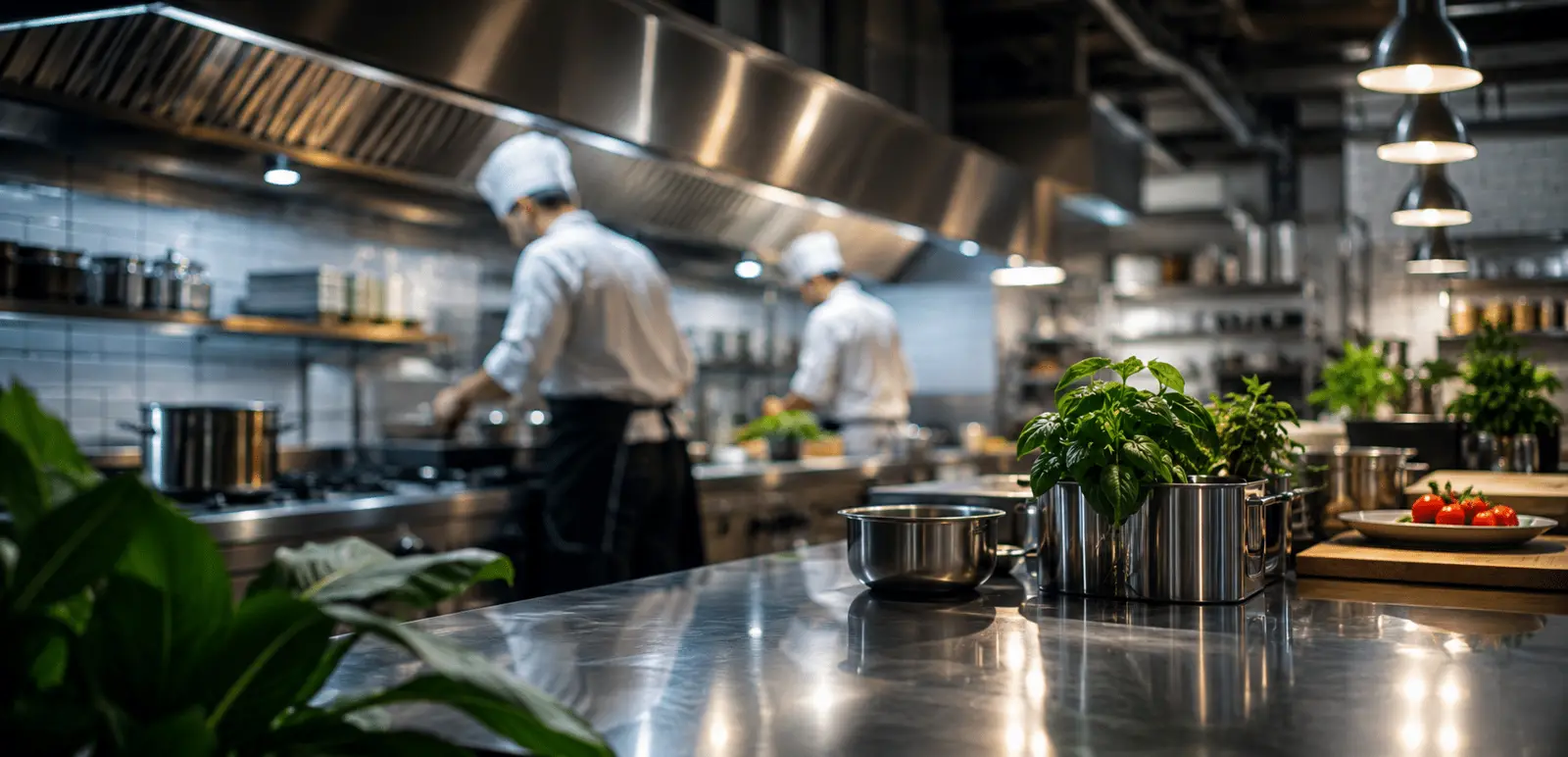
Hospitality & Food Services Pest Control
HACCP-aligned, fully documented pest management for Melbourne restaurants, cafes, kitchens and food businesses — compliant, audit-ready and protected year-round.
Hospitality & Food Services Pest Control Melbourne
Protect Your Reputation. Protect Your Customers.
Running a restaurant or cafe specifically? See restaurant and cafe pest control.
One pest sighting. One failed inspection. One bad review. That’s all it takes to put everything you’ve built at risk. Protech Pest Control gives Melbourne’s hospitality and food businesses the professional, effective pest management they need to trade with confidence — every day, all year round.
With over 40 years of combined industry experience, we understand the operational pressures of busy food environments. Our tailored commercial pest control programs deliver real protection with minimal disruption to your staff, customers, and daily operations — helping venues remain compliant, audit-ready, and protected year-round.
To arrange a tailored program for your venue, call Protech on 03 9449 4244.
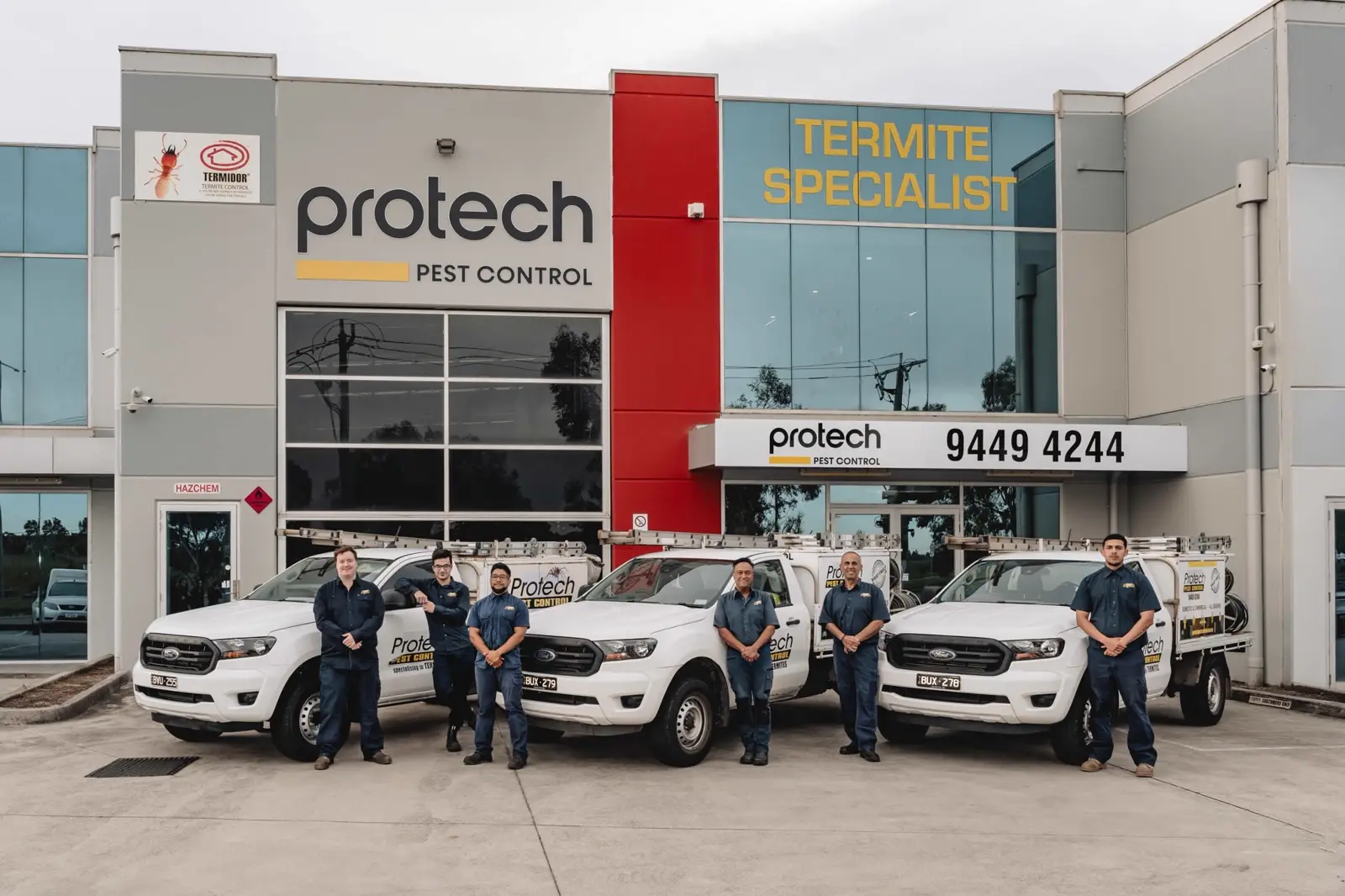
The real cost of doing nothing
Food environments are naturally attractive to pests. Warmth, moisture, and a constant food source create ideal conditions year-round. Without proactive management, the consequences escalate quickly — and they’re rarely cheap.
A single pest incident can result in:
- Food contamination and direct health risks to customers and staff
- Failed health inspections, closure orders, or council fines
- Damaged stock and equipment from rodent activity
- Negative reviews and lasting reputational harm
- Breaches of food safety legislation
- Costly reactive treatments that disrupt your operations
Effective pest management keeps your business open, compliant and trusted, which is why it belongs on the maintenance calendar alongside every other essential service.

Great customer service and always very thorough in their work and approach to our issues.
– Mike Pelar, DirectorPests We Manage in Hospitality & Food Environments
Food-based environments naturally attract a wide range of pests. Our technicians regularly manage and prevent cockroaches, rats and mice, ants, flies, stored product pests, birds, spiders and bed bugs — the full range of pests that threaten food safety, compliance, and customer confidence in commercial food environments. A hospitality site usually carries several of them at once, in different parts of the building, which is why a program is written across the whole venue.
- German cockroaches in kitchen equipment voids, bar fridges, glass washers, coffee machines and the warm cavities behind a cooking line, arriving in cartons and crates with a delivery.
- Rats and mice through delivery doors, roller-door gaps, service penetrations and roof voids, working the dry store, the bin area and the cellar.
- Flies in two forms — house flies and blowflies drawn in from bins and open waste, and small drain flies breeding in floor wastes, grease traps, mop sinks and under beer taps.
- Ants trailing to sugar stations, syrup lines, coffee grounds and spills, from nests in garden beds, paving joints and wall cavities.
- Stored product pests living inside flour, rice, grains, nuts and dried goods, most often found in the oldest bag on the shelf.
- Birds roosting on roofs, ledges, signage, loading docks and above outdoor dining, fouling entries and blocking gutters.
- Bed bugs in accommodation rooms, arriving in guest luggage and spreading room to room.
We cover all areas to prevent pests
Pest activity is rarely visible until it’s already established. Our technicians inspect the areas most commonly missed in routine cleaning — because that’s exactly where infestations begin.
High-risk areas we assess include:
- Commercial kitchens and food preparation zones
- Behind and beneath cooking equipment
- Cool rooms and refrigeration areas
- Dry food storage areas
- Waste and bin storage areas
- Ceiling voids and service penetrations
- Loading docks and delivery zones
- Staff break areas
- External entry points and drainage areas
By identifying risks early, we prevent infestations before they become operational crises.

Guest-Facing Risk and the Reputation Problem
Hospitality carries a risk that a warehouse or a factory does not. Your customers are inside the building, and a single pest sighting in a guest room, a dining room or a bar becomes a review within the hour. That review sits on a public listing for years, it is read by every future guest comparing venues, and it costs bookings long after the pest problem itself was resolved.
Group and franchise operators carry the exposure across every site, because a review naming one location attaches to the brand. Venues on booking platforms feel it hardest of all, since a cleanliness score drives placement in the search results a guest actually sees. Preventative servicing is cheap measured against that.
The practical consequence is that a hospitality program is judged on what guests never encounter. We work to keep activity out of guest-facing areas entirely, catch it in the back of house where it starts, and give your duty manager a documented response to hand a guest who does raise something.
Bed bugs in accommodation
Bed bugs are the pest that worries accommodation operators most, and for good reason. They arrive in guest luggage, they are impossible to screen for at check-in, and they move between rooms along skirting runs, service voids, shared walls and housekeeping trolleys. A room treated in isolation while the neighbouring rooms carry activity is a problem that returns within weeks.
Our approach inspects the affected room and the rooms around it, including the rooms above, below and either side, because that is the pattern the insects follow through a building. Treatment targets the harbourages: bed frames and bases, bed heads, mattress seams, skirting, joinery, bedside furniture and soft furnishings. We set out the preparation housekeeping needs to complete before the technician attends, and we advise on the inspection routine that lets your team catch a problem in its first week. Full detail on the species and the treatment is on our bed bug treatment page.
Where a room has to be taken out of service, we work with your reservations team on the shortest sensible window and document the treatment so there is a clear record if a guest or an insurer asks.
Kitchen, Bar and Back-of-House Pressure Points
Most hospitality pest problems begin in one of three places, and a program that covers all three properly stops the great majority of what would otherwise reach a customer.
The kitchen and prep areas
A commercial kitchen supplies heat, water and food continuously, and the voids behind fixed equipment stay warm right through a Melbourne winter. German cockroaches breed in those cavities year-round, so a food venue never gets the seasonal break a domestic property does. The work centres on targeted baiting and monitoring inside the harbourages, proofing the gaps between and beneath units, and flagging the leaks, damaged seals and blocked floor wastes that keep the area damp.
Bars, cellars and beverage service
A bar is a food area that is often treated as though it is not. Beer lines drip, drip trays sit wet overnight, glass washers hold warmth and moisture, garnish and syrup residue collects behind the rail, and the cellar below is cool, dark and rarely disturbed. Small flies breed in the film inside floor wastes and drain lines under the taps, ants trail to sugar residue, and cockroaches take up in the glass washer and the ice machine. Cellars and store rooms also give rodents an undisturbed run at cardboard and packaging.
Waste, loading docks and back-of-house access
The waste and delivery area is where most pests enter a hospitality building. Bins that sit against the building line, a bin pad that is never washed down, cardboard stacked in a back corridor and a delivery door propped open through a warm afternoon between them account for most rodent and fly pressure on a site. Loading docks add roller-door gaps, unsealed dock levellers and pallets brought straight in from a supplier yard.
We inspect the waste and delivery point on every visit, proof the gaps we find, place external monitoring where it will intercept rodents before they reach the building, and write the housekeeping items into the report as corrective actions so the manager has something specific to work with.
Pest Management Built Around Your Operation
Every hospitality venue operates differently. We build the program around your site, your risks, your trading hours, and your compliance obligations.
Our commercial pest management services include:
- Routine inspections and preventative treatments
- Integrated Pest Management (IPM) programs
- Rodent monitoring and physical proofing
- Cockroach management programs
- Fly control solutions
- Bed bug inspection and treatment for accommodation
- Bird proofing and exclusion systems
- Digital reporting and service documentation
- Site-specific risk assessments
- Corrective action recommendations
Multi-site operators are covered under a single agreement, with one point of contact, one consolidated reporting portal and consistent servicing across every location, which keeps the paperwork uniform at audit time.
Audit-Ready Documentation, Every Single Visit
HACCP-based food safety systems require documented evidence that pest management is being actively managed. We build our programs to support your compliance obligations as a core part of the service.
Every service visit generates a detailed digital report covering pest activity, treatment records, site observations, and corrective action recommendations. Everything you need for food safety audits, council inspections, and internal compliance reviews — accurate, on time, and ready to present.
Our documentation includes:
- HACCP-aligned pest management programs
- Detailed digital service reports
- Pest activity trend monitoring
- Site maps and treatment zone records
- Safety data sheets for every product used on site
- Corrective action recommendations
- Audit and inspection-ready documentation
Protech holds HACCP, NPMA and AEPMA accreditation. See our HACCP pest control page for what an auditor receives, and our digital reporting page for how the records are delivered and stored.
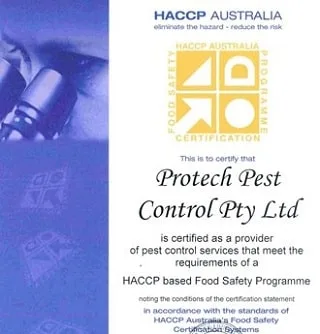
If Food Is Part of Your Business, Pest Management Is Too
We work with Melbourne hospitality, retail and food businesses of every scale, from a single-site cafe to a multi-venue group. Each sector below carries its own pest pressure and its own compliance obligations, and each program is written for the venue in front of us.
Hotels and motels
Accommodation combines a commercial kitchen, public bars and restaurants, back-of-house laundry and waste areas, and floors of guest rooms, so a single property carries several distinct pest problems at once. Bed bugs are the headline risk, and cockroaches, rodents and small flies press hardest around the kitchen, the loading dock and the bin store. Servicing runs around occupancy, with guest floors attended during the day-time changeover and food areas outside service.
Pubs and bars
A pub carries a kitchen, a public bar, a cellar and usually a beer garden or outdoor area, all of them wet and all of them trading late. Drip trays, beer lines, glass washers and floor wastes drive small-fly problems, cellars and store rooms give rodents cover, and the beer garden brings wasps through the warmer months. Attendance is normally early morning, before the kitchen and the bar open.
Clubs
Sporting, RSL and community clubs run a bistro, a bar, gaming and function space, often across an older building with a large footprint and long external perimeters. The scale and the number of external doors is the challenge, so club programs lean on perimeter protection, external rodent monitoring and proofing of the many entry points, alongside standard kitchen and bar servicing.
Function and event venues
Function centres, reception venues and event spaces cycle between heavy use and long quiet periods, and a room that sits closed for three weeks with residue left from the last event is where a problem starts. Bookings are also unforgiving, so servicing is scheduled tightly around the diary. We work between events, cover the kitchen, the bars, the storage and the cool rooms, and keep the reporting current so a corporate client asking for compliance records gets an answer the same day.
Retail stores
Retail carries pest risk even where nothing is sold to eat. Stock rooms and back corridors hold cardboard and packaging that rodents nest in, staff kitchens and break rooms attract cockroaches and ants, and shopfront doors that stand open all day let flies and birds in. Stores that do sell food or pet products add stored-product pests to the list. Retail servicing is timed before opening or after close, with monitoring placed out of customer view.
Supermarkets and grocers
A supermarket is one of the highest-risk sites we service: dry goods in bulk, fresh produce, delicatessen and bakery departments, cool rooms, a large receiving dock and constant pallet movement. Stored-product pests in bulk grain, flour and pet food are the recurring problem, alongside rodents in the receiving area and cockroaches in the deli and bakery plant. Programs run on a short cycle with heavy monitoring, and the documentation is built for supermarket supplier and head-office audit requirements.
Shopping centres
A centre is a single pest habitat shared by many tenants. Food-court kitchens sit back to back, waste is consolidated in a shared dock or compactor room, and service corridors, risers and roof voids connect every tenancy. A cockroach or rodent problem in one tenancy is a centre problem within a month. We service common areas, back-of-house corridors, waste rooms and plant spaces for centre management, and individual tenancies under their own agreements, so the coverage has no gaps between the two.
Caravan parks and holiday accommodation
Parks, cabins and holiday units combine accommodation turnover with an outdoor setting, so the pest list runs wider than a city hotel. Bed bugs and cockroaches travel in with guests, rodents work the camp kitchen, the bin compounds and the cabin subfloors, and ants, spiders, wasps and bees press in from the grounds. Servicing is planned around the booking calendar, with the heaviest work in the shoulder season and rapid attendance during peak periods.
We also service commercial kitchens, food manufacturers, bakeries, food warehouses, catering facilities, aged care kitchens, childcare centres, and schools and canteens across Melbourne.
Servicing Around Guests, Trade and Trading Hours
Hospitality venues rarely have a convenient window, and the schedule is the part of a program operators ask about first. It is agreed with your manager before the first visit and written into the service agreement, so attendance is booked in advance.
When we attend
Most hospitality servicing happens before opening, after close, on a quiet trading day or during a planned shutdown or renovation. A dinner-only restaurant suits an early-morning visit, a cafe that opens at six suits a late one, a hotel suits the mid-morning changeover on guest floors, and a club or function centre usually offers a clear day between bookings.
Venues that never close
Seven-day pubs, hotels and centres with rolling trade are serviced in stages. The dry store and waste area go on one pass, the kitchen during a changeover lull, the bar after last drinks, and guest floors during housekeeping. Splitting a visit across zones keeps the whole site covered while every working area stays in use.
Access, keys and site inductions
Out-of-hours attendance works only if access does, so we settle it up front: who admits the technician, whether keys and alarm codes are held, which entrance is used, what site induction applies and who is told when the visit is complete. Every technician is licensed, insured and carries identification.
Between scheduled visits
Reactive callouts between scheduled services are part of a commercial agreement. We run 24/7 availability including emergency callouts, and same-day service is normally available, which is what a venue needs when a guest reports a sighting at 9pm or an inspector raises something during trade. Every callout is documented in the same system as a scheduled visit, so the record stays complete for audit.
Hospitality Pest Control FAQs
What types of hospitality venues do you service?
We service the full range of Melbourne hospitality and food-service operations: hotels and motels, pubs and bars, clubs, function and event venues, restaurants and cafés, commercial kitchens, food manufacturers and bakeries, retail stores, supermarkets and grocers, shopping centres, caravan parks and holiday accommodation, catering facilities, aged-care kitchens, childcare centres and school canteens. Each program is built around the venue in front of us, its layout, its trading pattern and its compliance obligations.
Can you service our venue outside trading hours?
Yes, and most of our hospitality servicing happens that way. We attend before opening, after close, during a quiet trading day or through a planned shutdown, and for venues that trade continuously we split the visit across zones so no working area is taken out of use during service. Out-of-hours attendance is planned into the service agreement so it is scheduled and costed in advance.
Do you handle bed bugs in hotels and accommodation?
Yes. Bed bugs are one of the most common pest problems in Melbourne accommodation, because they arrive in guest luggage and move between rooms along skirting runs, service voids and shared walls. We inspect the affected room and the rooms around it, treat the harbourages in bed frames, bases, skirting, joinery and soft furnishings, and set out the preparation your housekeeping team needs to complete before the treatment. We also advise on inspection routines so housekeeping can catch a problem in its first week.
What documentation does a hospitality venue receive?
Every service visit generates a detailed digital report covering pest activity, treatments applied, site observations and corrective action recommendations. Alongside it you receive treatment records, safety data sheets for every product used, a site plan showing the location of bait stations and monitoring devices, and a pest-activity trend log. The paperwork is HACCP-aligned and structured so it sits straight into an audit folder for a food-safety audit, a council inspection or a head-office compliance review.
Will guests or customers see the pest control work?
Very rarely, because it is planned that way. Attendance is timed outside trading wherever the site allows, technicians work back of house first, and where discretion is needed we attend when no guests are present and park in an area agreed with you. Monitoring devices in guest and customer areas are discreet and tamper-resistant, placed under fixed joinery and along skirting runs where they do the job without being part of the room.
How often should a hotel, pub or club be serviced?
Frequency is set by the risk the site actually carries. A venue with a commercial kitchen and a public bar is usually monthly or fortnightly, accommodation floors are commonly quarterly with reactive attendance between visits, and a high-volume food operation with strict audit requirements can sit on a shorter cycle again. We assess the site, recommend a frequency that satisfies your compliance obligations and review it once the trend data shows what the venue does between services.
What guarantee applies to a hospitality pest control program?
Commercial pest management carries the guarantee terms set out in your service agreement, matched to the service frequency we agree. That structure suits an ongoing program, because a scheduled site is being attended continuously. The underlying treatments carry their own periods, which are published in full on our guarantee page, and bird proofing and netting carries workmanship cover for six years and product cover for up to ten, subject to annual inspections.
Why Melbourne Hospitality Businesses Choose Protech
Local, accredited and trusted since 2001 — rated 4.8★ from 411 Google reviews.
Deep industry experience
Over 40 years of combined experience in commercial food and hospitality environments means we understand the pressures you face and deliver practical, long-term pest solutions.
Fast, reliable response
Pest issues don’t keep business hours. We respond promptly and schedule treatments around your trading hours to keep disruption to a minimum.
Genuinely tailored programs
No two venues are the same. Every program is customised to your site layout, pest risks, operational schedule, and compliance requirements.
Prevention first
We identify and address the root causes of pest activity, so the conditions drawing pests in are dealt with at the source. Long-term prevention means fewer call-outs and lower overall costs.
Professional compliance support
Our reporting systems are designed to make food safety audits straightforward, with detailed documentation formatted to meet the standards auditors expect.
Fully licensed and insured
Every technician is fully licensed, insured, and professionally trained to deliver safe, compliant pest management — backed by our HACCP, NPMA and AEPMA accreditation.
Protect Your Venue With Professional Pest Management
Talk to the Protech Pest Control team about a tailored pest management program for your Melbourne hospitality or food service business. Call 03 9449 4244 or request a free quote.
Learn More About Pest Solutions
Same-day service, eco-friendly treatments and a pest-free guarantee. Domestic & commercial — all Melbourne suburbs.