
Aged Care & Retirement Living Pest Control
Resident-safe, discreet, audit-ready pest management for Melbourne aged-care facilities and retirement villages — scheduled around your residents and backed by our pest-free guarantee.
Aged Care & Retirement Village Pest Control Melbourne
Resident-safe pest management for the most sensitive environments we serve
An aged-care facility is a home, a workplace and a regulated care environment in one building, and its residents are among the people most vulnerable to the health risks pests carry. Protech Pest Control gives Melbourne aged-care facilities and retirement villages pest management built for that sensitivity, with resident safety governing every product choice, placement and visit time.
With over 40 years of combined industry experience and a company history going back to 2001, we already work in Melbourne’s most sensitive settings through our healthcare pest control and wider commercial pest control programs, and we bring the same standards to residential care.
To arrange a program for your facility or village, call Protech on 03 9449 4244.
Why aged-care facilities carry a higher pest risk
A care facility runs like a small town. A commercial kitchen produces meals all day, laundries run continuously, deliveries arrive through loading areas, gardens and courtyards sit against resident wings, and the building stays warm and occupied around the clock. Each of these supports pest activity on its own; together they demand a properly managed program.
What separates aged care from every other commercial building is the people inside it. Residents with reduced mobility cannot move away from an area while work is carried out, and a resident using a walker or a wheelchair may take several minutes to clear a corridor that a technician needs sealed off. Reduced eyesight, hearing loss and a diminished sense of smell mean cockroach activity in a kitchenette or a mouse in a wardrobe can go unmentioned for weeks, and a resident living with dementia may be unable to describe what they have seen at all. Staff observation and scheduled monitoring do the work that a customer complaint does in a restaurant.
Food inside resident rooms is the other constant. Biscuits in a bedside drawer, fruit on a windowsill, a box of chocolates left after a family visit, thickened drinks and nutritional supplements in a cupboard: each is a food source sitting in a private space that no kitchen audit ever looks at. Medication trolleys, personal fridges and the small kitchenettes attached to a wing add to it. Any program that treats the main kitchen as the whole food-safety picture in an aged-care facility has looked at the best-managed room in the building and ignored the rest.
The building is also occupied every hour of every day. Restaurants close overnight, schools empty over the holidays and factories run planned shutdowns, and each of those windows gives a technician a clear run at an area. Aged care has no equivalent window. Treatments are planned around wings, rooms and service areas that stay occupied, which is why the program depends on scheduling and access arrangements agreed with your facility manager well before a technician arrives on site.
Access constraints in memory-support and high-care areas
Dementia and memory-support units add a further layer. Doors are secured, residents may enter areas they are not expected to, and equipment left unattended for a moment can be picked up and carried elsewhere. Monitoring devices in those areas have to be tamper-resistant, secured in position and placed where a resident walking a corridor will not reach them. High-care and palliative rooms bring their own restrictions on who may enter and when. Our technicians work to the unit’s access procedure and are escorted where the unit requires it, and any area that cannot be entered on the day is recorded on the service report and booked for the following visit.
For an aged-care provider, pest activity can lead to:
- Health risks to residents with reduced immunity and fragile skin
- Findings against the facility at accreditation and audit time
- Contamination in the kitchen, serveries and food storage
- Bed bug spread through resident rooms and shared laundries
- Distress for residents and difficult conversations with families
- Damage to the facility’s standing with regulators and the community
A monitored, documented program protects residents first and gives management the evidence to show the risk is controlled.
Pests We Manage in Aged Care & Retirement Living
Our technicians regularly manage and prevent cockroaches, rats and mice, bed bugs, ants, flies, spiders, birds and the occasional termite issue — the pests that most directly threaten resident health, kitchen hygiene and accreditation outcomes across Melbourne’s aged-care facilities and retirement villages. Five of them account for most of the work.
Cockroaches in serveries and resident kitchenettes
The main kitchen is usually the best-managed room in a care facility, because it is audited and someone is accountable for it. The recurring risk sits further out, in the ward serveries, tea rooms, resident kitchenettes and the trolley bays where meals are held between the kitchen and the wing. German cockroaches arrive on deliveries and in cardboard, then settle into the warm cavities around dishwashers, hot boxes, urns, kettles and toasters, and those cavities are rarely opened up during a clean. We monitor those areas as part of the scheduled program and treat with placements that cannot contact food, crockery or preparation surfaces. The full method is on our cockroach control page.
Rats and mice in roof and service voids
Rodents rarely announce themselves in a resident wing first. They use the roof void, the subfloor, riser cupboards, cable trays and the service corridors running behind resident-facing rooms, then move down into the ceilings above kitchens, laundries and storerooms where the warmth and the food are. In a retirement village the same routes run through detached units, garages and the landscaping between them. Monitoring points are placed along those runs and secured so nothing is accessible to a resident or a visitor, and proofing closes the gaps at pipe penetrations, door sweeps, weep holes and roof junctions. Our rat and mouse control page covers the treatment detail.
Flies around waste, laundry and loading areas
Bin rooms, clinical waste storage, soiled-linen holding areas and the loading dock are the fly pressure points in any care facility, and they sit close to the doors staff use most often. Fly management in these areas is largely a question of the conditions: bin lids and wash-down frequency, door discipline, drainage that has dried out or blocked, and the placement of insect light traps where they draw flies away from food-handling areas. Our fly control programs cover both the monitoring and the treatment.
Ants through wings, courtyards and garden beds
Ants move indoors through expansion joints, window frames, weep holes and courtyard doors, and they head for exactly the places residents keep food. A trail across a resident’s room usually leads back to a nest outside the building or in a garden bed planted hard against the wall. Treatment starts with identifying the species and following the trail to its source, because a surface spray applied to a visible trail leaves the nest producing and the trail returns within days.
Bed bugs arriving with admissions and returning residents
Bed bugs enter a facility with belongings. A new admission coming from a private home, a resident returning from a hospital stay, a respite guest and a piece of second-hand furniture donated by a family can each bring them in inside a suitcase, a mattress topper or an upholstered armchair. Because residents share laundries, mobility equipment moves between rooms and staff move between wings through the day, a single untreated room becomes a facility-wide problem quickly. The response protocol is set out further down this page.
How we keep treatments safe around residents
In residential care, the method is as important as the result. Our programs lead with monitoring, physical proofing and hygiene-based prevention, so in many areas the pest risk is controlled before any product is used at all.
The standards we work to in every facility:
- Non-chemical methods first — monitoring, proofing and exclusion
- APVMA-registered products only, applied strictly to label
- Secured bait placements out of resident and visitor reach
- Treatments timed around meals, activities and rest periods
- Work areas cleared of residents and signed off with your staff
- Discreet presentation that respects residents and families
- Licensed, insured technicians on every visit
Your facility manager approves the schedule, and nothing happens on site without your staff knowing where we are and what we are doing.
A Program Built for Residential Care
Every facility runs differently, and each program is built around your buildings, your kitchen, your care routines and your compliance obligations.
Our pest management services for aged care and retirement living include:
- Ongoing monitored Integrated Pest Management (IPM) programs
- Cockroach management for kitchens, serveries and utility areas
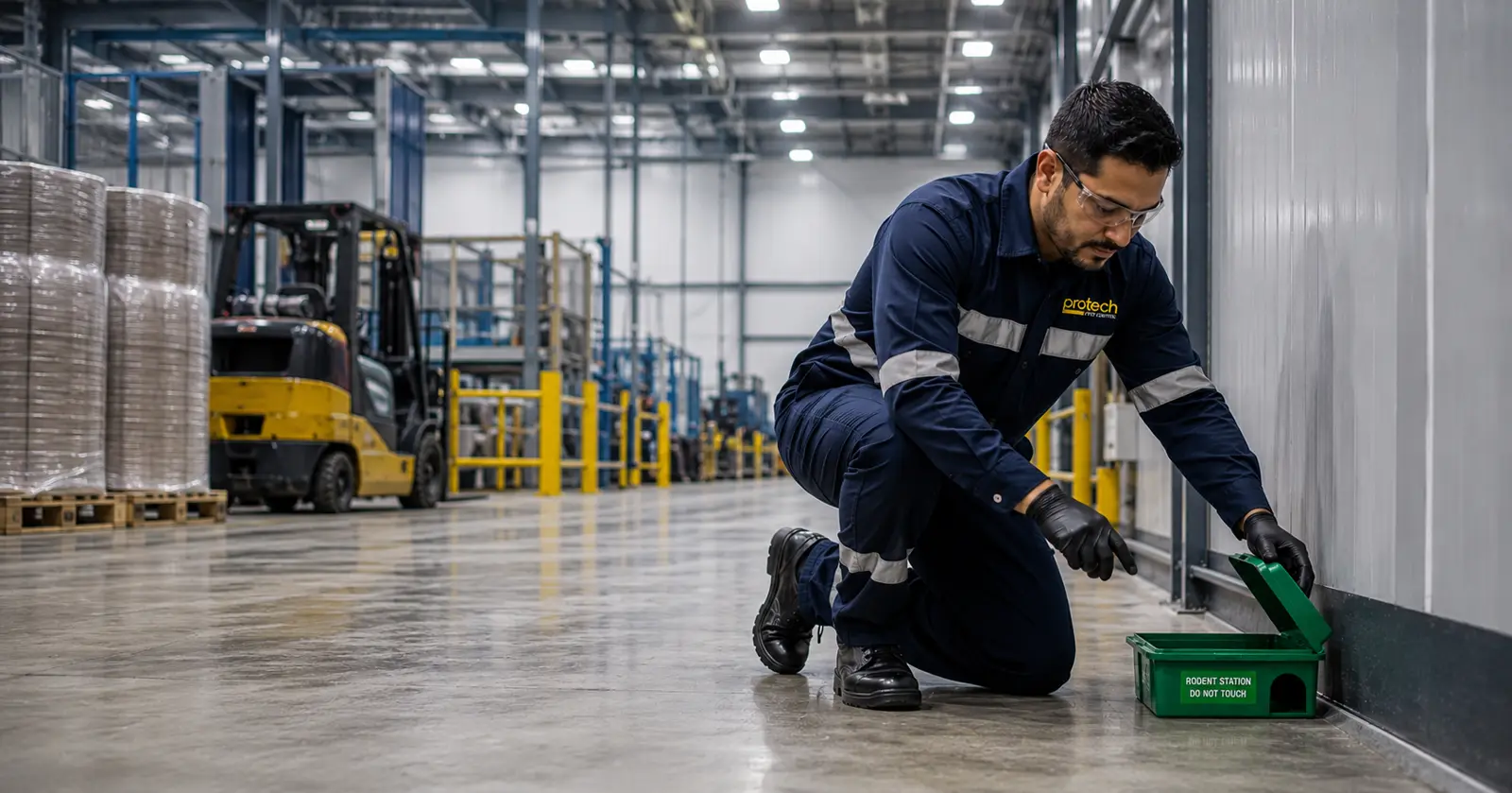
- Rat and mouse monitoring, secured baiting and physical proofing
- Bed bug inspection and treatment protocols for care settings
- Ant, spider and fly management across wings, courtyards and entries
- Bird management for roofs, ledges and outdoor dining areas
- Termite inspections where the buildings call for it
- Digital reporting and accreditation-ready documentation
Bed bugs in care settings need a careful, discreet response, because residents share laundries, mobility equipment moves between rooms, and visitors come and go daily. We inspect the affected room and its neighbours, map every harbourage, and treat each one with a targeted residual application, supported by vacuuming where the job calls for it — the full process is on our bed bug control page. Room access and any temporary resident moves are coordinated with your care staff, and where the infestation is a heavy one your technician may recommend a follow-up treatment.
Your facility kitchen is covered within the same program. It operates as a commercial kitchen with a food-safety obligation, so we service it with the food-safe methods and HACCP-ready documentation we apply across Melbourne’s hospitality kitchens, with products and placements that cannot contact food, surfaces or equipment.
Service frequency is set by the site and its risk profile. Aged-care programs are built around scheduled attendance across the whole building, with the kitchen, serveries and food storage attended on the frequency your food-safety obligations call for, and the schedule reviewed against the pest-activity trend log as the picture changes. The scope of the program, the frequency and the guarantee terms are set out in your service agreement, matched to how often we attend. The underlying treatments carry their own periods, published in full on our guarantee page.
Working Around Residents, Staff and Care Routines
A pest program in aged care succeeds or fails on its scheduling. Every visit has to be fitted into a building where care continues around the clock, so the timing of the work is agreed with your facility manager before a technician is ever booked in.
We plan attendance around the day the home actually runs:
- Kitchen and servery work timed between meal services, ahead of breakfast preparation or after the evening service is finished
- Resident wings attended while residents are at activities, therapy, appointments or in the dining room
- Laundries, bin rooms and loading areas serviced when those areas are quiet and staff are not moving through them
- Roof voids, subfloors, plant rooms and service corridors attended at any hour, because no resident is present in them
- Memory-support and high-care areas booked with the senior staff member on duty and escorted where the unit requires it
- Staff handover periods left clear, so a technician is never competing for the people who hold the keys and the room list
Access is the other half of it. Our technicians sign in through your normal contractor process, carry identification, and work to your infection-control requirements for hand hygiene, personal protective equipment, isolation-room exclusions and cleaning of equipment between areas. Each area is cleared with the staff member responsible for it before the technician leaves. Where a room is under precautions or a resident cannot be moved on the day, that is written on the service report and the room is booked for the next visit, so nothing is quietly skipped and the gap is visible in your records.
Nothing is applied in an occupied area without your staff knowing where the technician is working and what is being used. Safety data sheets for every product held or applied on site are supplied with your documentation, which gives a nurse, a facility manager or a family member asking the question an answer on the spot.
Accreditation Evidence Ready for Your Next Assessment
Aged-care providers have to show their environment is safe and well maintained, and pest management sits squarely inside that obligation. Every service visit generates a detailed digital report covering pest activity, treatments applied, site observations and corrective actions, and we keep your facility’s full service history on file. When an assessor, auditor or food-safety inspector asks how pests are managed, the answer is already documented, dated and signed off.
The evidence an assessor finds persuasive is continuous evidence. A single clean report proves one day at the site. A run of dated reports across the assessment period, showing what was found, what was done about it and whether activity is rising or falling, demonstrates a system that has been operating all along. That is what the documentation set is built to produce.
Your facility’s records include:
- A dated digital service report after every visit, covering pest activity, treatments applied, site observations and corrective actions
- Treatment records naming the product applied, the areas treated and the technician who attended
- Safety data sheets for every product held or applied on the site
- A site plan showing the location of every bait station and monitoring point across the buildings and grounds
- A pest-activity trend log across the life of the program, so a developing problem or a sustained improvement is visible over time
- Corrective-action recommendations covering proofing, hygiene and building defects, with the facility’s response recorded at the following visit
- The full service history for the site, kept on file and available whenever an assessor or an auditor asks for it
The set is structured to sit straight into an audit folder. Our digital reporting page shows what each document contains, and the kitchen side of the program follows the same HACCP pest control approach we use for Melbourne food premises. Providers running several homes under one agreement get consistent paperwork across the group, which is set out on our commercial pest control page. Facilities with a clinical wing or a co-located day service can be covered under the same program as our healthcare pest control clients.
When Activity Is Found in a Resident’s Room
Every facility manager wants a clear answer ready for this one, because it involves a resident, a family, and usually a staff member who found the problem and is anxious about how it will be received.
The response follows the same sequence each time. We inspect the room and the rooms either side of it, because activity in one room is seldom confined to it. We identify the pest and locate the source, which in a resident’s room is commonly food kept in a drawer or a bedside cabinet, a soiled item held in a wardrobe, a personal fridge that has not been cleaned out, or a gap at a skirting board or a service penetration. We treat the room with the method that pest calls for, coordinate any temporary resident move and the handling of belongings with your care staff, and extend the work to the shared laundry where the pest travels that way. The building issue behind it is written up as a corrective action so maintenance can close it.
For bed bugs specifically, we inspect the affected room and its neighbours, map every harbourage and treat each one with a targeted residual application, supported by vacuuming where the job calls for it. Room access and any temporary resident move are coordinated with your care staff. Where the inspection finds a heavy infestation, your technician may recommend a follow-up treatment.
The visit is documented like any other, and that report is what your staff use when they speak to the resident’s family. A dated record setting out what was found, what was done, when the room was cleared and what preventive work followed gives them a plain account to work from. Families are generally reassured by evidence that the facility acted on the day, and a documented response protects the home if the question is asked again months later.
To arrange a program for your facility or village, call Protech on 03 9449 4244 or request a free quote. We are HACCP, NPMA and AEPMA accredited, our technicians are licensed and insured, and we have serviced Melbourne premises since 2001. Attendance is available 24/7 including emergency callouts, with same-day service normally available.
Learn More About Pest Solutions
Same-day service, eco-friendly treatments and a pest-free guarantee. Domestic & commercial — all Melbourne suburbs.