

Redback Spiders in Melbourne
How to recognise the female, where she shelters around the home, the real bite risk, and how our licensed team clears a redback population.
Written by Muzi Tsolakis, Founder and Competency Assessor, Pest Management Victoria. Last reviewed 7 July 2026.
The redback is the one spider on our Melbourne call-outs that genuinely warrants caution, and it is also one of the most common. It has adapted comfortably to suburban life, sheltering in letterboxes, sheds and outdoor furniture across the city, which is exactly why people come across it so often. This guide covers how to identify the female, where she builds, what a bite actually does and the correct first aid for it, and the way our licensed technicians clear an established redback population and keep it from rebuilding. For the wider picture of Melbourne's spiders, our spiders guide sets the redback alongside the harmless species people often confuse it with.
How to identify a redback spider
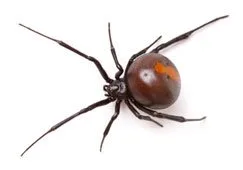
The female redback is the one everyone pictures, and she is the sex responsible for the bites of medical concern. She has a shiny black body about the size of a large pea, slender legs, and the marking that gives the species its name: a clear red to orange stripe running along the top of the abdomen, often with an hourglass or reddish patch underneath. The Australian Museum describes her as black, occasionally brownish, with that obvious longitudinal stripe on the upper abdomen.
Males are a fraction of the size, lighter brown, and are rarely involved in bites because their small fangs struggle to penetrate skin. Young redbacks look paler and more mottled, and they gain the classic colouring as they mature. The web is a good second clue: a messy, tangled structure of dry silk with strong catching threads running down to the ground, built in a sheltered dry corner where the female can sit hidden through the day.
Where redbacks shelter around Melbourne homes
Redbacks look for dry, undisturbed spots with a solid overhead surface to anchor a web, and suburban yards are full of them. The places we check first are inside and behind the letterbox, under outdoor tables and the rims of seldom-moved chairs, beneath pot plant saucers, in the corners of the garden shed and garage, around meter boxes and taps, and along the underside of decking, handrails and windowsills. Anywhere that stays dry and out of the wind will suit them.
The population can build quietly because a single female is prolific. The Australian Museum notes she can produce up to ten round egg sacs, each holding around 250 eggs, so a female tucked into the corner of a shed through a warm season leaves a considerable number of young behind. This is why an untreated redback spot tends to become a persistent one, with new spiders appearing in the same sheltered zones season after season.
The redback bite: venom, symptoms and first aid
Redback envenomation is the most common serious spider bite in Australia, so it deserves a clear and accurate account. The bite of the female causes pain at the site that tends to build over the following minutes to hours, sweating localised around the bite, and in more significant cases nausea, headache and a general feeling of being unwell. Better Health Channel notes that only the female redback bite is dangerous and that it may require antivenom. An effective antivenom has been in use for decades, and the Australian Museum records no deaths from redback bites since it became available.
For first aid, healthdirect advises washing the bite with soap and water and applying a cold pack for around fifteen minutes to ease the pain. A pressure immobilisation bandage should not be used for a redback bite, because the venom moves slowly and a tight bandage increases the pain. Keep the person calm, watch for spreading pain, sweating or nausea, and get them to a hospital emergency department if symptoms become severe or worsen. The Victorian Poisons Information Centre is available around the clock on 13 11 26 for advice on any bite.
Signs a redback population has established
The clearest sign is the web itself: a small, untidy tangle of strong, dry silk built low to the ground in a sheltered dry spot, with taut catching lines running down to a surface below. A close look into the retreat at the centre will often reveal the glossy female sitting upside down, most reliably after dark. Round, papery, cream-coloured egg sacs clustered in the web are the confirmation that the spider is breeding there and not simply passing through.
Finding several sacs, or spotting redbacks in more than one corner of the yard, means numbers have grown past a single wandering spider and the sheltered spots are filling up. Increased daytime sightings point the same way. At that stage a treatment is the sensible step, both to clear the current population and to deal with the sacs that would otherwise seed the next one.
Why household sprays fall short with redbacks
A can of surface spray will kill a redback you catch in the open, and there is a place for that. The difficulty comes with an established population, because two things work against a spray. The female sits in the middle of her web and only crosses treated surfaces when she chooses to, so residue applied to a nearby wall or the web itself may never reach her. And the egg sacs are essentially sealed against surface products, so a treatment that clears the visible adults leaves the next generation intact to hatch within weeks.
Reducing the harbourage helps and is worth doing. Clear stored timber, boxes and stacked pots away from the walls of the house and shed, keep outdoor furniture and pot saucers off the ground where you can, and check inside letterboxes and meter boxes from time to time. These measures lower the number of sheltered spots a redback can use, though on a property that already has sacs and multiple webs they support a professional treatment rather than replace it.
How Protech treats redbacks
Our treatment begins with a walk of the property to find where redbacks are sheltering: the letterbox, the shed and garage, outdoor furniture, decking, meter boxes and any stored material against the external walls. Identifying every active spot, and any egg sacs, tells us where the treatment has to concentrate. We then apply a residual product to those harbourage points and the surrounding zones, and we physically remove the webbing and egg sacs so the population cannot simply carry on from where it was.
Removing the webs helps for a second reason: it forces any surviving spiders to rebuild across the treated surfaces, which increases how much of the residual product they pick up. For sheds, subfloors and dense garden harbourage we treat those specific zones more thoroughly. A few simple habits then keep the property less inviting: storing firewood and boxes off the ground and away from walls, moving pot saucers and furniture occasionally, and clearing clutter from the shed. Our work covers spider control for homes and commercial premises right across Melbourne, and every spider treatment is backed by our pest-free guarantee.
If you are finding redback webs around the letterbox, under the outdoor furniture or in the shed, an inspection is the sensible next step before the numbers build. Call our Melbourne team on 03 9449 4244 or request a free quote, and we will arrange a visit, most often the same day.
Redback spider FAQs
How dangerous is a redback bite?
The redback is the spider Melbourne residents are right to treat with genuine care. A bite from the female causes intense and often worsening pain at the site, sweating around the bite, and sometimes nausea and feeling unwell. An effective antivenom has been available for decades, and the Australian Museum records no deaths from redback bites since it was introduced. Children, older people and anyone with a strong reaction should be seen by a doctor without delay.
What does a redback spider look like?
The female is the one people recognise: a shiny black body about the size of a large pea, slender legs, and a clear red or orange stripe running along the top of the abdomen. Some females also show reddish markings underneath. Males are much smaller, lighter brown, and are rarely involved in bites because their fangs struggle to break the skin.
What should I do if I am bitten by a redback?
Wash the bite with soap and water and apply a cold pack for around fifteen minutes to ease the pain. Do not apply a pressure immobilisation bandage, because redback venom moves slowly and a tight bandage makes the pain worse. Keep the person calm and watch for spreading pain, sweating or nausea. If the pain becomes severe or those symptoms appear, go to a hospital emergency department, and you can call the Victorian Poisons Information Centre on 13 11 26 for advice at any hour.
Where do redbacks hide around the home?
They favour dry, sheltered spots close to where people spend time. Common places we find them are inside and behind the letterbox, under outdoor furniture and seat rims, beneath pot plant saucers that are seldom moved, in the corners of the garden shed and garage, around meter boxes, and along the underside of decking and handrails. A torch check of these spots after dark, when the female sits out in her web, is the quickest way to confirm them.
Can I get rid of redbacks myself?
A single spider spotted in the open can be dealt with safely, but a shed or garden that is producing egg sacs is a different situation. The sacs are unaffected by household surface sprays, so a treatment that clears the adults you can see will be followed by a fresh generation within weeks. A professional treatment reaches the harbourage points and the sacs together, which is what clears a redback population properly.
Do you guarantee redback treatments?
Yes. Our spider treatments, redback work included, are backed by our pest-free guarantee. If redbacks return within the guarantee period we come back and re-treat at no additional charge, and the length of that cover is confirmed in writing with your quote.
Protecting Melbourne homes and businesses since 2001 — HACCP, AEPMA and NPMA accredited, rated 4.8★ from 411 Google reviews.



Learn More About Pest Solutions
Same-day service, eco-friendly treatments and a pest-free guarantee. Domestic & commercial — all Melbourne suburbs.