
Dampwood Termites
How to recognise the orange-headed dampwood termite, why its presence points to damp timber, and how it differs from the subterranean termites that threaten Melbourne homes.
Written by Muzi Tsolakis, Founder and Competency Assessor, Pest Management Victoria. Last reviewed 18 July 2026.
The dampwood termite, Porotermes adamsoni, is a large, orange-headed termite of forests and gardens that lives in damp, decaying wood. It turns up around Victorian homes far less often than the subterranean termite, and when it does, the wet, rotting timber it is feeding on is usually the real story. This guide explains how to recognise a dampwood termite, where it lives across Melbourne and the wider state, why finding one is often a sign of a moisture or ventilation problem, and how it differs from the subterranean termites that cause almost all structural termite damage in Victoria.
How to identify a dampwood termite
The dampwood termite is one of the larger termites you will come across in southern Australia, and its soldier is the easy one to recognise: it has a rounded orange to reddish-brown head with prominent black jaws, a colouring recorded in the Museums Victoria species entry for Porotermes adamsoni. The workers are pale and soft-bodied, as with all termites, and the colony as a whole is smaller than a mature subterranean nest.
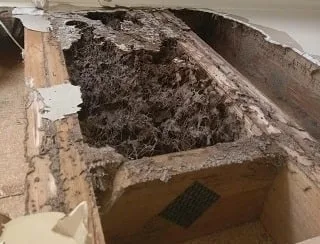
The other reliable clue is the wood itself. A dampwood termite is found in timber that is already wet and decaying, so an infested log, stump or sleeper tends to be soft, damp and crumbling rather than sound and dry. The galleries follow the softened grain and hold moisture, and there is no network of soil tubes running to the ground, because this species takes the water it needs from the rotting timber it lives in. A correct identification still comes down to a specialist looking at the soldiers and the workings together, since a damp, damaged timber can host more than one kind of pest.
Where dampwood termites live
Porotermes adamsoni is mainly a forest insect. Its nests sit in living eucalypts, fallen logs and decaying stumps, and its range covers south-western and eastern mainland Australia and Tasmania, which takes in Melbourne and the country around it. Across most of that range it does its quiet work in bushland and gardens, breaking down dead timber, and it counts as a pest of forest trees far more than a pest of houses.
Around a home the dampwood termite shows up where damp, decaying wood gives it a foothold: old garden sleepers, tree stumps left in the ground, buried offcuts and fence posts, and, less often, structural timber that has been kept wet by a leak or poor ventilation. The colonies that reach a building are usually small and localised to the wet timber, which is a different situation from a spreading subterranean attack on sound structural wood.
Finding one is usually a moisture message
The most useful thing to understand about a dampwood termite around a house is what its presence tells you. This termite needs timber that is already wet and rotting, so if it has moved into part of a building, there is almost always an underlying moisture problem feeding it: a persistent leak, a blocked subfloor with poor airflow, ground water sitting against the timber, or a section of framing that has stayed damp long enough to begin decaying.
Fixing the moisture is central to resolving a dampwood termite issue, and it also removes the conditions that invite the far more damaging subterranean termite and ordinary timber rot. A well-ventilated, dry subfloor is one of the best defences a Melbourne home has, which is why we treat ventilation and drainage as part of the picture; you can read how we improve airflow under a house on our subfloor ventilation page. Removing the decaying sleepers, stumps and offcuts that host the colony outdoors takes away the harbourage in the first place.
How dampwood termites differ from subterranean termites
The distinction decides how seriously a Melbourne homeowner needs to treat a find. A dampwood termite depends on timber that is wet and decaying and draws its moisture from the wood itself, so its damage is usually confined to the affected damp timber and the colony stays relatively small and local. It builds no mud tubes to the soil.
The subterranean termite, described in our subterranean termite guide, is the species that causes almost all structural termite damage in Victoria. It nests in the soil, keeps contact with soil moisture through mud tubes it builds up walls and piers, and from there it can attack sound, dry structural timber across a whole house. A dampwood find is a prompt to fix a moisture problem; any suspected subterranean activity is a prompt to act on the structure without delay.
Signs and prevention around the home
The signs of a dampwood termite are tied to wet wood: soft, crumbling, damp timber in a subfloor, deck, retaining sleeper or stump, sometimes with the large orange-headed soldiers visible when the wood is opened, and often a musty, damp smell in an enclosed subfloor. Because the colony sits in the damp timber rather than travelling far, the damage and the moisture source are usually found together.
Prevention is moisture control. Keep the subfloor dry and well ventilated so timber never stays wet, fix leaks and drainage promptly, and avoid trapping moisture against structural wood with garden beds, paving or render built up over the slab edge. Clear decaying timber away from the house: pull out old stumps, lift buried offcuts, and keep sleepers, firewood and fence timber from sitting damp against the building. These same habits, echoed across our other guides in the pest library, also deny the subterranean termite the damp, hidden pathways it prefers.
How Protech helps
Our part begins with a thorough timber-pest inspection that identifies exactly what is present and finds the moisture behind it. A typical inspection of a Melbourne home takes around one to two hours, during which the technician checks the roof void, subfloor, external perimeter and accessible internal timbers, using a moisture meter to pinpoint damp zones and microwave radar to detect activity hidden behind plaster and under floors without cutting. You receive a written report of what we find. Where the evidence points to a dampwood termite, we identify it, show you the moisture source that is feeding it, and set out what needs to change so the conditions do not simply return.
Because a dampwood termite is a moisture problem as much as a pest problem, the durable fix usually pairs removing or drying out the affected timber with improving subfloor ventilation and drainage. Where the inspection instead turns up the subterranean termites that are the real structural threat, we set out the treatment on our termite control page and inspect to the Australian termite-management standard AS 3660. General guidance on managing termites across the species is set out in the CSIRO Managing Termites resource, and our work follows AEPMA best practice. If you have found soft, damp, damaged timber or orange-headed termites around the home, a termite inspection settles what you are dealing with. Call our Melbourne team on 03 9449 4244 or request a free quote.
Dampwood Termites FAQs
How do I recognise a dampwood termite?
The soldier has a rounded orange to reddish-brown head with prominent black jaws, and the whole insect is larger than the common subterranean termite. The other giveaway is the wood: a dampwood termite lives in timber that is already wet and decaying, so an infested log, stump or sleeper is soft, damp and crumbling. There are no soil mud tubes, because the species takes its moisture from the rotting timber itself.
Are dampwood termites a threat to my Melbourne house?
Usually far less than subterranean termites. Porotermes adamsoni is mainly a forest and garden species that lives in decaying logs and stumps. It reaches buildings only where damp, rotting timber gives it a foothold, and the colonies that do are usually small and confined to the wet wood. The subterranean termite remains the species that causes almost all structural termite damage in Victoria.
Why do I have dampwood termites?
Because something is keeping timber wet. A dampwood termite needs decaying, moist wood to live, so its presence points to an underlying moisture problem — a leak, a poorly ventilated subfloor, ground water against the timber, or decaying garden sleepers and stumps. Resolving a dampwood issue means fixing that moisture source, not just treating the insects.
How are dampwood and subterranean termites different?
A dampwood termite depends on timber that is already wet and decaying, draws moisture from the wood itself, builds no soil tubes, and keeps its damage local to the damp timber. A subterranean termite nests in the soil, travels up mud tubes to stay in contact with soil moisture, and can attack sound, dry structural timber right across a house. That is why a subterranean find is the more urgent of the two.
How do I keep dampwood termites away?
Control moisture. Keep the subfloor dry and well ventilated, fix leaks and drainage promptly, and stop moisture being trapped against structural timber by garden beds or paving over the slab edge. Outdoors, remove decaying stumps, buried offcuts and damp sleepers sitting against the house. The same dry conditions also discourage subterranean termites and ordinary timber rot.
Should I still get a termite inspection?
Yes. An inspection confirms whether you have dampwood termites and a moisture problem, the far more damaging subterranean termite, or ordinary decay, and it finds the moisture source at the same time. A regular timber-pest inspection, annual at minimum for a Melbourne home, is the dependable way to catch any termite activity early. You can read more on our termite inspection page.
Protecting Melbourne homes and businesses since 2001 — HACCP, AEPMA and NPMA accredited, rated 4.8★ from 411 Google reviews.



Learn More About Pest Solutions
Same-day service, eco-friendly treatments and a pest-free guarantee. Domestic & commercial — all Melbourne suburbs.