
Drywood Termites
What a drywood termite is, the dry pellets they leave behind, and why the termite that actually threatens Melbourne homes is the subterranean kind.
Written by Muzi Tsolakis, Founder and Competency Assessor, Pest Management Victoria. Last reviewed 18 July 2026.
Drywood termites live their whole lives inside dry, sound timber without any contact with the soil, and that single habit shapes everything about them, from the tiny colonies they form to the hard, dry pellets they push out of the wood. The species most people have in mind is the West Indian drywood termite, Cryptotermes brevis, a serious introduced pest that is established in parts of Queensland and is notifiable there. This guide explains how to recognise a drywood termite, why it is a quarantine concern well to Melbourne's north rather than a common local problem, and how to tell drywood evidence from the subterranean termite activity that causes almost all termite damage in Victorian homes.
How to identify a drywood termite
A drywood termite gives itself away through what it leaves behind rather than through mud or soil. Because the colony lives sealed inside dry timber, the clearest sign is frass: hard, dry faecal pellets the termites eject from small kick-out holes in the wood. According to Business Queensland, these pellets collect on windowsills, on bedclothes and on the floor beneath infested timber, and the galleries themselves stay clean and dry, with none of the muddy, caked lining that marks subterranean termite workings.
The colonies are small and slow to grow, often only a few thousand insects, and they can sit inside a piece of furniture or a structural timber for a long time with no outward sign beyond the occasional trickle of pellets. Soldiers of Cryptotermes have a distinctive short, plug-shaped head they use to block the gallery entrances, one of the features a specialist uses to confirm the species. Because the pellets can look like ordinary debris or ant leavings to an untrained eye, a positive identification is work for a licensed technician rather than a homeowner guess.
Where drywood termites are found in Australia
The West Indian drywood termite is an introduced species, and its established range in Australia sits well to Melbourne's north. Business Queensland records established populations in Maryborough and across many Brisbane suburbs, along with Bundaberg, Townsville and Rockhampton. It is treated as a biosecurity threat: anyone who suspects the West Indian drywood termite is asked to collect a sample and report it to Biosecurity Queensland within 24 hours.
For a Melbourne household the practical picture is reassuring. The termite that threatens Victorian homes is the subterranean termite, which you can read about in our subterranean termite guide; drywood termites are a northern quarantine concern that moves mainly through infested timber and second-hand furniture rather than something that colonises Melbourne houses from the local environment. The reason to know them at all is so an unusual find in imported furniture or timber is recognised for what it is and reported to the right authority.
Telling drywood evidence from subterranean termites
The two leave very different traces, and knowing which you are looking at points to the right response. Drywood termites produce dry, gritty pellets and keep clean, dry galleries inside the timber, with small kick-out holes but no connection to the ground. Subterranean termites, the ones that matter in Melbourne, build mud tubes up walls and piers and pack their galleries with a damp, muddy lining, because they must stay in contact with soil moisture to live.
A trickle of hard pellets on a windowsill points one way; a pencil-thick mud lead running up a subfloor pier or a skirting board points the other. Either find is worth acting on, and both call for a professional inspection to confirm the species and map the extent before anything is treated. Disturbing the timber before a technician has seen it can scatter the evidence that makes the identification certain.
The risk drywood termites carry
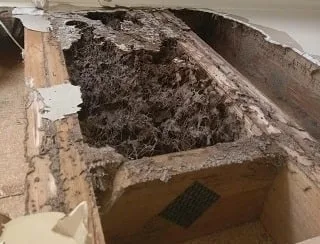
Where the West Indian drywood termite does establish, the damage is serious precisely because it needs no soil and no external moisture. A colony can work through furniture, flooring, framing, skirtings and joinery entirely from within, and infested items can carry the termites to a new building when they are moved. That capacity to travel in timber and furniture is the reason the species is quarantined and notifiable in the states where it occurs.
In Victoria the everyday timber-pest risk to a home remains the subterranean termite, and a Melbourne homeowner's attention and inspection budget are far better spent there. Drywood termites earn a place in this library so the rare, out-of-place find is recognised and handled correctly rather than mistaken for something harmless.
What to do if you think you have found a drywood termite
If you find dry pellets or suspect a drywood termite in furniture or timber, avoid disturbing or discarding the item, since an intact sample is what allows a definite identification. In the states where the West Indian drywood termite is established it is a notifiable pest, so a suspected find should be reported to the relevant biosecurity authority; in Queensland that is Biosecurity Queensland, within 24 hours of finding it, as Business Queensland sets out.
For a Melbourne property, the sensible step is a professional termite inspection. It confirms whether what you have found is a drywood termite, the far more likely subterranean termite, or a harmless look-alike, and it settles the question before any money is spent on treatment. You can read how we approach that inspection on our termite inspection page.
Why professional identification matters here
Termite control follows species identification, so getting the identification right is the whole game. A drywood find and a subterranean find call for completely different responses, and a native timber pest or ordinary wood decay can be mistaken for either. Reliable identification takes a correct read of the frass, the gallery structure and the insects themselves, together with the equipment to find hidden activity behind plaster and under floors, which is the work of a licensed technician following AEPMA best practice. Guidance on managing termites generally, across the species, is set out in the CSIRO Managing Termites resource.
How Protech helps
Our part is a thorough timber-pest inspection that identifies exactly what is present. A typical inspection of a Melbourne home takes around one to two hours, during which the technician checks the roof void, subfloor, external perimeter and accessible internal timbers, using a moisture meter and microwave radar to detect activity hidden behind plaster and under floors without cutting into the structure. You receive a written report of what we find. Where the evidence points to a drywood termite, we identify it, advise on the correct reporting or handling for that species, and are straight with you that a genuine drywood termite is an uncommon find this far south.
Where the inspection finds the subterranean termites that are the real Melbourne threat, we set out the treatment options on our termite control page and inspect to the Australian termite-management standard AS 3660. If you have found dry pellets, hollow-sounding timber or any sign you cannot explain, an inspection settles what you are dealing with before it goes any further. Call our Melbourne team on 03 9449 4244 or request a free quote, and you can read our other species guides in the pest library.
Drywood Termites FAQs
Are drywood termites a problem in Melbourne?
Rarely. The West Indian drywood termite is an introduced pest whose established range in Australia is in Queensland — Maryborough, Brisbane, Bundaberg, Townsville and Rockhampton. The termite that threatens Melbourne homes is the subterranean termite. Drywood termites are worth knowing about mainly so an unusual find in imported timber or second-hand furniture is recognised and reported correctly.
How do I tell drywood termites from subterranean termites?
Drywood termites leave hard, dry frass pellets and keep clean, dry galleries inside the timber, with no connection to the soil. Subterranean termites build mud tubes up walls and piers and line their galleries with damp mud, because they need soil moisture to survive. A trickle of dry pellets on a windowsill points to drywood; a mud lead up a subfloor pier points to subterranean. An inspection confirms which one you have.
What does drywood termite frass look like?
It is a collection of small, hard, dry faecal pellets that the termites push out of tiny holes in infested timber. The pellets often gather on windowsills, floors or bedclothes beneath the wood. They can look like ordinary grit or debris to the untrained eye, which is one reason a professional identification is worth getting before assuming what they are.
Do I need to report drywood termites?
In the states where the West Indian drywood termite is established it is a notifiable pest. In Queensland, a suspected find should be reported to Biosecurity Queensland within 24 hours, and you should keep an intact sample. For a Melbourne property, the first step is a professional inspection to confirm what you have actually found before anything else is done.
Can drywood termites travel in furniture?
Yes, and it is one of the main ways they move. Because the colony lives sealed inside dry timber with no need for soil or outside moisture, an infested piece of furniture, flooring or framing can carry the termites to a new building when it is moved. That ability to travel in timber is the reason the species is quarantined and notifiable where it occurs.
Should I still get a termite inspection in Melbourne if drywood termites are rare here?
Yes, because the local threat is the subterranean termite, which causes almost all termite damage in Victoria and works unseen. A regular timber-pest inspection, annual at minimum for a Melbourne home, is the dependable defence. The inspection also settles any drywood question at the same time. You can read more on our termite inspection page.
Protecting Melbourne homes and businesses since 2001 — HACCP, AEPMA and NPMA accredited, rated 4.8★ from 411 Google reviews.


Learn More About Pest Solutions
Same-day service, eco-friendly treatments and a pest-free guarantee. Domestic & commercial — all Melbourne suburbs.