
Strata & Body Corporate Pest Control
One provider for the whole building — scheduled common-property pest management for Melbourne owners corporations, strata managers and unit complexes, backed by our pest-free guarantee.
Strata & Body Corporate Pest Control Melbourne
Building-wide pest management for owners corporations and strata managers
Pests treat an apartment building as one connected habitat. Cockroaches breed in the bin room and turn up in a third-floor kitchen, rats and mice travel the risers and shared roof voids, and each affected owner books their own callout while the source in the common property carries on untouched. Protech Pest Control gives Melbourne owners corporations, body corporates and strata managers a single, scheduled program that covers the whole building.
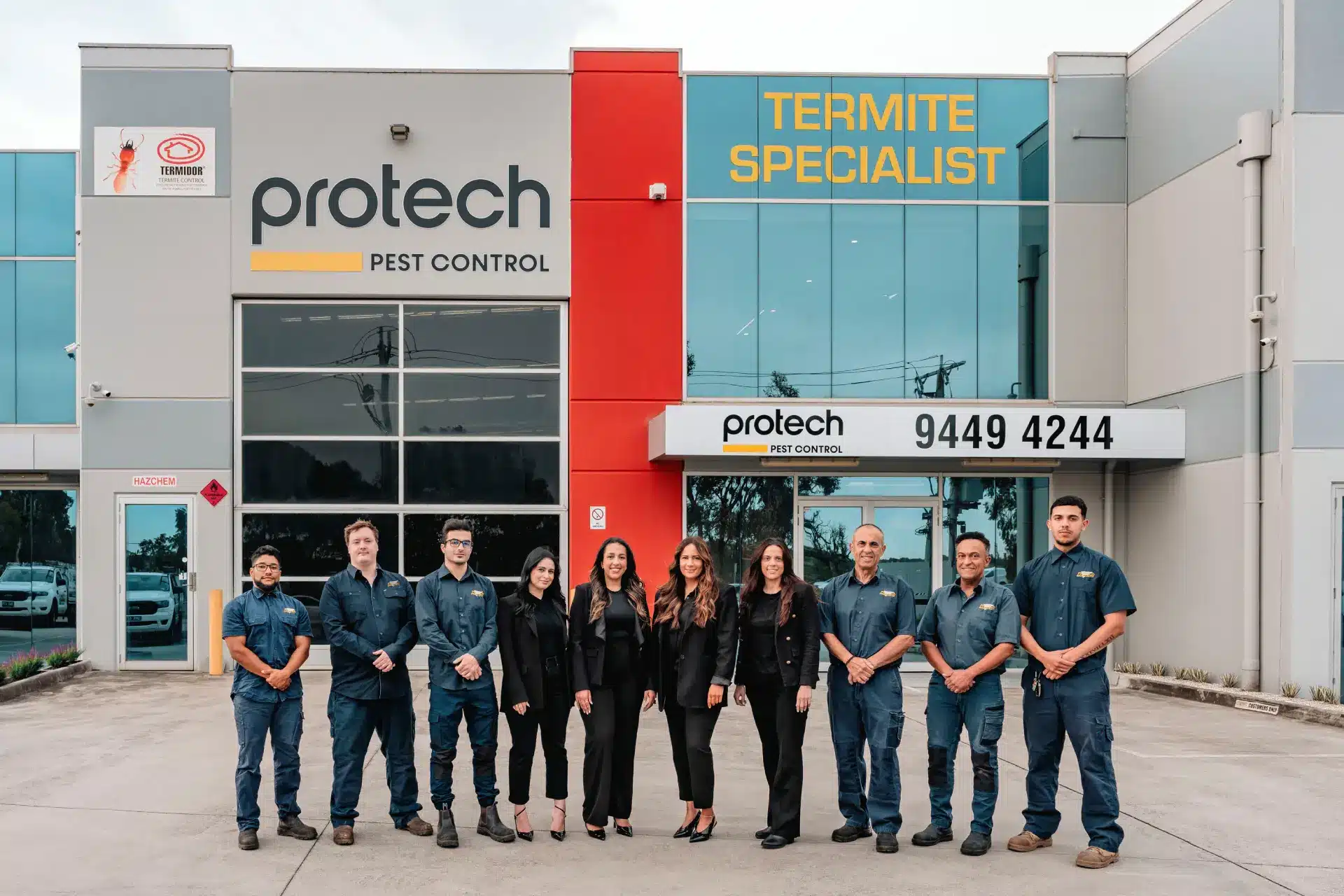
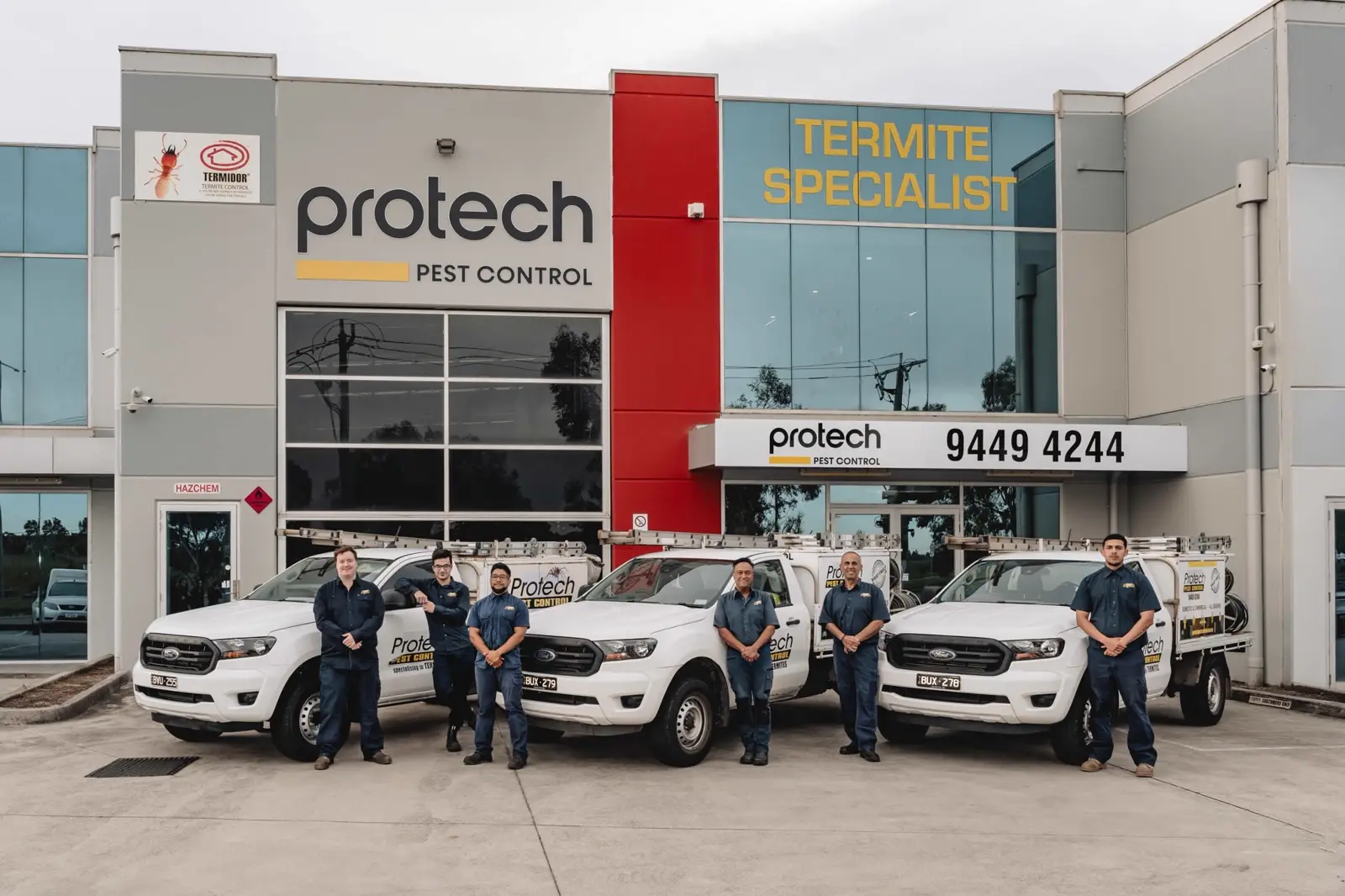
With over 40 years of combined industry experience and a company history going back to 2001, we service unit complexes and apartment buildings across Melbourne as part of our commercial pest control work, from small walk-up blocks to large managed towers.
To arrange a program or a quote for your building, call Protech on 03 9449 4244.
Why apartment buildings attract pests
A residential building concentrates everything pests look for. Bin rooms and garbage chutes supply food around the clock, basements and carparks offer warm, undisturbed shelter, gardens and planters bring harbourage right up to the entries, and the shared voids that carry the building’s services double as highways between lots. Once a population establishes in the common property, every unit above it is exposed.
Left without a managed program, pest activity in a strata building can lead to:
- Complaints from owners and tenants to the committee and the managing agent
- Cockroach and rodent pressure spreading from lot to lot through shared cavities
- Contamination of bin rooms, common laundries and shared areas
- Damage to wiring, insulation and stored property in basements and roof voids
- A stream of uncoordinated per-unit callouts that never reach the source
- Tenant turnover and pressure on the building’s reputation and rental returns
A scheduled building-wide program deals with the source in the common property, which is where almost every recurring apartment pest problem begins.
Pests We Manage in Strata Buildings
Our technicians regularly manage and prevent cockroaches, rats and mice, ants, spiders, wasps and bees, birds and the occasional termite issue — the pests that most often move through the bin rooms, basements, gardens and shared voids of Melbourne apartment buildings and unit complexes.
Cockroaches
Cockroaches are the pest that generates the most committee correspondence in a multi-unit building. German cockroaches establish in warm, damp cavities, which in an apartment block means bin rooms, chute hoppers, laundry areas, dishwasher and fridge voids inside lots, and the wall cavities carrying hot water and waste lines between units. They travel the risers and the pipe penetrations, so a population that starts in one kitchen reaches the neighbouring stack without ever crossing a corridor.
Treating one affected lot while the shared cavities and the bin room carry activity is the pattern that produces a building complaining about cockroaches for years. A building-wide program treats the harbourages in the common property, coordinates the affected lots into the same visit and proofs the penetrations that connect them. Our cockroach control page covers the species and the methods.
Rats and mice
Rodents in an apartment building come from the bin room, the basement, the surrounding gardens and the drainage system, and they move vertically through service risers, ducts and wall cavities with very little to stop them. Roof rats work the upper levels and the roof void; mice colonise storage cages, plant rooms and the cavities behind kitchen joinery. The damage runs to gnawed wiring, damaged insulation, contaminated stored property and, in older buildings, gnawing at plastic waste and water lines.
Rodent work is done with secured, tamper-resistant bait stations placed away from children, pets and common thoroughfares, along with monitoring at the entry points and physical proofing of the gaps found. See our rat and mouse control page for the detail.
Ants
Ants nest in garden beds, planters, paving joints, retaining walls and the expansion joints of a concrete slab, then trail into ground-floor lots, common laundries and bin areas. Coastal and inner-Melbourne buildings also get black house ants working their way up external walls into balconies and upper-level kitchens. Treatment identifies the species, baits the nest through it and treats the perimeter and the landscaped areas where the colonies sit.
Spiders, wasps and bees
Shared entries, stairwells, carpark ceilings, letterbox banks, balconies and garden walls collect webbing through the warmer months, and they are the parts of a building every resident sees daily. Wasp nests turn up under eaves, in wall cavities, in meter cupboards and behind downpipes, and a bee swarm settling in a common area is a genuine safety issue in a building with children. Both are treated as located jobs on the common property, scheduled so the area is clear.
Birds
Pigeons and other birds roost on parapets, ledges, plant decks, carpark entries and balcony recesses, fouling walkways and balconies, blocking gutters and box drains, and bringing bird mites into the building through nesting material. The work is proofing and exclusion: netting, spikes and wire systems installed to keep birds off the structure. Bird proofing and netting carries workmanship cover for six years and product cover for up to ten, subject to annual inspections.
Termites
Termites are less common in a concrete-framed tower and a real risk in a walk-up block, a townhouse development or an older brick-and-timber complex with garden beds and retaining walls against the structure. Where the building calls for it, a termite inspection is included in the program, and any findings go into the report so the owners corporation can plan the work.
We look where pests actually hide
In a multi-unit building, pest activity establishes in the common property long before an owner sees anything inside a lot. Our technicians inspect the shared spaces where the population actually lives and breeds.
High-risk common areas we assess include:
- Bin rooms, garbage chutes and waste collection areas
- Basement carparks and storage cages
- Service risers, ducts and meter cupboards
- Shared roof voids and subfloor spaces
- Common laundries and utility rooms
- Gardens, planters and landscaped borders
- Lift wells and plant rooms
- Fire stairs, corridors and shared entries
- Building perimeters, drainage and entry points
Finding activity in these areas early keeps it out of the units and off the committee’s agenda.

Common Property, Lots and Where Responsibility Sits
Almost every strata pest conversation reaches the same question early: who arranges the treatment and who pays for it. It is worth setting out the general arrangement, because a committee that understands it can make a decision quickly and stop a problem while it is still small.
What common property usually covers
Common property is the part of the building shared by all owners. In a typical Melbourne apartment building that means the bin room and garbage chute, the basement carpark and storage cages, lobbies, corridors, fire stairs and lift wells, the common laundry, plant and meter rooms, service risers and ducts, shared roof and subfloor spaces, the gardens and landscaped areas, the building perimeter, and the external structure including roofs, gutters, ledges and balcony recesses in many schemes. Those are precisely the areas where a pest population establishes, which is why the owners corporation program is written around them.
The general arrangement between the parties
Broadly, the owners corporation is responsible for maintaining the common property, the lot owner is responsible for their own lot, and a tenant’s obligations sit in their rental agreement with the rental provider. On that basis a rodent population in the bin room is usually an owners corporation matter, and a one-off treatment inside a single apartment is usually the owner’s or the tenant’s.
The scheme’s own rules and the owners corporation decide how any particular case is handled. Buildings differ, their rules differ, and a problem that starts in the common property and spreads into lots does not divide neatly. We are pest managers, so we work to whatever instruction the owners corporation or the manager gives us, and where a responsibility question is disputed the committee should take its own advice.
How we keep the decision on evidence
What we can do is remove the guesswork. Our report sets out plainly where activity was found, how widespread it is, whether the pattern indicates a source in the common property or a problem confined to one lot, and what building maintenance is contributing. A committee deciding whether to fund a building-wide treatment is then working from an inspection record, and an owner told their lot is part of a wider problem can see why.
Rented lots inside a strata building
A large share of apartments are tenanted, which adds the managing agent to the conversation. We work alongside property managers routinely, and where a rented lot needs attention it can be coordinated into the building visit. Our pest control for real estate and property managers covers per-property servicing across a rent roll, and end of lease pest control covers the treatment an outgoing tenant is commonly required to arrange.
How Pests Move Between Units, and Why Treating One Lot Fails
The single most useful thing to understand about pest control in a strata building is that the walls between apartments are far less solid than they look. A building is threaded with continuous cavities, and pests use every one of them.
Wall cavities and party walls
Cavities run vertically and horizontally through a building, and they connect at floor and ceiling junctions. Cockroaches and mice use them as a road network, moving between lots without ever entering a corridor. A treatment applied inside one apartment stops at the plasterboard, and the population sitting in the cavity beyond it is untouched.
Service risers and ducts
Risers carrying water, waste, gas, electrical and communications services usually run the full height of a building, with an access door on every level. They are warm, undisturbed and rarely inspected, which makes them ideal harbourage and an easy vertical route from a basement to a top floor.
Shared plumbing and drainage
Waste stacks connect every kitchen and bathroom in a line of apartments. Cockroaches move along the pipe runs and through the gaps where a pipe passes through a slab or a wall, and a dry floor waste or a failed trap gives them direct access into a lot. Rodents follow damaged sewer and stormwater lines in older buildings and come up through the same penetrations.
Bin rooms and garbage chutes
A chute is a continuous open shaft from every floor down to a single hopper, and it holds food residue on its walls the whole way. It feeds a population in the bin room and delivers pests to a chute door on every level. Bin rooms are the highest-value target in most buildings, because the food supply that sustains the whole population is concentrated there.
Roof voids and subfloors
In walk-up blocks and townhouse developments the roof space and the subfloor commonly run continuously above and below several units with no barrier between them. Rodents and possums use them freely, and a noise complaint from one apartment usually points to a population ranging across the whole roof.
Balconies, carparks and external walls
Externally, balconies, planter boxes, downpipes, cable trays and vegetation against the wall give ants, spiders and rodents a path up the outside of a building, past the ground-floor defences entirely.
Every one of these routes explains the same outcome: an owner pays for a treatment, the lot is clear for a fortnight, and the problem returns. A building-wide program treats the harbourages, proofs the penetrations we can seal and monitors the routes we cannot, which is what stops the cycle.
Pest Management Built Around Your Building
Every building runs differently. We build each program around your common property, your waste arrangements, your access requirements and the pest pressure your building actually carries, and we quote it per building with the scope itemised so the owners corporation can see exactly what is covered.
Our pest management services for strata and body corporate properties include:
- Scheduled preventative servicing of all common property
- Integrated Pest Management (IPM) programs across the building
- Cockroach management for bin rooms, chutes and shared voids
- Rat and mouse monitoring, secured baiting and physical proofing
- Ant, spider and wasp management for gardens, entries and perimeters
- Bird management for roofs, ledges and carpark entries
- Termite inspections where the building calls for it
- Per-lot treatments coordinated into the same visit, including end of lease pest control for outgoing tenants
- Digital reporting and committee-ready documentation
All work in occupied buildings favours secured baiting, monitoring and proofing, with bait stations locked and placed away from children, pets and common thoroughfares. Visits are arranged through your manager with proper notice to residents, and most common-property servicing needs no entry to any private lot.
Quarterly and Scheduled Programs Across a Building
A strata program works because it is on a calendar. The committee knows the building is covered, the manager has a service date to point to when an owner asks, and our technicians build a picture of the building over successive visits that no single callout can produce.
Setting the cycle
Quarterly servicing suits most Melbourne buildings, and it is the interval the majority of owners corporations settle on. A building with a garbage chute, a food tenancy at ground level, an older drainage system, dense landscaping against the walls or a history of rodent pressure is commonly serviced more often. Some buildings run a tighter cycle through the warmer months and drop back over winter, which follows the ant, spider, wasp and cockroach seasons.
What a scheduled visit covers
A common-property visit works through the bin room and chute hopper, the basement and storage areas, plant and meter rooms, laundries, service riser access points, lobbies and stairwells, the gardens and perimeter, and the roof void where there is safe access. Bait stations and monitors are checked, recorded and replenished, treatments are applied where activity calls for it, proofing gaps are noted or sealed, and building maintenance items that are driving pest pressure go into the report as corrective actions.
Trend data across visits
Each visit records what was found at each monitoring point, so after a few services the building has a trend record. A rising count at the bin room monitors tells the manager something changed in the waste arrangements. A station that has been quiet for a year says the perimeter is holding. That record turns a pest budget line into something a committee can actually evaluate.
Between scheduled visits
Reactive attendance between services is part of the arrangement. We run 24/7 availability including emergency callouts, and same-day service is normally available, which is what a manager needs when a resident reports a rodent in a corridor or a wasp nest appears beside a play area. Every callout is documented in the same reporting system as a scheduled visit, so the building record stays complete.
Access to Occupied Lots, Notice and Working Around Residents
The part of a strata program that most often goes wrong is access, so we settle the arrangements with your manager before the first visit and follow them every time.
Common property needs no entry to a lot
It is worth stating plainly, because it removes most of the difficulty: the majority of a strata program is carried out in shared areas and needs no entry to any private apartment. A quarterly common-property service can normally be completed with a key or fob for the bin room, the basement and the plant areas, and residents are affected only by a notice on the board.
When a lot does need attention
Where a treatment inside a lot is part of the job, entry is arranged through the manager and the occupant, with notice given in the way your building requires. We book time windows so a resident is not waiting all day, and we work to whatever notice period the scheme’s rules and the relevant tenancy arrangements set. A resident who prefers to be present is accommodated wherever the schedule allows it.
Preparation and safety in occupied buildings
Where preparation is needed inside a lot, we set it out in writing beforehand so the occupant knows exactly what to do and how long to stay out after a treatment. In shared areas, bait stations are locked, tamper-resistant and placed away from children, pets and thoroughfares, and their locations are recorded on the site plan. Every technician is licensed, insured and carries identification, and products are APVMA-registered and applied at label rates.
Communication with residents
We give the manager the notice text, the dates and the areas affected in advance so it can go on the noticeboard or into the building app before the visit. Residents told what is happening and when raise fewer complaints, and a building that sees the program running is far more likely to report early activity to the manager, which is exactly what a preventative program relies on.
Documentation the Committee Can Table
Owners corporations answer to their owners, and a pest program only helps the committee if it can be shown to be working. Every service visit generates a detailed digital report covering pest activity, treatments applied, site observations and recommended corrective actions, from sealing entry gaps to changes in waste handling. We keep the building’s full service history on file, ready for committee meetings, AGMs and maintenance planning.
The record a building receives covers:
- A service report for every visit, recording the areas inspected, the activity found and the treatments applied
- Treatment records naming the products used, the rates and the areas treated
- Safety data sheets for every product held or applied on site
- A site plan showing the location of every bait station and monitoring device across the common property
- A pest-activity trend log across visits, so a rising or falling count is visible over time
- Corrective action recommendations covering the building maintenance and waste-handling items contributing to pest pressure
The reports are written to be tabled. A strata manager can attach the current report to a committee agenda, answer an owner’s question with the inspection record, and take the corrective actions into the maintenance plan and the budget for the year. Our digital reporting page shows how the records are delivered and stored.
If you manage individual rental properties as well as buildings, our pest control for real estate and property managers covers per-property servicing across a rent roll.
Common-Property Pressure Points and What Fixes Them
Across the Melbourne buildings we service, the same handful of areas generate most of the activity. Each one has building maintenance behind it, and each one appears regularly in our corrective action recommendations.
Bin rooms and garbage chutes
This is the highest-value area in almost every building. Overflowing bins between collections, a chute hopper that is never cleaned, food residue on the floor and a door that is propped open feed the entire building population. The fixes are practical: a collection frequency that matches the building, periodic hard cleaning of the hopper and the room, a self-closing door with an intact seal, and hard rubbish removed promptly so it never accumulates beside the bins.
Basement carparks and storage cages
Basements are warm, dark and quiet, and storage cages are full of cardboard, fabric and stored food that nobody looks at for years. Rodents nest in them, and residents storing food or pet food in a cage keep them there. Cage housekeeping rules, monitoring through the basement and proofing at the vehicle entry and the lift lobby doors handle most of it.
Gardens, planters and landscaping
Dense planting hard against a wall, heavy mulch, ivy on the facade, irrigation running against the building and overhanging branches touching the roof all give pests harbourage and a path in. Trimming vegetation clear of the structure and keeping mulch back from the wall line does more for ant and rodent pressure than any treatment applied over the top of it.
Roof voids, gutters and ledges
Blocked gutters and box drains hold water and organic matter, which draws birds and insects and eventually causes water ingress into a roof void that then becomes rodent harbourage. Bird fouling on parapets and plant decks is the usual first sign. Gutter clearing on a schedule, and proofing or netting where birds are roosting, deal with the cause.
Pool areas, gyms and shared amenities
Pool surrounds, gym rooms, shared kitchens in a resident lounge and rooftop terraces all combine water, food residue and furniture nobody moves. They collect spiders and ants, and a resident lounge with a kitchenette carries the same cockroach risk as any small kitchen. They go on the service run like any other common area.
Building fabric and penetrations
Gaps under doors, failed door seals, unsealed service penetrations, damaged air-conditioning ducts, broken vent covers, cracked render and gaps around meter boxes are the entry points we look for on every visit. Sealing them is slow, unglamorous work, and it is what separates a building that keeps having callouts from one that stops.
Working With Strata Managers Across a Portfolio
A strata manager carrying dozens of buildings has a different problem from a single committee. The buildings vary, the committees vary, the budgets vary, and every owner enquiry has to be answered from whatever record exists. We work with Melbourne strata and facilities managers on that basis.
One contact across every building
Portfolio work can run through a single point of contact, so a manager arranging a program at one building, chasing a report at a second and booking a reactive callout at a third makes one call. Scheduling across the portfolio is coordinated, and buildings in the same area are grouped where it suits the run.
Consistent scope and reporting
Every building is quoted on its own layout and pest pressure, and the scope is itemised the same way each time, so a committee can see what it is buying and a manager can compare one building against another. Reports arrive in a consistent format, which makes an owner enquiry a matter of opening the current report for that building.
Budgeting and the maintenance plan
A scheduled program gives a committee a known annual figure to put in the budget, and the corrective action recommendations feed straight into the maintenance plan. A recurring recommendation across several reports, such as gutter clearing or a failed bin room door seal, gives a manager the evidence to have a capital works conversation with the committee.
Taking over an existing program
Buildings frequently come to us mid-contract or after a poor run with another provider. We inspect the building, review the monitoring equipment already installed and the documentation held, identify anything the previous program left uncovered, and set up the schedule so there is no gap in servicing or in the record. Where equipment is serviceable, we work with what is there.
Buildings with facilities management
Larger complexes with an on-site building manager or an appointed facilities contractor are coordinated through them, alongside the cleaning, waste and maintenance contractors already working the site. Our facilities management pest control page covers how a program sits inside a wider facilities arrangement.
Strata & Body Corporate Pest Control FAQs
Do you treat individual apartments as well as the common property?
Yes. The owners corporation program covers the common property — bin rooms, basements, carparks, gardens, shared roof voids and building perimeters — and individual lots can be added to the same visit. Treating an affected unit and the surrounding common areas together is the most effective way to clear a problem that has spread through the building.
How do you coordinate access across a multi-unit building?
We arrange everything through your strata or facility manager. Visits are scheduled in advance, residents receive proper notice where their lot or a shared area is involved, and our technicians carry identification and work to the access arrangements the building sets. Most common-property servicing needs no entry to any private lot at all.
What documentation does the committee receive?
Every service visit generates a detailed digital report covering pest activity, treatments applied, site observations and recommended corrective actions, such as sealing gaps or changes to waste handling. We keep the building's full service history on file, so the strata manager has records ready for committee meetings, AGMs and maintenance planning.
Why do cockroach and rodent problems keep returning in apartment buildings?
Cockroaches and rats and mice move freely between units through service risers, wall cavities, garbage chutes and shared subfloor and roof spaces. A treatment confined to one lot clears that lot while the wider building population carries on, and the problem reappears within weeks. A building-wide program treats the harbourages in the common property, which is where the population actually lives.
How often should a strata building be serviced?
Most Melbourne buildings run a quarterly common-property program, which suits a building with enclosed bin storage, a basement carpark and landscaped grounds. Buildings with a garbage chute, a food tenancy at ground level, an older sewer and drainage system or a history of rodent pressure are commonly serviced more often, and some run monthly through the warmer months and quarterly through winter. We assess the building, recommend a cycle and review it once the trend data shows what the site actually does between visits.
Who is responsible for pest control in a strata building, the owners corporation or the lot owner?
As a general arrangement, the owners corporation looks after the common property and the lot owner looks after their own lot, while a tenant's obligations sit in their rental agreement. Where the line falls in a particular case depends on your scheme's own rules and on what the owners corporation decides, and a committee dealing with a disputed responsibility question should take its own advice. We are pest managers, so we work to whatever instruction the owners corporation or the manager gives us, and we set out plainly in the report where activity was found so the decision can be made on evidence.
Can you service a portfolio of buildings under one arrangement?
Yes. Strata managers and facilities managers commonly place several buildings with us under a single arrangement, with one point of contact, a consistent scope and service standard across every site, and reporting delivered in the same format for each building. That makes it straightforward to compare buildings, plan budgets across a portfolio and answer a committee question without chasing separate contractors.
One Program for the Whole Building
Talk to Protech Pest Control about a scheduled common-property program for your Melbourne strata building, unit complex or portfolio. Call 03 9449 4244 or request a free quote — coordinated access, committee-ready reporting and 24/7 attendance between visits, from a licensed and accredited team trusted since 2001.
Learn More About Pest Solutions
Same-day service, eco-friendly treatments and a pest-free guarantee. Domestic & commercial — all Melbourne suburbs.