
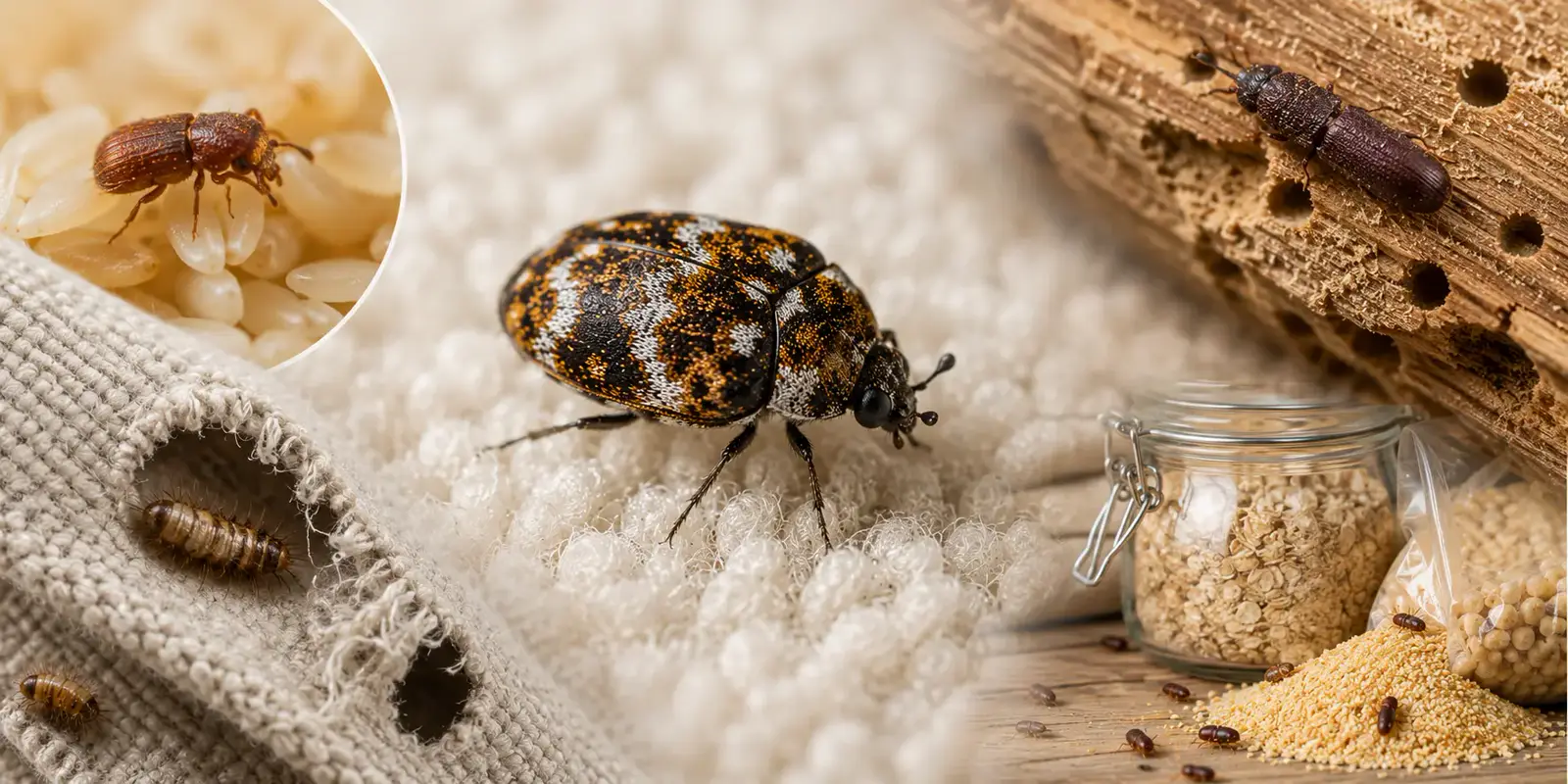
Weevils in Melbourne
How to identify rice, granary and maize weevils, why the damage happens inside the grain where you cannot see it, and how our licensed team clears an infestation.
Written by Muzi Tsolakis, Founder and Competency Assessor, Pest Management Victoria. Last reviewed 3 August 2026.
Weevils are the small, long-snouted beetles that turn up in a bag of rice, a packet of flour or a container of pasta, usually in numbers that seem to have appeared from nowhere. The reason they seem to appear from nowhere is genuinely interesting: the species found in Australian pantries spend their entire immature life sealed inside an individual grain, invisible from the outside, and the first any household knows about it is when the adults chew their way out and begin walking across the shelf. By that point the packet has often been on the shelf for months. Weevils are also strong wanderers once they emerge, which is why they are so often found well away from the kitchen, along skirting boards and window sills in other rooms of the house. This guide covers what separates a weevil from every other small beetle, the three stored-product species we see in Melbourne, the lifecycle that makes them so hard to detect early, and what actually clears an infestation.
What makes a beetle a weevil
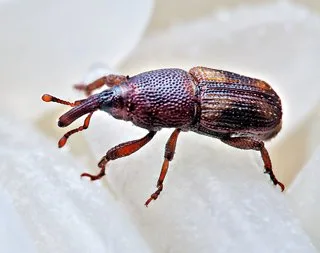
Weevils belong to the family Curculionidae, the true weevils, which the Atlas of Living Australia records as one of the largest families in the entire animal kingdom, with many thousands of Australian species alone. The great majority live outdoors on plants and have nothing to do with houses. The defining feature across the family is the rostrum, an elongated snout projecting forward from the head with the chewing mouthparts at its tip and the antennae set part-way along it, usually with a distinct elbow. That snout is the character to look for; the Australian Museum describes it as the feature that separates weevils from other beetle groups at a glance.
The weevils people encounter in Melbourne fall into two quite separate groups. Garden weevils such as the vine weevil and the whitefringed weevil feed on plant roots and foliage and occasionally wander indoors through a door or a gap in a window frame, where they die within a day or two without breeding. The pantry weevils in the genus Sitophilus are a different proposition entirely, because they breed in stored grain and can sustain a population indefinitely inside a kitchen cupboard.
Size is a useful first filter. The stored-product weevils are small, between about two and five millimetres, with a hard, pitted body and a snout roughly a third the length of the body. If the insect in your rice has a long downward-curving snout, walks steadily and plays dead when disturbed, it is a weevil. If it has no snout at all, you are more likely looking at one of the flat grain beetles or a flour beetle, which we also treat and which need a slightly different approach.
Rice weevils: the species in most Melbourne pantries
The rice weevil, Sitophilus oryzae, is the stored-product weevil we deal with most often in Melbourne homes and food premises, and it is catalogued as an established Australian species in the Atlas of Living Australia. The adult is a small, slender beetle of roughly 2 to 3 millimetres, reddish-brown to nearly black, with a densely pitted thorax and four pale reddish or orange patches arranged on the wing covers, one near each shoulder and one on each side toward the rear. Those four spots are the most reliable field mark once you have a specimen under decent light or a phone camera zoom.
The rice weevil flies well, which shapes how it behaves in a house. Adults leave an infested packet, fly or walk to other food containers, and readily move between rooms, so a population that began in a bag of rice in the kitchen frequently produces beetles found in bedrooms, on window sills and around light fittings upstairs. Anyone finding them away from the kitchen will get the room-by-room detail in our article on how to remove weevils from your bedroom, which covers the search and clean-up sequence for the rooms they have wandered into.
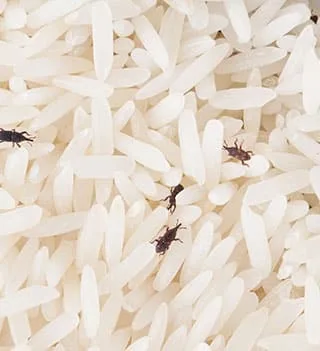
Rice weevils attack whole grains and hard products above all: rice, wheat, barley, maize, dried corn, pasta, and hard grains in birdseed mixes. They will breed in anything with an intact kernel large enough for a larva to develop inside. Warm conditions suit them, and through a Melbourne summer a generation can complete in about a month, which is how a single overlooked bag builds a substantial population between Christmas and Easter.
Granary and maize weevils, and telling the three apart
The granary weevil, Sitophilus granarius, also recorded in the Atlas of Living Australia, is the larger of the two at roughly 3 to 5 millimetres, a uniform shiny chestnut to dark brown with no pale patches on the wing covers and with elongated pits on the thorax. The most useful behavioural difference is that the granary weevil cannot fly: its wing covers are fused and there are no functional flight wings beneath. It therefore stays close to the grain it emerged from, which makes it a serious pest of bulk storage, mills and warehouses and a less mobile one in a domestic kitchen.
The maize weevil, Sitophilus zeamais, is the third of the group. It closely resembles the rice weevil, carries the same four pale patches and also flies, and is generally a little larger with slightly more rounded pits on the thorax. Separating maize from rice weevil reliably requires a microscope, and in practice it changes nothing about the treatment, so we identify to genus in the field and treat accordingly.
For a household the practical shorthand is straightforward. Four orange patches on the wing covers and beetles turning up in other rooms indicates a rice or maize weevil, and the search needs to cover the whole house. A uniformly dark, unspotted, slightly larger weevil confined to one food store points to the granary weevil, and the source is almost always a single sack or container of whole grain.
Why the damage happens where you cannot see it
The Sitophilus lifecycle explains nearly everything that makes weevils frustrating. A female uses the mandibles at the tip of her snout to chew a small cavity into an individual grain, deposits a single egg inside it, and seals the hole with a gelatinous plug that hardens and becomes almost impossible to see. She repeats this several hundred times across her life, which can run for months in warm conditions.
The larva hatches inside the kernel and eats the starchy interior, growing through several stages and pupating in the hollowed-out shell. Nothing about that grain looks unusual from the outside during the whole period, which typically lasts around four to six weeks in a warm Melbourne kitchen and considerably longer in a cool one. A bag of rice can therefore hold a hundred developing weevils and still appear perfectly clean to anyone who opens it and looks.
The adult finally chews its way out, leaving a small round exit hole in the grain and a hollow husk behind. Because development is synchronised by temperature, adults often emerge in a cluster over a few days, which is exactly why so many households describe the infestation as having appeared overnight. The webbing that gives away a pantry moth infestation is entirely absent here, so weevils are typically found later in their progression.
Signs of a weevil infestation
The most common first sign is adult beetles walking on a pantry shelf, across a benchtop or up a wall near the food store. They move deliberately, drop and play dead when disturbed, and cluster near a light source in the evening. Finding them on a window sill or in a bedroom is normal for the flying species and does not mean there is food stored in that room.
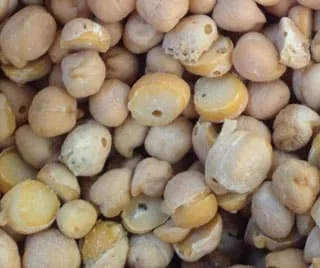
In the food itself, look for fine, flour-like dust at the bottom of the container, which is the frass and grain debris produced by feeding larvae. Hollow grains that float when the rice is put in water, kernels with a small round hole in the side, and a musty or slightly sweet smell from an opened container are all characteristic. Heavily infested grain also warms and takes on a slightly damp feel from the insects' own metabolic activity.
Because adults travel, check every dry good in the house once weevils are confirmed, along with birdseed, dry pet food and any decorative items containing grain or dried botanicals. Ornamental jars of dried beans and rice, and the wheat bags used as heat packs, are recurring sources in the homes we attend and are easily overlooked.
Are weevils harmful?
Weevils do not bite, they do not sting, and they carry no venom. They do not damage the fabric of a building, they do not chew clothing, and they will not harm a pet. On any reasonable measure they are a contamination and food-loss problem in the household setting.
Food containing weevils, larvae, frass and hollowed grain should be discarded. Swallowing a weevil by accident is unlikely to do a healthy adult any harm, though infested food is unfit to eat and can bring on the sort of stomach upset described by healthdirect. In a long-running infestation the accumulated insect fragments and dust also add to the indoor allergen load, and the Better Health Channel includes insect-derived particles among common indoor allergens worth reducing in a household where someone has asthma.
Commercially the calculation is very different. For a bakery, a food manufacturer, a grocer or a hospitality kitchen, a Sitophilus infestation means stock loss and a food safety issue, and infested product can move through a supply chain quickly. We hold HACCP accreditation and treat food-premises weevil work as a priority job.
How to keep weevils out
Airtight hard-sided containers are the foundation. Adult weevils chew through paper, cardboard and thin plastic film with ease, and a cardboard box of rice offers no protection at all, so decanting into glass or rigid sealed canisters on the day of purchase both protects clean food and contains any packet that arrives already infested.
Freezing at minus 18 degrees Celsius for at least 72 hours kills eggs, larvae and adults inside the grain, and it is the only home measure that deals with the developing stages sealed inside individual kernels. Doing this routinely with rice, flour, pasta and birdseed as they come home is the most effective habit available to a household, particularly for bulk purchases and anything bought from a bulk bin.
Beyond that, buy in quantities the household will use within a few months, rotate the shelf so nothing sits for a year at the back, and clean the shelf grooves and corners where spilled grain collects, since a small pile of loose rice in a shelf join will sustain a population on its own. Bay leaves and similar folk deterrents have a mild repellent reputation and no useful effect on an established infestation. If weevils have been a problem before, check the pantry properly every few months, especially through the warmer half of the Melbourne year. Related prevention advice runs through our guides to pantry moths and grain mites, and the wider pest library covers the other insects that turn up in kitchens.
How Protech treats weevils
Every job starts with finding the source, because a weevil treatment applied around an infested packet achieves nothing. The technician works through every food store in the property, including the garage, laundry and any second pantry, and checks birdseed, dry pet food, ornamental grain jars and wheat heat packs alongside the obvious kitchen stock. Where beetles have been reported in other rooms, we search those rooms as well to confirm whether they are wanderers from the kitchen or whether a second source exists.
Once the sources are identified and removed, we vacuum the spilled grain and debris out of shelf joins, bracket holes and cupboard corners, then apply APVMA-registered products appropriate to a food storage area, placed on the structure and into the cracks where adults shelter, following AEPMA best practice for food environments. We will ask for shelving to be emptied so surfaces can be treated properly, and the technician explains the ventilation period and what can go back on the shelf. In a commercial setting the program extends to stock inspection, storage practice and a monitoring schedule so that incoming product is checked at delivery.
Our weevil treatments carry Protech's pest-free guarantee: if activity returns within the guarantee period we come back and re-treat at no charge. We have been treating Melbourne homes and food businesses since 2001, hold HACCP, AEPMA and NPMA accreditation, and are rated 4.8 stars from 411 Google reviews. If you are finding beetles in the rice or walking across the bedroom window sill, call us on 03 9449 4244 or request a free quote for an inspection, most often the same day. Our beetle control service covers the related stored-product beetles, and moth control covers the pantry moths that often turn up in the same cupboard.
Weevils in Melbourne FAQs
Where do weevils in my rice come from?
They come in with the grain. A female weevil chews a tiny cavity into an individual kernel, lays one egg inside and seals it with a plug that is almost impossible to see, and the larva develops entirely within that grain. This happens in storage or transport long before the packet reaches your shelf, so a bag of rice can look perfectly clean while holding a hundred developing weevils. The adults chew their way out weeks later, which is why an infestation seems to appear overnight.
How do I tell a rice weevil from a granary weevil?
Look at the wing covers and the size. A rice weevil is about 2 to 3 millimetres, reddish-brown to nearly black, with four pale reddish or orange patches on the wing covers, and it flies. A granary weevil is larger at 3 to 5 millimetres, a uniform shiny chestnut brown with no patches, and it cannot fly because its wing covers are fused. In practice, beetles turning up in other rooms of the house indicate the flying rice weevil; a population confined to one container points to the granary weevil.
Why are weevils in my bedroom when the food is in the kitchen?
Rice and maize weevils fly, and adults disperse from an infested packet toward light and open space, which regularly takes them into bedrooms, onto window sills and around light fittings well away from any stored food. Finding them there does not mean there is food in the room. The source is almost always a packet in the kitchen, laundry or garage, and our article on removing weevils from a bedroom covers the room-by-room search and clean-up.
Are weevils dangerous to eat?
Weevils do not bite or sting and carry no venom, and accidentally swallowing one is unlikely to harm a healthy adult. Food that contains weevils, larvae, frass or hollowed grain should still be thrown out, since it is unfit to eat and can cause the sort of stomach upset healthdirect describes under food poisoning. In a large or long-running infestation the insect fragments and dust also add to the indoor allergen load.
Does freezing rice actually kill weevils?
Yes, and it is the only home measure that reaches the stages developing inside individual grains. Holding the product at minus 18 degrees Celsius for at least 72 hours kills eggs, larvae, pupae and adults. Freeze first, then decant into an airtight hard-sided container, and the food goes onto the shelf clean. This is worth doing as a matter of routine with rice, flour, pasta and birdseed, particularly with bulk purchases.
Can I get rid of weevils myself?
A single infested packet caught early can often be dealt with by discarding it, freezing everything else and cleaning the shelf thoroughly. Once beetles are appearing in several rooms or in more than one food store, the population has spread into shelf joins, bracket holes and cupboard voids where cleaning does not reach, and a professional treatment is the reliable route. Our inspection finds the sources, treats the harbourage and carries a pest-free guarantee.
Protecting Melbourne homes and businesses since 2001 — HACCP, AEPMA and NPMA accredited, rated 4.8★ from 411 Google reviews.



Sources and further reading
- Atlas of Living Australia — Curculionidae (true weevils)
- Atlas of Living Australia — Sitophilus oryzae (Rice Weevil)
- Atlas of Living Australia — Sitophilus granarius (Granary Weevil)
- The Australian Museum — Beetles (order Coleoptera)
- healthdirect — Food poisoning
- Better Health Channel (Victorian Government) — Asthma and allergens
Learn More About Pest Solutions
Same-day service, eco-friendly treatments and a pest-free guarantee. Domestic & commercial — all Melbourne suburbs.