

Pantry Moths in Melbourne
How to recognise the Indian meal moth, why the infestation almost always arrives inside a packet of food, and how our licensed team clears a breeding population from a kitchen.
Written by Muzi Tsolakis, Founder and Competency Assessor, Pest Management Victoria. Last reviewed 5 September 2026.
A pantry moth problem usually announces itself in one of two ways: a small brown-and-grey moth fluttering across the kitchen ceiling at night, or a bag of flour that turns out to be bound together with fine silken threads. The insect behind both is almost always the Indian meal moth, and the detail that surprises most households is where it came from. These moths rarely fly in through an open window. They arrive inside packaged dry goods bought from a supermarket, a bulk food store or a pet supplies shop, already carrying eggs or small larvae that nobody could reasonably have spotted at the checkout. Once a single packet is opened on a warm Melbourne shelf, the larvae spread along the shelving and into neighbouring containers, and the population compounds quietly for weeks. This guide covers identification at every life stage, how an infestation starts and spreads, what to throw out and what can be saved, the prevention that genuinely works, and what a professional treatment involves.
How to identify a pantry moth
The pantry moth found in Melbourne kitchens is nearly always the Indian meal moth, Plodia interpunctella, recorded among Australia's established stored-product insects in the Atlas of Living Australia. The adult is a small moth of roughly 8 to 10 millimetres with a wingspan a little under two centimetres, and its forewings carry a marking that makes identification straightforward once you have seen it: the half nearest the body is pale grey or cream, and the outer half is a coppery reddish-brown, with a fairly sharp line between the two tones. Adults fly readily after dark and are commonly seen circling a kitchen light or resting flat against the ceiling above the pantry with their wings folded along the body.
The larva is the stage doing the damage, and it is the one worth learning to recognise. A mature Indian meal moth caterpillar is around 10 to 12 millimetres long, creamy white to pale pink with a distinctly darker brown head capsule, and it moves slowly through the food it is feeding on. What gives the larvae away long before anyone sees one is the webbing. As they feed they spin a fine silk that binds flour, rice, oats or breakfast cereal into clumps and mats, and a packet that pours in lumps rather than freely is usually infested. Grains stuck to the inside of a container, a greyish film across the surface of a bag of nuts, and small dark specks of frass through the food are all part of the same picture.
Pupae turn up well away from the food. Late-stage larvae leave the packet and crawl across shelves, up walls and along the underside of cupboard doors before spinning a small silken cocoon in a crack, a ceiling corner, the groove of a shelf edge or the hinge recess of a pantry door. Finding those cocoons confirms that the infestation has already moved past the packet it started in, which changes what treatment needs to cover.
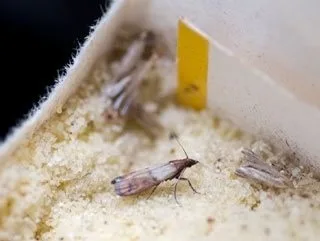
Where the infestation actually starts
Pantry moths are stored-product pests, which means their whole life is spent in and around human food stores rather than in gardens or outdoor habitat. Eggs and early-stage larvae get into packaged goods at the mill, the processing plant, the warehouse or the retail shelf, and the packet then travels home in the shopping. Larvae are small enough at hatching to pass through the tiny gaps in a manufacturing seam, and they are quite capable of chewing through thin plastic film, foil laminate and cardboard from either side, so an unopened packet offers very little protection.
The dry goods most often responsible in the homes we attend are flour, rice, breakfast cereal, rolled oats, dried fruit, nuts, chocolate, pasta, spices, and two categories people rarely think of at all: birdseed and dry pet food. A large bag of birdseed sitting in a laundry cupboard through a warm Melbourne summer can supply an entire household infestation on its own, and the same is true of a sack of dog biscuits in the garage.
Warmth accelerates everything. Through the hotter months a Melbourne kitchen sits comfortably in the range where the Indian meal moth completes a generation in about six to eight weeks, and shorter still in a warm north-facing pantry. That is why an infestation that seemed to appear overnight in February has usually been building since spring, one generation at a time, in a packet at the back of the shelf that nobody has moved.
The lifecycle that keeps the population going
A female Indian meal moth lays her eggs directly onto or beside food material, and a single female can produce a few hundred over her short adult life. Adults live for roughly one to two weeks and do no feeding of any consequence; their entire purpose is to mate and place the next generation on a food source. Killing the adults you see therefore does very little on its own, because the eggs and larvae they have already placed carry the infestation forward.
Eggs hatch within about four days to two weeks depending on temperature, and the larvae begin feeding immediately. The larval stage is the long one, running anywhere from several weeks to several months where conditions are cool or the food is poor, and it is during this period that the webbing, the contamination and the migration between containers all occur. Larvae wander further than most people expect: it is normal to find them on a wall two metres from the food they hatched in, having left a fine silk trail behind them.
Pupation takes a week or two in a sheltered crevice, after which the new adults emerge and begin the cycle again on whatever food is available. Because generations overlap in a warm kitchen, an established infestation contains eggs, larvae, pupae and adults simultaneously, which is precisely why removing one contaminated packet almost never resolves it.
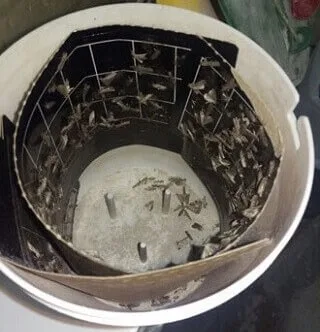
Pantry moth larvae: what they look like and how to get rid of them
The larvae are the infestation, so they deserve their own answer. A pantry moth larva is a caterpillar around 10 to 12 millimetres long when mature, creamy white to pale pink with a darker brown head capsule, found in or near dry food and always accompanied by fine silk webbing. You will see them inside the packet they hatched in, but just as often on the move — inching across a shelf, up the pantry wall or along the ceiling corner, because late-stage larvae leave the food to find a crevice to pupate in. The same insect is often called simply the meal moth; in a Melbourne kitchen it is almost always the Indian meal moth at work.
Getting rid of the larvae is a sequence, and the order is what makes it work. First find and bin every infested packet — anything with webbing, clumping, live larvae or frass — sealed in a bag and taken outside the same day. Second, deal with the food that looks clean but shared the shelf: freeze it at minus 18 degrees for at least 72 hours, which kills eggs and larvae at every stage, then decant it into hard-sided airtight containers. Third, go after the wanderers and the pupae: empty the shelving, vacuum the shelf grooves, bracket holes, hinges and the join where the cupboard meets the wall, and wipe the lot down. A larva you can see is easy to remove; the cocoons tucked into the crevices are what bring the moths back three weeks later.
If larvae keep appearing after that clean-out, the reservoir has not been found yet. The usual suspects are the ones nobody checks: the birdseed in the laundry, the dog biscuits in the garage, the forgotten bag of nuts on top of the fridge. At that point a professional inspection earns its keep, because finding the last source is precisely what the visit is structured around.
Signs of a pantry moth infestation
The first sign is usually the food. Dry goods that clump, pour badly or carry a greyish film through them, grains bound to the inside of a container, small pale caterpillars visible when a bag is opened in good light, and dark specks of frass at the bottom of a packet all point to active larvae. Cereal boxes with a fine web across the inner liner are a common find in Melbourne kitchens, as are bags of nuts and dried fruit that have sat unopened since the previous Christmas.
Away from the food, look for the cocoons. Small silken pupal cases wedged into the corner where the pantry ceiling meets the wall, along the top edge of a cupboard door, behind the kickboard or in the groove of an adjustable shelf bracket are all reliable indicators that larvae have been travelling. Fine silk threads running along a shelf edge point in the same direction.
Adult moths flying at night near kitchen lights, or resting flat on the ceiling above the pantry, confirm a breeding population rather than a stray insect. Seeing adults during the day, particularly several of them on walls near the food store, generally means numbers are substantial and eggs are being laid faster than the household is finding them.
Contaminated food and what to do about it
Food containing larvae, eggs, webbing, cast skins or frass should be thrown out. The material is not poisonous and accidentally eating a small amount is unlikely to cause harm to a healthy adult, but insect-contaminated food is unfit to eat by any reasonable standard, and consuming it can bring on the sort of gastrointestinal upset described by healthdirect. The webbing also makes any attempt to sift out the affected portion pointless, because the contamination is distributed through the packet.
Anything on the same shelf that appears clean should still be moved into a sealed rigid container while the problem is being dealt with, since larvae migrate freely between packets and eggs may already have been laid on adjacent packaging. Bin the discarded food outside the house in a sealed bag on the same day, as larvae will happily continue developing in a kitchen tidy.
The dust and shed skins that accumulate in a long-running infestation add to the general allergen load in an enclosed room, which is worth considering in a household where someone has sensitive airways; the Better Health Channel lists insect-derived particles among common indoor allergens. In a café, restaurant, bakery or food manufacturing site the calculation is different again, because a pantry moth infestation becomes a food safety and compliance problem alongside the stock loss, and we treat those jobs as a priority.
How to keep pantry moths out
The single most effective habit is transferring dry goods into hard-sided airtight containers on the day they come home. Glass jars, rigid plastic canisters with a proper seal and screw-top steel tins all deny larvae the access that cardboard, paper and thin film freely allow. This one change breaks the chain at the point where nearly every infestation begins, because a packet carrying eggs from the warehouse can then only ever ruin its own contents.
Freezing is the other genuinely useful measure. Holding a packet of flour, rice, nuts or birdseed at minus 18 degrees Celsius for at least 72 hours kills eggs and larvae at every stage, and it is worth doing routinely with bulk purchases and with anything bought loose from a bulk bin. Freeze first, then decant into the sealed container, and the food goes onto the shelf clean.
Beyond that, rotate the shelf so older stock gets used rather than pushed to the back, buy quantities the household will actually get through in a few months, and keep birdseed and dry pet food in sealed bins away from the kitchen. Wipe out shelves periodically and pay attention to the shelf grooves, bracket holes and door hinges where pupae shelter. If you have had an infestation before, a pheromone trap left in the pantry gives early warning that adults are flying again, well before the next packet is ruined. Similar prevention thinking runs through the other guides in our pest library, and our moth control service page covers the clothes moth side of the problem.
Why a DIY clean-out often falls short
Emptying the pantry, throwing out the obviously infested packets and wiping the shelves is a sensible first move, and on a very early infestation confined to one packet it sometimes succeeds. What it usually misses are the pupae. Larvae leave the food to pupate in cracks, hinge recesses, shelf-bracket holes and the join between the cupboard carcass and the wall, and a damp cloth does not reach any of those places. Two to three weeks later a new generation of adults emerges from a pantry that appeared to have been cleared, and the household concludes the moths have come back when they never actually left.
Supermarket pheromone traps add to the confusion. They attract male moths only and are designed as a monitoring device, so a trap filling up tells you adults are still emerging while doing nothing about the females, the eggs or the larvae. A trap that stops catching may equally mean the males are gone and a fresh cohort of larvae is only halfway through feeding.
Aerosol sprays applied into a food cupboard bring their own problems. They rarely penetrate the crevices where the pupae are, and they put product where food is stored. A licensed technician working to AEPMA best practice selects APVMA-registered products appropriate to a food storage area, applies them to the structure rather than to food contact surfaces in use, and knows which parts of the cupboard actually hold the next generation.
How Protech treats pantry moths
The visit begins with an inspection of every food store in the property, not only the pantry that prompted the call. We check the kitchen cupboards, the laundry and garage shelving, any second fridge-top storage, and the bags of birdseed or pet food that so often turn out to be the reservoir. The technician works through the packets to find the sources, then examines shelf edges, bracket holes, hinges, kickboards and ceiling corners for pupae so that the treatment covers where the population actually sits rather than only where it feeds.
Source removal comes first, because no treatment succeeds while an infested packet remains on the shelf. We will advise on what needs to go and what can be salvaged in sealed containers, and ask for the shelving to be emptied so surfaces can be reached properly. The technician then treats the shelving, cracks, joins and cupboard voids with APVMA-registered products chosen for use in a food storage environment, applied to the structure rather than to exposed food surfaces, and vacuums the debris and cocoons out of the crevices. Pheromone monitoring traps go in afterwards so that any residual adult emergence over the following fortnight is visible, which tells us whether a second visit is warranted.
Most household pantry moth infestations clear with one thorough treatment once the sources are out and the harbourage has been reached, and our work is backed by Protech's pest-free guarantee: if activity returns within the guarantee period we come back and re-treat at no extra charge. We have been treating Melbourne kitchens and food premises since 2001, we hold HACCP, AEPMA and NPMA accreditation for food-handling environments, and our work is rated 4.8 stars from 411 Google reviews. If you are finding webbing in the flour or moths on the kitchen ceiling, call our team on 03 9449 4244 or request a free quote, and we will arrange a visit, most often the same day. You can read about the related stored-product insects in our guides to weevils and grain mites.
Pantry Moths in Melbourne FAQs
Where do pantry moths come from?
They almost always arrive inside packaged dry goods. Eggs or tiny larvae get into food at the mill, the processing plant, the warehouse or the retail shelf, and the packet is carried home in the shopping. Flour, rice, cereal, oats, nuts, dried fruit, birdseed and dry pet food are the usual sources, and larvae can chew through thin film, foil laminate and cardboard, so an unopened packet is not necessarily safe. Very few infestations begin with a moth flying in through a window.
Do I have to throw out all my food?
No, but anything showing webbing, larvae, cast skins or frass should be discarded, and it should go outside in a sealed bag on the same day. Food on the same shelf that looks clean can usually be kept if it is transferred into hard-sided airtight containers straight away, because larvae migrate between packets and eggs may already be on adjacent packaging. Freezing a doubtful packet at minus 18 degrees for 72 hours kills any eggs and larvae present.
Are pantry moths harmful to eat?
The larvae are not venomous or poisonous, and swallowing a small amount by accident is unlikely to harm a healthy adult. Insect-contaminated food is still unfit to eat, and eating it can cause the sort of stomach upset healthdirect describes under food poisoning. In a long-running infestation the accumulated dust and shed skins add to the indoor allergen load, which is worth considering where someone in the household has asthma or airway sensitivities.
Why do pantry moths keep coming back after I clean the cupboard?
Because the larvae leave the food to pupate elsewhere. Cocoons sit in shelf-bracket holes, hinge recesses, the groove of an adjustable shelf, behind the kickboard and in ceiling corners, where wiping down the shelves does not reach them. A new generation of adults emerges two to three weeks later from a pantry that looked clear. Treating those crevices, rather than only the food, is what ends the cycle.
Do pheromone traps get rid of pantry moths?
They do not. Pheromone traps attract male moths only, so they function as a monitoring tool that tells you whether adults are still flying. Females, eggs and larvae are unaffected. They are genuinely useful after a treatment, because a trap that stops catching over a few weeks is good evidence the population has been cleared, and one left in a pantry long term gives early warning of a fresh infestation.
What do pantry moth larvae look like?
A mature larva is a slow-moving caterpillar around 10 to 12 millimetres long, creamy white to pale pink with a distinctly darker brown head, and it is always associated with fine silk webbing in the food it has been eating. Larvae are found inside infested packets, in the clumps and mats of webbed food, and wandering across shelves, walls and ceiling corners when they leave the food to pupate. Small dark specks of frass through the food and grains stuck to the inside of a container complete the picture.
How do I get rid of pantry moth larvae?
Work in order. Bin every packet showing webbing, larvae or frass, sealed and outside the house the same day. Freeze the shelf-mates that look clean at minus 18 degrees for at least 72 hours, then decant them into hard-sided airtight containers. Then empty the shelving and vacuum and wipe the crevices — shelf grooves, bracket holes, hinges and the cupboard-to-wall join — because that is where the larvae pupate and where the next generation comes from. If larvae reappear after a thorough clean-out, an unfound source such as birdseed or pet food is usually carrying the population, and a professional inspection will find it.
How much does pantry moth treatment cost in Melbourne?
It depends on how far the infestation has spread and how many food storage areas need to be covered, so we give you a fixed price after the inspection and before any work starts. A single kitchen is a smaller job than a house where the garage, laundry and pantry are all involved. Call 03 9449 4244 or request a free quote and we will arrange a visit, most often the same day. All our general treatments carry a pest-free guarantee.
Protecting Melbourne homes and businesses since 2001 — HACCP, AEPMA and NPMA accredited, rated 4.8★ from 411 Google reviews.



Sources and further reading
Learn More About Pest Solutions
Same-day service, eco-friendly treatments and a pest-free guarantee. Domestic & commercial — all Melbourne suburbs.