
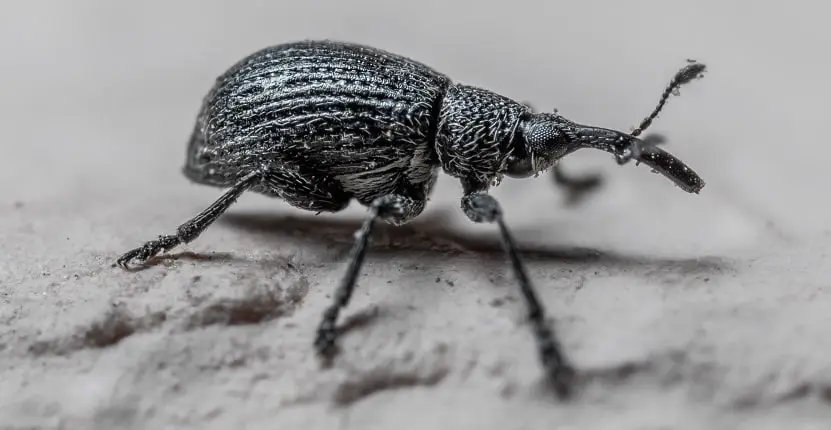
Why weevils appear in the house at all
Weevils are stored-product insects: they arrive inside packaged dry goods — rice, flour, cereals, birdseed, dry pet food — already carrying eggs laid at the mill, the warehouse or the shop. Once one packet is opened on a warm shelf, adults spread out in search of the next food source, and that is how they end up well away from the kitchen. A bedroom earns its weevils honestly: a snack drawer, a bag of pet food, a stash of muesli bars, or simply wanderers from an infested pantry two rooms away. Our weevil identification guide covers the species side in full, and the same shopping-bag origin story runs through our pantry moth guide — the two problems arrive the same way and are fixed the same way.
Which Weevils Are in Your House?
Knowing which insect you are dealing with shapes the clean-out, because true weevils live inside whole grains while several look-alike beetles thrive in processed food. These are the ones Melbourne homes find:
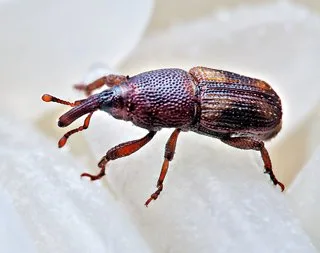
- Rice weevils (Sitophilus oryzae): around 2–3 millimetres, reddish-brown, with the classic curved weevil snout. As the name suggests they develop inside rice and other whole grains, and they are the weevil Melbourne households find most. An infested packet can look normal until adults start appearing around it.
- Granary weevils (Sitophilus granarius): easily mistaken for rice weevils and treated the same way. They are slightly longer, and they attack wheat and other stored grains. Either species reaches a bedroom the same way — inside food carried there, or wandering from an infested packet elsewhere in the house.
- Flour beetles (Tribolium species): the red and confused flour beetles are commonly lumped in with weevils, though they carry no snout — small oval reddish-brown beetles of 3–4 millimetres. They infest flour, grains and cereal products, and because they thrive in processed food they often outnumber true weevils in a kitchen clean-out.
- Bean weevils (Acanthoscelides obtectus): small, dark seed beetles of about 2–3 millimetres that develop inside dried beans and pulses. Stored legumes that have sat untouched for months are their usual base.
- Drugstore beetles (Stegobium paniceum): tiny brown insects of 2–3 millimetres, often called drugstore weevils, that infest dried herbs, spices, tea and a remarkable range of other dry goods. A spice rack or herbal tea stash in a bedroom is exactly the kind of source that explains insects appearing far from the kitchen.
Remember, while these are some common types found in bedrooms, there may be other species specific to your region. If you’re unsure about the type of species infesting your bedroom, consider consulting a local entomologist or pest control professional for accurate identification.
By identifying the specific species, you can tailor your pest management approach accordingly. So, keep an eye out for these telltale signs and take action promptly to regain control of your bedroom.
Infestation Signs: Don’t Ignore the Red Flags
Identifying an infestation in your bedroom is crucial for taking swift action. Here are the key signs that indicate the presence of weevils:
- Spotting Weevils: If you notice small beetles with long snouts and curved bodies crawling in your bedroom, it’s a clear indication of an infestation.
- Holes in Food Packaging: Check your pantry items for small holes or chew marks on packaging, indicating weevils have been feeding on stored food.
- Fine Webbing or Silk: webbing through dry food usually points to pantry moth larvae sharing the shelf rather than the weevils themselves — the two infestations often travel together, and both trace back to the same packets.
- Musty Odour: A distinct musty or rancid odour can be a sign of an infestation, caused by secretions and decaying food.
- Larvae or Eggs: Look for small, white larvae or tiny eggs in stored food items, particularly in dry goods like flour or grains.
- Contaminated Food: They can contaminate food with their presence, droppings and shed skins. Black or brown specks in stored food may indicate insect activity.
By recognising these signs, you can address the infestation promptly and prevent further spread in your bedroom.
Where Do They Come From in Your House?
 They can enter your house through various means and find their way into your bedroom. Here are the common sources of weevils in your house:
- Infested Food Products: They often come into homes through contaminated food products. They can already be present in grains, rice, flour, cereals, and other dry pantry items that are susceptible to weevil infestation.
- Improper Food Storage: They are attracted to improperly stored food. If you store food in open containers or loosely sealed bags, it becomes an easy target for insects seeking a meal.
- Hitchhiking on Infested Items: They can hitch a ride into your house on infested items such as clothing, bags, backpacks, or even pet food that has been in contact with weevil-infested environments.
- Structural Openings: They can enter your house through small openings and cracks in windows, doors, walls, or foundations. They have the ability to detect food sources or favourable environments and find their way inside.
- Migration from Other Infested Areas: If there are infestations in other parts of your house, such as the kitchen or pantry, weevils can migrate and spread to other areas, including your bedroom.
It’s important to be proactive in preventing them from entering your bedroom. Properly storing food in airtight containers, inspecting food purchases for signs of infestation, maintaining cleanliness, sealing gaps or openings, and addressing infestations promptly in other areas of your house can help reduce the risk of them finding their way into your bedroom.
Getting Rid of Weevils: Effective Steps for Elimination and Prevention
Dealing with an infestation in your bedroom requires taking immediate action to eliminate the pests and implementing preventive measures to keep them from returning. Follow these step-by-step instructions to get rid of them effectively:
Step 1: Identify and Remove Infested Items:
- Inspect your bedroom pantry and storage areas for infested food products. Look for signs of insect activity, such as live weevils, larvae, eggs, holes in packaging, or webbing.
- Dispose of any infested food items in sealed bags or containers to prevent further spread of weevils.
- Thoroughly clean the affected areas, including shelves, containers, and surfaces, to remove any traces of weevils or food debris.
Step 2: Vacuuming and Cleaning:
- Vacuum your bedroom thoroughly, paying attention to cracks, crevices, and corners where they may hide.
- Empty the vacuum bag or canister immediately and discard the contents outside in a sealed bag to prevent them from revisiting your bedroom.
Step 3: Deep Cleaning and Sanitization:
- Clean your bedroom pantry and storage areas with warm, soapy water. Pay close attention to shelves, containers, and any potential hiding spots.
- Wipe down surfaces with a mixture of equal parts white vinegar and water. The vinegar helps deter them and masks the scent of food, making your bedroom less attractive to them.
Step 4: Implement Preventive Measures:
- Transfer any remaining dry pantry items to airtight containers to prevent future infestations.
- Regularly inspect new food purchases for signs of insect activity before bringing them into your bedroom.
- Practice proper food storage techniques, such as sealing bags and containers tightly and avoiding open packages.
- Maintain cleanliness in your bedroom and pantry by regularly cleaning and organizing storage areas.
Step 5: Natural Remedies and Repellents:
- Consider using natural repellents to deter them. Examples include placing bay leaves, cinnamon sticks, or dried citrus peels near food storage areas, as they dislike their strong scents.
- Diatomaceous earth can be sprinkled around the edges of your bedroom pantry to create a barrier that dehydrates and kills them. Remember to use food-grade diatomaceous earth for safety.
Step 6: Monitor and Take Swift Action:
- Keep a close eye on your bedroom pantry for any signs of weevil activity. Promptly dispose of any contaminated items and clean the affected areas to prevent a resurgence.
- If the weevils persist or become unmanageable, consider contacting a professional pest control service for expert assistance.
By following these steps and maintaining a proactive approach, you can effectively get rid of them in your bedroom and reduce the risk of future infestations. Remember, early detection and consistent preventive measures are key to keeping weevils at bay.
When to Bring in a Professional
A weevil problem confined to one or two packets clears with the steps above. Where the insects keep reappearing after a thorough clean-out, the reservoir has not been found — a forgotten bag of birdseed, pet food in the garage, or an infestation that has spread across several rooms — and that is the point where a professional inspection pays for itself. Protech treats stored-product pests in Melbourne homes and food businesses, and every general treatment is backed by our pest-free guarantee. Call 03 9449 4244 or request a free quote, and we will arrange a visit, most often the same day.