
How to Kill Cockroaches
The methods that genuinely kill cockroaches, how each one works, and how honest each is about reaching the insects you never see.
Written by Muzi Tsolakis, Founder and Competency Assessor, Pest Management Victoria. Last reviewed 7 July 2026.
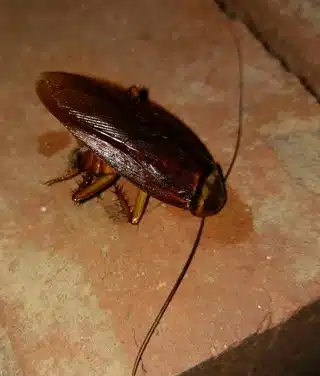
Most people who want to kill cockroaches are really trying to kill a colony, even if it does not feel that way when you are standing over one on the kitchen floor. A cockroach in the open is a small fraction of the population; the rest sit inside wall cavities, appliance motors and cupboard voids, breeding. Squashing or spraying the visible few does little to that hidden group, which is why a problem returns. This guide runs through the methods that genuinely kill cockroaches, how each one works, and how honest each is about reaching the insects you never see.
Gel bait: the method that reaches the colony
Professional and good retail gel baits are the most effective way to kill a cockroach colony, because they use the insects' own behaviour to carry the active ingredient inward. A cockroach feeds on the gel, returns to its harbourage, and dies there; other cockroaches then feed on its droppings and its body and take up the active ingredient in turn. This secondary and even tertiary transfer is what reaches the insects deep inside a wall that no spray will ever touch.
The active ingredients in modern gels, such as fipronil or indoxacarb, are slow enough to let a cockroach get home before it dies, which is exactly what makes the transfer work. Placement is everything: small dabs in cupboard hinges, behind the fridge, around the dishwasher and along drawer runners, kept out of the open and away from any repellent spray.
Insect growth regulators: stopping the next generation
An insect growth regulator kills a colony over time by breaking its breeding cycle. It does not kill an adult cockroach outright; it stops the nymphs developing into breeding adults, so the population cannot replace the insects the bait removes. On its own an IGR is slow, and paired with a gel bait it is what turns a knock-down into a lasting result. This combination, bait plus growth regulator, is the backbone of professional cockroach control, and it is the piece most home approaches are missing.
Boric acid and cockroach dusts
Boric acid genuinely kills cockroaches, and it has done so for decades, though it asks for patience and care. A cockroach walks through a fine deposit, grooms the powder from its legs and antennae, ingests it, and dies over several days as it damages the gut. The catch is application. A thick, visible line of powder is useless, because cockroaches simply walk around it; the deposit has to be an almost invisible film puffed into cracks, wall-plate gaps and the voids behind kickboards.
Boric acid also needs to stay dry to work, so it is unsuited to the damp spots where cockroaches often gather, and it should be kept well away from food surfaces and anywhere children or pets can reach.
Diatomaceous earth
Diatomaceous earth works on a similar principle, drying out and abrading the insect's protective outer layer as it walks through the dust. It can help as part of a wider effort in dry voids and subfloors, though it shares the same limits: it only works while completely dry, it must be applied as a barely-there film in the right harbourage, and it does nothing for the breeding insects sealed inside a warm, humid wall cavity. Treat it as a supporting measure for the right places; on its own it will not clear an established German cockroach problem.
Why sprays and bombs miss the mark
Surface sprays and bug bombs are the products people reach for first and the ones that disappoint most. A spray kills the cockroaches it directly contacts and leaves a residue on open surfaces, which the insects cross only briefly, so the breeding population inside is untouched and rebuilds within days. Many sprays also repel, which drives cockroaches deeper into the structure and away from any bait you have placed.
Bug bombs are worse for an infestation, because the sudden fog scatters a colony into adjoining rooms and wall spaces and leaves the core untouched. Killing a few visible cockroaches this way can feel like progress while the real population grows.
Using any product safely
Any product that kills an insect deserves respect around a home. In Australia every registered pest control product carries an approved label from the Australian Pesticides and Veterinary Medicines Authority, and that label is a legal instruction: it sets where a product may be used, at what rate, and what to keep away from food, pets and children. Read it and follow it. Gels and dusts should be placed where people and animals cannot contact them, food and utensils covered or removed during any treatment, and food-preparation surfaces kept clear of residue. A licensed technician is trained to place professional-grade products in exactly the concealed spots that keep them working and out of harm's way.
When to bring in a professional
For an established infestation, a professional treatment kills the colony far faster and more completely than any single home product, because it combines a targeted bait, a growth regulator and crack-and-crevice work placed by someone who knows where the insects are hiding. Our cockroach control clears homes and food premises across Melbourne, and every general treatment is backed by our pest-free guarantee. If you want the wider picture on prevention and clearing a problem end to end, read our companion guide on how to get rid of cockroaches, and for identification detail see our German cockroach guide. To have it dealt with quickly, call 03 9449 4244 or request a free quote.
Killing cockroaches FAQs
What kills cockroaches instantly?
A direct hit from a contact spray, or a physical squash, kills an individual cockroach on the spot, though neither does anything about the colony breeding inside the walls. There is no product that instantly clears an infestation. The methods that actually end a cockroach problem, gel bait and an insect growth regulator, work over one to several weeks because they rely on the insects carrying the active ingredient back to the harbourage.
Does boric acid kill cockroaches?
Yes, boric acid kills cockroaches when they ingest it while grooming, though it works slowly and only if applied correctly. It has to go down as an almost invisible film puffed into cracks and voids, has to stay dry, and must be kept away from food, children and pets. A thick, visible line of powder is ignored, because cockroaches simply walk around it.
Will diatomaceous earth kill cockroaches?
It can, by drying out and scratching the insect's outer layer as it walks through the dust, though the same conditions apply: it only works while completely dry and applied as a thin film in the right harbourage. It is a useful supporting measure in dry voids and does little for a breeding colony inside a warm, humid wall cavity.
Is cockroach treatment safe around pets and children?
It is when products are used to their registered label. Every pest product sold in Australia carries an APVMA-approved label setting out safe use, and gels and dusts are placed in concealed spots where people and animals cannot reach them. A licensed technician is trained to treat a home so it is safe to return to, and will tell you any short re-entry time to observe.
Why do cockroaches keep coming back after I kill them?
Because the cockroaches you killed were the visible few, and the breeding population survived inside the structure. German cockroaches reach breeding age in as little as six to twelve weeks, so any survivors rebuild the numbers. Lasting control comes from reaching the harbourage with bait and stopping the next generation with a growth regulator, then removing the food and moisture that let them settle.
Protecting Melbourne homes and businesses since 2001 — HACCP, AEPMA and NPMA accredited, rated 4.8★ from 411 Google reviews.



Learn More About Pest Solutions
Same-day service, eco-friendly treatments and a pest-free guarantee. Domestic & commercial — all Melbourne suburbs.