
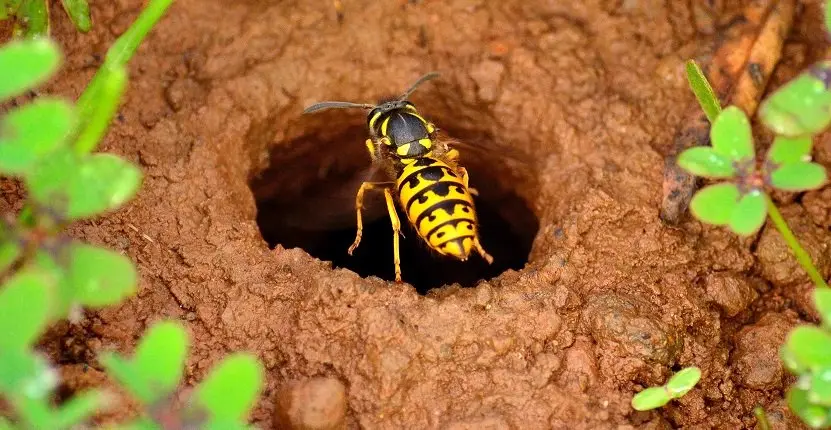
Most wasp stings in a Melbourne garden come from one of two insects: the native paper wasp, defending a small open comb you never noticed under the eave or in the hedge, or the introduced European wasp, foraging around food and drink or pouring out of a disturbed nest. The two experiences differ, the first aid is the same for both, and a small number of stings each year turn into genuine emergencies. Here is what is actually worth knowing.
Do wasps bite or sting?
Wasps sting. They have jaws and use them on their insect prey, and a large wasp can give a pinching nip, but the sharp, burning injury people describe after a run-in with a wasp is a sting — venom injected through a stinger at the tail end. The stinger is a modified egg-laying organ, which is why only female wasps can sting; males have no stinger at all.
 The detail that separates wasps from bees is what happens next. A honeybee's barbed stinger lodges in the skin, tears free and kills the bee, so a bee stings once. A wasp's stinger is smooth: it withdraws cleanly, and the same wasp can sting again and again at no cost to itself. That single piece of anatomy explains why a disturbed wasp nest is so much more dangerous than an equivalent encounter with bees, and it also changes the first aid — after a wasp sting there is no stinger to remove.
What a paper wasp sting is actually like
A paper wasp sting is immediate, sharp and burning, followed by a raised red welt, local swelling and an ache or itch that can persist for a day or two. Paper wasps are placid insects away from their nest, slender-bodied with long legs that dangle in flight, and they rarely bother anyone at the table. Nearly every paper wasp sting we hear about happens the same way: someone pruning a hedge, washing a window or working under the eaves puts a hand or a head near an open comb they did not know was there, and the small colony defends it. The nest is a grey papery disc of open cells, often no bigger than a coaster, and several adults will sting to protect it.
The European wasp is a different proposition. It is stockier, intensely yellow with black markings, nests by the thousand in the ground and in wall cavities, and defends the colony in numbers. Multiple stings from a disturbed European wasp nest are the scenario that most often ends in a hospital visit, which is why an established nest is a professional's job rather than a weekend project — our wasp identification guide covers how to tell the species and their nests apart.
First aid for a wasp sting
For an ordinary sting with local pain and swelling, the steps are simple and they are the same ones Victorian health guidance gives: wash the area with soap and water, apply a cold pack to ease the pain and swelling, and take a pain reliever or an antihistamine as directed if you need one. There is no stinger to scrape out — that step belongs to bee stings. The welt settles over hours to a couple of days; a sting that keeps getting worse after that, or shows spreading redness or signs of infection, deserves a doctor's look.
When a sting is an emergency
The danger in wasp stings is allergy. Better Health Channel notes that around one in ten people who receive multiple stings develop an allergic sensitivity to later stings, and its guidance on allergies to bites and stings records that stinging insects cause around three deaths a year in Australia through severe allergic reaction. Anaphylaxis can develop within minutes: difficulty breathing, swelling of the face or throat, hives beyond the sting site, abdominal cramps, dizziness or collapse. Any of those signs after a wasp sting means calling 000 immediately — and anyone with a known wasp or bee allergy should carry their prescribed adrenaline autoinjector through the warmer months and keep well clear of any nest.
Stings in the mouth or throat are treated as urgent even without an allergy, because swelling there can obstruct breathing. That is the strongest argument for checking open drink cans and straws outdoors in late summer, when European wasps forage hardest around sweet drinks.
Getting stung repeatedly in the same part of the garden?
One wasp at the barbecue proves nothing — European wasps forage hundreds of metres from home. A sting or near-miss in the same corner of the garden every time you work there is a different signal: somewhere close by there is a nest, and the reliable tell is a steady stream of wasps moving in and out of a single point — a hole in the lawn or a retaining wall, a gap under the weatherboards, or a small grey comb under an eave or rail. Resist the temptation to block the hole or pour anything down it; a colony responds to a threat at the entrance by mobilising in seconds, and that is how most serious multi-sting incidents happen. Our post on dealing with wasps in autumn covers the prevention side.
Being stung at home usually means a nest is close by, and the lasting fix is removing the nest itself. Protech provides professional wasp nest removal across Melbourne from $154, with same-day service on most jobs. Call 03 9449 4244 or request a free quote.