
How to Get Rid of Fleas in Your Home
The signs to look for, why the flea lifecycle makes them stubborn, and the steps that clear an infestation properly.
Written by Muzi Tsolakis, Founder and Competency Assessor, Pest Management Victoria. Last reviewed 7 July 2026.
Fleas are tiny, quick and remarkably good at multiplying, which is how a few insects carried in on a pet become a household problem within a couple of weeks. They cause itchy bites for people and constant discomfort for animals, and once they are established they are among the more stubborn pests to get rid of. Knowing how to spot an infestation early, and understanding why fleas are so persistent, puts you in a much stronger position to clear them.
How to spot a flea infestation
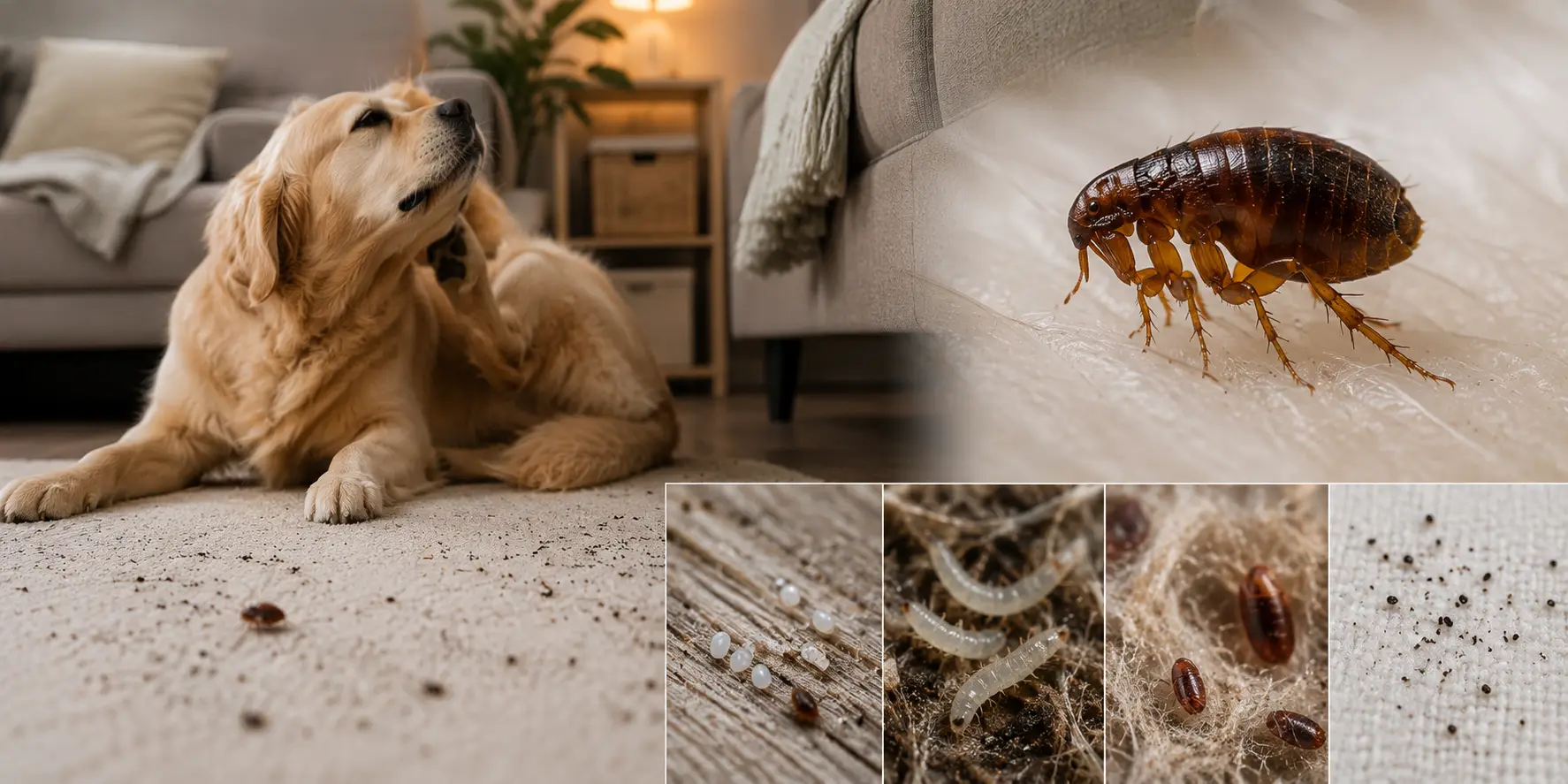
The first clue is nearly always the pet. A dog or cat that suddenly scratches, bites or licks at itself, particularly around the tail base and belly, is worth checking closely. Part the fur and look for fast-moving dark specks and for flea dirt, the digested-blood droppings that look like grains of black pepper and turn rusty red when dabbed on damp paper. People often notice the problem through their own skin, with small itchy red bites grouped around the ankles and lower legs. The Better Health Channel notes that flea bites are intensely itchy and can affect both people and pets.
Why fleas are so hard to clear
The reason an infestation resists a quick fix lies in the flea lifecycle. Adult fleas lay eggs on the host, and those eggs roll off into carpet, bedding, floorboards and soil. The eggs hatch into larvae, which develop into pupae protected inside a tough cocoon. The Better Health Channel explains that fleas pass through this full cycle, and the pupal stage is the sticking point: a cocooned flea can lie dormant for weeks, shielded from insecticide, then emerge when it senses warmth and movement. That single stage is why fleas seem to return after a treatment that looked successful, and why timing and thoroughness win in the end.
The groundwork that makes any treatment work
There is real value in the work you do around the home before and after a treatment. Vacuum thoroughly and often, covering carpet, rugs, along skirting boards and under furniture, then seal and dispose of the vacuum contents so any eggs and larvae you have collected cannot re-emerge. Wash pet bedding and any washable soft furnishings on a hot cycle. Outdoors, mow the lawn and tidy the shaded, protected spots where pets rest, since these are common flea nurseries. This groundwork lifts a large share of the population and gives a treatment a much better surface to work on.
Treat the pet and the home together
Because pets are how fleas feed and travel, the home and the animal have to be dealt with as one job. Treat your pet with a product recommended by your vet, and coordinate that with treatment of the house so neither keeps reinfesting the other. Doing one without the other is the most common reason an infestation drags on for months.
When to call in professional flea treatment
An established infestation that has spread through carpets and bedding is difficult to clear with retail products alone, because reaching every lifecycle stage and timing for the emerging pupae takes the right products and experience. Our flea control targets all stages and, where needed, includes a follow-up visit to catch the fleas that emerge from dormant pupae after the first treatment.
If fleas have taken hold in your home, call our Melbourne team on 03 9449 4244 or request a free quote, and we will arrange a visit, most often the same day.
Flea infestation FAQs
How do I know if I have fleas?
The earliest sign is usually a pet scratching, biting or licking more than normal, especially around the base of the tail and belly. Look through the fur for fast-moving dark specks and for flea dirt, which shows up as blackish grains that turn a rusty red when dabbed on damp paper. People often notice small, itchy red bites clustered around the ankles and lower legs. Seeing live fleas in carpet or bedding confirms an active infestation.
Why do fleas keep coming back after I treat them?
The flea you see is a small part of the population. Eggs, larvae and pupae are spread through carpet, bedding and floor cracks, and the pupae are protected inside a cocoon that resists insecticide and can lie dormant for weeks. When conditions are right they hatch, which is why fleas reappear a week or two after a first treatment. Reaching every stage, and timing follow-up for those emerging pupae, is what finally clears them.
Can I get rid of fleas without treating my pet?
It is very hard to. Pets are the main way fleas feed and move around the home, so treating the house while leaving the animal untreated allows the cycle to start again quickly. The reliable approach is to treat the pet with a product recommended by your vet and treat the home at the same time, so the two do not keep reinfesting each other.
Do I need to leave the house during flea treatment?
Your technician will give you clear advice for your specific treatment, which usually includes staying off treated areas until surfaces are dry and keeping pets clear for a short period. Requirements vary with the products used and whether anyone in the home is pregnant, unwell or very young, so follow the guidance you are given on the day.
Protecting Melbourne homes and businesses since 2001 — HACCP, AEPMA and NPMA accredited, rated 4.8★ from 411 Google reviews.



Sources and further reading
Learn More About Pest Solutions
Same-day service, eco-friendly treatments and a pest-free guarantee. Domestic & commercial — all Melbourne suburbs.