
How to Get Rid of Ants
Why the ants you squash keep coming back, how to reach the colony properly, and the point where a home approach needs a professional.
Written by Muzi Tsolakis, Founder and Competency Assessor, Pest Management Victoria. Last reviewed 11 August 2026.
A line of ants across the kitchen bench is one of the most common household frustrations in Melbourne, and also one of the most misunderstood. The ants you see marching along a trail are foragers, a small fraction of a colony whose queen and brood sit hidden in a wall cavity, under a path or beneath the garden. Wiping out the visible trail does nothing to the nest, which is why the ants are back the next morning. Getting rid of ants properly means reaching the colony, and that changes the whole approach.
Know your ants
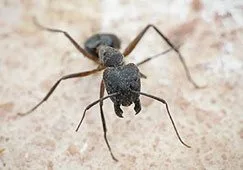
A handful of ant species account for most home call-outs across Melbourne, and knowing roughly which one you have helps, because they nest and behave differently. Small black or brown ants trailing to food indoors are usually black house ants or the closely related coastal brown ant, which nest in wall cavities, subfloors and around paths. Argentine ants form very large, cooperative colonies with many queens and are known for how quickly they spread. Out in the garden and lawn you may meet bull ants and the smaller jack jumpers, which are larger, more aggressive and able to deliver a painful sting.
The Australian Museum's guide to ants is a good identification starting point. Knowing whether you are dealing with a sweet-feeding trail ant or a stinging species shapes both the urgency and the method.
Take away food and water
Ants forage for food and moisture, so the first practical move is to make the kitchen far less rewarding. Wipe up spills straight away, keep sugar, honey and sticky jars sealed and clean around the lids, store pet food so it is not left out overnight, and empty the bin regularly. Deal with damp spots too, since many ants are as interested in water as in food. Then follow the trail to where the ants are entering, a gap around a pipe, a window frame or a skirting board, and seal what you can.
On its own this will not clear a colony, though it removes the reward that keeps the trail active and makes baiting far more effective.
Bait patiently: the home method that works
For most trailing ants indoors, a good ant bait is the single most effective thing a homeowner can use, provided you resist the urge to spray. Ant baits work by exploiting the colony's own habits: foragers carry the bait back and share it through the nest by trophallaxis, the mouth-to-mouth feeding ants use, so the active ingredient reaches the queen and brood you never see. This means you should expect to see more ants at first, as they crowd the bait and ferry it home, and that is the sign it is working.
Place the bait on the trail and near the entry point, leave it undisturbed for a week or two, and do not clean the trail away or spray around it, because both cut off the delivery route to the nest.
Why sprays can make it worse
Reaching for a surface spray is understandable and often counterproductive. A spray kills the foragers on show and leaves a repellent residue, which does nothing to the protected nest and, with some species, actively worsens the problem. Argentine ants and a few others respond to being sprayed by budding, splitting the colony and setting up several new nests to escape the treated area, so a single trail can become three.
Spraying also drives ants away from any bait you have put down, cutting the one line that actually reaches the queen. Killing the visible ants feels satisfying while the colony simply relocates and regroups.
Where a home approach runs out
Home baiting clears many ant problems, and there is a clear point where it stops being enough. Large Argentine or coastal brown infestations with multiple interconnected nests, colonies established inside a wall or subfloor, ants that keep returning season after season, and any stinging species like bull ants or jack jumpers near where children play are all situations that call for professional treatment. A licensed technician can identify the species accurately, match the right product to how that species feeds and nests, and treat the nests directly, including the ones outside that keep re-supplying the trail indoors.
How Protech gets rid of ants
Our ant control starts by identifying the species and following the activity back to the nests, indoors and out, because treating the trail alone never lasts. We use targeted baits and treatments matched to the species, applied where they reach the colony, and we treat the external nests and entry points that feed the indoor problem. For homes with recurring seasonal ant pressure, or businesses where ants near food are a hygiene concern, we set up a treatment that keeps them out through the warmer months. Every general treatment is backed by our pest-free guarantee.
Once the colony is dealt with, keeping ants out comes down to denying them food, water and easy entry: keep benches and the floor free of crumbs, store sweet foods sealed, fix leaks, trim back plants and branches that touch the house and act as bridges, and seal the gaps around pipes, weep holes and window frames. If ants keep finding their way in despite this, or you are dealing with a stinging species or a large infestation, call our Melbourne team on 03 9449 4244 or request a free quote.
Ant control FAQs
Why do ants keep coming back?
Because the ants you see are foragers from a colony hidden nearby, and clearing the trail or spraying the bench does nothing to the queen and brood. Until the nest itself is treated, fresh foragers keep arriving along the scent trail the colony has established. Reaching the colony with bait, or having a technician treat the nests directly, is what actually stops them returning.
Does killing the ants I see get rid of them?
No. The visible ants are a small fraction of the colony, and killing them leaves the queen and the brood untouched to replace them within days. Worse, spraying can cause some species, such as Argentine ants, to split their colony into several new nests. Lasting control comes from baiting or treating the nest itself.
Do ants in Melbourne bite or sting?
Most household trail ants are a nuisance and do not sting, though several species around Melbourne gardens can. Bull ants and jack jumpers deliver a painful sting that, in some people, causes a severe allergic reaction; healthdirect and ASCIA both note that jack jumper ants are a leading cause of ant-sting anaphylaxis in Australia. For an ordinary sting, wash the affected area with soap and water and apply a cold compress to reduce the pain and swelling; seek emergency medical attention immediately, and call triple zero (000), if there is difficulty breathing, swelling of the face or throat, dizziness or collapse. Anyone with a known allergy should treat a nest near the home as a priority and seek medical advice about an action plan.
What is the best way to get rid of ants naturally?
Removing what draws them is the most effective natural step: keep food sealed and surfaces clean, fix damp and leaks, and seal entry points along their trails. Some people slow ants with barriers of substances they dislike, though these interrupt a trail at best and do not treat the nest. For a colony that keeps returning, baiting reaches the nest far more reliably than any home remedy.
How long does ant treatment take?
A baited trail often quietens within one to two weeks as the colony takes up the bait, and you should expect to see more ants briefly before they decline. A professional treatment of a larger or multi-nest infestation may show results in a similar window with follow-up where needed. The timing depends on the species and how established the colony is.
Protecting Melbourne homes and businesses since 2001 — HACCP, AEPMA and NPMA accredited, rated 4.8★ from 411 Google reviews.



Sources and further reading
Learn More About Pest Solutions
Same-day service, eco-friendly treatments and a pest-free guarantee. Domestic & commercial — all Melbourne suburbs.