

What to Do About a Bee Swarm
Why a swarm is usually calm, how to stay safe, and when to call a beekeeper or a hive-removal professional.
Written by Muzi Tsolakis, Founder and Competency Assessor, Pest Management Victoria. Last reviewed 7 July 2026.
Coming across a swarm of bees, a humming cluster of thousands hanging from a branch or clinging to a fence, is a startling sight. The reassuring part is that a settled swarm is usually one of the calmest states a colony ever passes through. Knowing what a swarm is, and how to behave around it, takes most of the worry out of the situation and points you to the right kind of help.
What a swarm actually is
Swarming is simply how a honey bee colony reproduces. When a hive grows crowded, the old queen leaves with about half the workers to find a new home, while the rest stay behind to raise a new queen. Agriculture Victoria's beekeeping guidance describes this as a natural part of the colony's cycle, most common in spring and early summer.
The cluster you see is a temporary staging point. Scout bees fan out to look for a permanent cavity, and once they agree on a site the whole swarm lifts off and moves there. That is why a swarm often appears one afternoon and is gone the next.
Why a swarm is usually calm
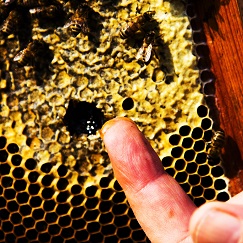
A colony is at its most defensive when it has comb, honey stores and young to protect. A travelling swarm has none of those things with it, and the bees have filled up on honey before leaving, which leaves them docile and focused on finding a home. That is the reason a swarm can sit quietly for hours with people passing nearby. Keeping a respectful distance still makes sense, and it lets the bees get on with what they are doing.
How to stay safe around a swarm
Give the swarm plenty of room and keep children and pets well back. Do not swat at the bees, throw anything, or spray them with water or insecticide, since any of these can turn a calm cluster defensive. If the swarm is close to a doorway or window, go inside and close up until it settles or moves on. Above all, do not try to knock it down or move it yourself. If you or anyone nearby has a known allergy to bee stings, stay indoors and let a professional handle it.
Stings and allergy: what to know
A honey bee stings only once, because its barbed stinger stays in the skin and the bee dies afterwards. For most people a sting means brief pain and local swelling. The Better Health Channel describes the honey bee as the most common cause of allergic reactions to insects in Australia, and records that around three people die each year from a severe allergic reaction to stinging insects. For a simple sting, the Better Health Channel's first-aid advice is to scrape the sting out sideways rather than pull at it, wash the area, and apply a cold pack, with an antihistamine or pain reliever for the swelling. If someone shows signs of a severe reaction such as difficulty breathing or throat swelling, call 000 immediately.
A swarm you can save, a hive you need removed
Because honey bees are such valuable pollinators, the aim is to save them where it can be done. A swarm clustered in the open is the best case: a local beekeeper can often collect it and rehouse the colony. The situation is different once bees have moved into a wall cavity, roof space or chimney and started to build comb, because that established hive needs proper removal to clear it from the structure.
If bees have set up inside your home, our bee hive removal team can assess where the colony is and the best way to deal with it. Call our Melbourne team on 03 9449 4244 or request a free quote, and if it is a swarm in the open we can point you toward a beekeeper who can collect it.
Bee swarm FAQs
Is a bee swarm dangerous?
A settled swarm is usually docile, because the bees have no hive, honey stores or young to defend and have filled up on honey before leaving. It looks alarming, but if you keep your distance and leave it undisturbed it will generally move on within a day or two. The picture changes if someone swats at it or tries to move it, and anyone with a known bee-sting allergy should stay well clear regardless.
Should I call a beekeeper or pest control for a swarm?
For a swarm clustered in the open, on a branch, fence or wall, a local beekeeper can often collect it and give the bees a new home, which is the preferred outcome for a valuable pollinator. If the bees have already moved into a wall cavity, roof space or chimney and established a hive, that becomes a removal job. Our team handles bee hive removal from buildings across Melbourne.
What is the difference between a swarm and a hive?
A swarm is a travelling cluster of bees, temporarily resting while scout bees search for a permanent home, and it has no comb or honey with it. A hive is an established colony that has built wax comb, raised young and stored honey inside a cavity such as a wall or roof. A swarm can often be collected by a beekeeper; an established hive in a structure needs professional removal.
Can bees be relocated instead of killed?
Wherever it is practical, relocation is the better outcome, because honey bees are important pollinators and their numbers are worth protecting. A clustered swarm in the open is the easiest case, and a local beekeeper can usually collect it. A hive built deep inside a wall or roof is harder to reach intact, and the right approach depends on where it is and how established it is. We can assess the situation and advise on the options.
Sources and further reading
Learn More About Pest Solutions
Same-day service, eco-friendly treatments and a pest-free guarantee. Domestic & commercial — all Melbourne suburbs.