
Termite Barriers Melbourne
Chemical & physical termite barrier systems installed by accredited technicians — long-term protection for new builds and existing Melbourne homes.
Termite Barriers in Melbourne
A recent study found that one in every three homes in Australia is at risk of a termite attack — finished houses and buildings still under construction alike. A termite barrier is your front line of defence: a continuous zone of protection installed around, and often beneath, a building to stop subterranean termites ever reaching the structure.
There are two broad approaches. A chemical barrier treats the soil with a termiticide so termites cannot pass through it. A physical barrier uses sheets, membranes, meshes or treated foams built into the construction to seal off the concealed routes termites use to get in. A well-installed barrier of either type does more than keep termites out — it forces them into the open, so any attempted entry is visible rather than hidden inside your walls.
Protech has been protecting Melbourne homes against termites since 2001. We install the leading barrier systems — Termidor, Biofilm, HomeGuard, TERM-seal and Greenzone — and recommend the right one for your property, build stage and budget. For expert termite control and a free barrier assessment, call us on 03 9449 4244.
Why a Termite Barrier Matters
When people say precaution is better than cure, with termites it is literally true. Termites arrive in great numbers and work tirelessly to take over a building, and they cause more damage to Australian homes than fire, storm and flood combined. The only reliable way to beat them is to stop them before they start.
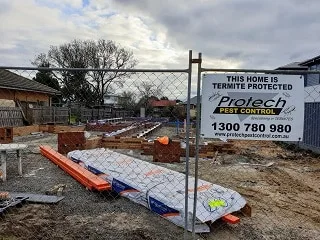
A barrier reduces the chance of an infestation creeping up on you unnoticed. It is especially important for properties under construction — the Building Code of Australia and Australian Standard AS 3660 set out termite-protection requirements for new builds, and in many council “Declared Zones” barrier protection is a condition of obtaining an Occupancy Certificate. Chemical applications, in particular, are best laid before construction, when technicians can work the termiticide deep into the soil without disturbing the finished property.
Barriers also work best as part of a complete program. Pairing a barrier with regular building and pest inspections — and, where appropriate, a termite baiting system — gives a property the most dependable, long-term protection.
Types of Termite Barrier
Termite barriers fall into two families — chemical and physical. Many of the systems we install combine elements of both. Here is how each works.
Chemical Termite Barriers
A chemical termite barrier is created by infusing the soil around a house or building with a termiticide, forming a treated zone that stops termites entering through the ground. It is one of the most proven ways to protect a property from grave or irreversible damage.
There are two kinds. Repellent barriers create a treated zone that termites instinctively avoid — but if there is any gap in coverage, termites will find it and use it, so their effectiveness depends on even, level, rock-free soil. Non-repellent barriers (such as Termidor) are the modern standard: termites cannot detect the chemical, walk straight through it, and carry it back to the colony. They cost more but are far more effective because there is no gap for termites to exploit.
At Protech we work with Altriset, Biflex, Termidor, Premise and Homeguard chemistries, matched to your soil and site.
How a Chemical Barrier Is Installed
The technician first inspects the property for any active infestation. If termites are present they are dealt with before the barrier goes in. A trench roughly 300 mm wide is then dug around the building, right down to the footings, and the termiticide is mixed with water and worked into the soil as the trench is back-filled. On most properties this is completed in a single day, varying with the size of the building and the soil type.
The Benefit of a Reticulation System
A soil barrier needs the chemical replenished over time to stay effective. Rather than re-trenching, we recommend a reticulation system — a perforated pipe installed in the trench at the outset. When a top-up is due, the technician simply pumps fresh termiticide through the pipe and it releases evenly into the soil through the holes, with no need to dig up or disturb your property. It is faster and cheaper over the life of the barrier.
Physical Termite Barriers
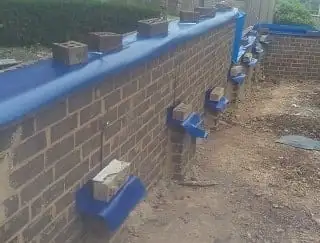
A physical termite barrier is a moisture-resistant barrier installed around the perimeter of a building and at pipe penetrations to block entry. It is typically made of wide sheets laid beneath the slab — before the concrete is poured — or fitted around the property and pipework, secured with adhesive and tape. The exact method depends on the construction and your needs.
A well-installed physical barrier does more than keep termites out: it forces any termites that do try to get in to build obvious entry tracks over the barrier, so their presence is visible rather than concealed. For physical barriers Protech installs Biofilm, TERM-seal, Greenzone and HomeGuard systems.
Physical Barrier Methods
Membranes
Flexible, thick polymer sheets impregnated with a strong insecticide so they act as both a physical and a chemical barrier in one — an effective, safe and affordable solution.
Collars
Slab-built homes have hidden penetration points around pipes and services that need protecting. Collars are fitted before the concrete is poured to seal those entry routes.
Foams & Sealants
Used for complex construction joins, these fill the irregular gaps where the slab meets walls and pipework. As well as filling the void they repel termites, keeping them out.
Metal Ant Capping
Metal sheets used in older construction to redirect termites to the outside of the structure where their activity is visible. Prone to rust, so they must be installed correctly to remain effective.
Stainless Steel Mesh
Marine-grade stainless mesh with openings too fine for a termite to pass through. Glued to slabs or masonry and worked around pipe penetrations for a durable physical block.
Aggregates
Crushed granite of a specific particle shape and size, packed so termites cannot tunnel through it. Highly effective but used less often than cheaper alternatives.
Termcoat
A clear Bifenthrin coating sprayed over brickwork and cement to build a termite-resistant zone that doubles as an inspection surface — easy to apply and cost-effective.
Barrier Systems We Install
Protech is accredited to install the industry’s leading termite barrier systems. Each has its own strengths — our technicians recommend the right one for your property after a free inspection.

Termidor
Termidor is the premium non-repellent chemical barrier, built on the active ingredient Fipronil. Repellent treatments only push termites away — sooner or later they find an untreated gap and slip past. Termidor works the opposite way: termites cannot detect it in the soil, so they walk straight through the treated zone, become carriers, and transfer it back through the colony until the colony itself is eliminated.
It delivers faster colony control than repellent products, long-term residual protection, and binds tightly to soil so there is little leaching during heavy rain. It is water-based, applied in low doses, does not harm soil micro-organisms, and is safe for use on domestic and commercial properties. Available as Termidor Residual (soil treatment), Termidor Dust and Termidor Foam for live, visible infestations. Protech's technicians are BASF-accredited Termidor applicators.
- Active ingredient: Fipronil
- Residual, Dust & Foam forms
- BASF-accredited applicators

Biofilm
Biofilm is an Australian owned and manufactured termite management system: a high-resistance 300-micron polyethylene film with bifenthrin dispersed all the way through the sheet, so it acts as a physical and a chemical exclusion barrier in one. Classed as a chemical barrier in a non-soil matrix, it is installed during construction — new builds and extensions to existing buildings alike — as a once-only treatment designed to protect the structure for the economic life of the building.
The film protects the complete underslab, the perimeter, cold joints, retaining walls and slab penetrations, where its Memory Tech collars slide straight over capped pipes for a firm one-step seal. Biofilm meets the Deemed-to-Satisfy requirements of the NCC 2022, must be installed to AS 3660.1 by accredited technicians, and carries a durability and design life in excess of 50 years with a product warranty covering repair and replacement up to $250,000 per claim, subject to annual timber pest inspections.
Biofilm information sheet (PDF) · Biofilm product warranty (PDF)
- Physical + chemical film in one
- 50+ year design life
- $250,000 product warranty
HomeGuard
HomeGuard is the only physical termite barrier officially registered with the Australian Pesticides and Veterinary Medicines Authority (APVMA). A single-sheet membrane infused with Biflex (bifenthrin), it blocks, repels and kills subterranean termites on contact, and replaces the moisture membrane in new construction. It is best installed during a new build, but existing homes can also benefit.
The range covers every scenario: HomeGuard Blue (cavity and perimeter), DPC (damp-proofing plus termite protection), TMB (under-slab termite and moisture barrier), Collars (concealed service penetrations), GT granules for areas sheet cannot reach, and Termiflex adhesive-sealant. It is lightweight, odourless, non-allergenic and rated for a 50-year lifespan, backed by the FMC HomeGuard million-dollar warranty.
- APVMA-registered
- Up to 50-year service life
- Million-dollar warranty
TERM-seal
TERM-seal is a physical barrier that doubles as a waterproofing system — the right choice when a property needs both termite protection and damp-proofing from a single install. Its sealants, sheets, penetration collars and fibre-reinforced membranes carry 0.1% Bifenthrin, and the system adapts to conventional and unusual constructions alike.
It is patent-protected, CSIRO-appraised (Appraisal #309), UV-stable, accepted by local government and compliant with AS 3660.1 and the AS/NZS 4347.6 damp-coursing standard. The perimeter and penetration systems carry up to a 50-year product warranty (20 years on wall coatings, 10 years on back-filled-wall waterproofing), subject to accredited installation and an annual inspection.
- Termite + waterproofing in one
- CSIRO Appraisal #309
- Up to 50-year warranty
Greenzone
Greenzone is a builder-favourite physical barrier that combines a termite-and-insect barrier with a compressible expansion-joint foam in one product. Bifenthrin — a long-residual fourth-generation pyrethroid — is sealed into a cross-linked, closed-cell polyethylene foam, so it cannot degrade or leak, and the foam doubles as the joint filler between concrete slabs, sealing the cracks and crevices termites use to get in.
It is applied three ways: as a pipe-penetration wrap (no separate collar needed), a control-joint fill, or a concrete infill between slab and wall. Installation is fast with no nails, clips or ties, it sticks to PVC, concrete, brick and metal, and plumbing does not need to be removed. Backed by a two-million-dollar warranty when fitted by an accredited installer.
- Barrier + expansion-joint foam
- Long-residual bifenthrin
- Two-million-dollar warranty
Not sure which barrier suits your home? Read our guide to termite barriers vs termite baiting, or call us and we will talk you through the options.
Why Choose Protech for Termite Barriers?
Protech Pest Control has been securing Melbourne homes and businesses against termites since 2001, with a team carrying over 40 years of combined experience. We are accredited to install every major barrier system, and product warranties — from Greenzone’s two-million-dollar cover to the HomeGuard and TERM-seal warranties — are only valid when installed by an accredited operator like us.
- Accredited installers for Termidor, Biofilm, HomeGuard, TERM-seal and Greenzone
- Full compliance with Australian Standard AS 3660 for new construction
- Barriers for new builds, existing homes and renovations
- Licensed, insured and accredited technicians (HACCP, NPMA, AEPMA)
- Environment-friendly products, safe around children and pets
- Same-day service and a free, no-obligation inspection and quote
- 4.8★ from 384 Google reviews — trusted across Melbourne since 2001
To arrange a free barrier assessment, call Protech on 03 9449 4244.
Complete Termite Protection
A barrier is one part of a full termite-management program. Explore our related termite services.
Termite Control & Treatment
Inspection, treatment and long-term protection for active termite problems across Melbourne.
Termite Baiting
In-ground bait stations that eliminate the whole colony at the source — the barrier’s sibling system.
Barriers vs Baiting
How chemical and physical barriers compare with baiting systems, and when each is the better choice.
Building & Pest Inspection
Thorough Termatrac inspections that confirm a barrier is performing and catch activity early.
Frequently Asked Questions
What is a termite barrier?
A termite barrier is a continuous zone of protection installed around — and often under — a building to stop subterranean termites reaching the structure. A chemical barrier treats the soil with a termiticide so termites cannot pass through it; a physical barrier uses sheets, membranes, meshes or treated foams built into the construction to physically block their concealed entry routes. The aim of both is the same: force termites into the open where their activity can be seen, rather than letting them enter hidden inside walls and slabs.
What is the difference between a chemical and a physical termite barrier?
A chemical barrier is created by treating the soil around the footings with a termiticide such as Termidor, forming a treated zone termites cannot cross. A physical barrier is a built-in product — a membrane, stainless-steel mesh, collar or treated foam — installed during construction (or retrofitted) to physically seal entry points. Many modern systems, such as HomeGuard, combine both: a physical membrane impregnated with an insecticide so it blocks and kills on contact. The right approach depends on whether the property is being built or already exists, the soil and site conditions, and your budget.
Which termite barrier is best for my home?
There is no single best barrier — the right system depends on whether you are building or protecting an existing home, the construction type, soil conditions, site access and budget. Chemical barriers (Termidor) suit existing homes and pre-construction soil treatment; physical systems (Biofilm, HomeGuard, TERM-seal, Greenzone) are usually built in during construction and several add waterproofing or expansion-joint benefits. After a free inspection, Protech recommends the system that gives your property the most reliable, long-term protection.
Are termite barriers safe for children and pets?
Yes. The treatments we use are environment-friendly and safe for families and pets when installed correctly. As a precaution we ask that children and pets are kept indoors during installation of a chemical barrier. If anyone in the home has specific allergies or health concerns, raise them with our technician at the time of installation and they will advise accordingly.
How long does a termite barrier last?
It depends on the system. Soil-applied chemical barriers can last several years before the soil needs replenishing — a reticulation pipe system makes that top-up quick and non-disruptive. Physical systems such as Biofilm, HomeGuard and TERM-seal are rated for service lives up to and beyond 50 years. Whichever system is installed, an annual inspection is required to keep the protection — and any product warranty — valid.
Do termite barriers come with a warranty?
Several do. Greenzone carries a two-million-dollar warranty, HomeGuard a million-dollar FMC warranty, TERM-seal up to a 50-year product warranty on its perimeter and penetration systems, and Biofilm a product warranty covering repair and replacement up to $250,000 per claim. Every one of these warranties requires installation by an accredited operator and an annual inspection by a qualified technician — both of which Protech provides.
Can a barrier be installed on an existing home, or only during construction?
Both. Chemical barriers are routinely installed around existing homes by trenching and treating the soil around the footings, and systems like HomeGuard can be retrofitted as well. That said, physical barriers are most cost-effective when built in during a new construction, because the membranes and collars can be laid before the slab is poured. Protech installs barriers pre-construction, post-construction and during renovations.
Do I still need annual termite inspections if I have a barrier?
Yes. A barrier dramatically reduces the risk of a hidden infestation, but no barrier removes the need for monitoring. Annual inspections confirm the barrier is performing, catch any conducive conditions early, and are a condition of keeping product warranties valid. We recommend a professional inspection at least every 12 months — sooner if you suspect activity.
Client Testimonials
Very happy with the service we received. The technician explained in much detail what was required to be done and made us feel that the right outcome would be achieved, which it was, much to our relief. Would highly recommend the company.
– Helen WilsonLearn More About Pest Solutions
Same-day service, eco-friendly treatments and a pest-free guarantee. Domestic & commercial — all Melbourne suburbs.