
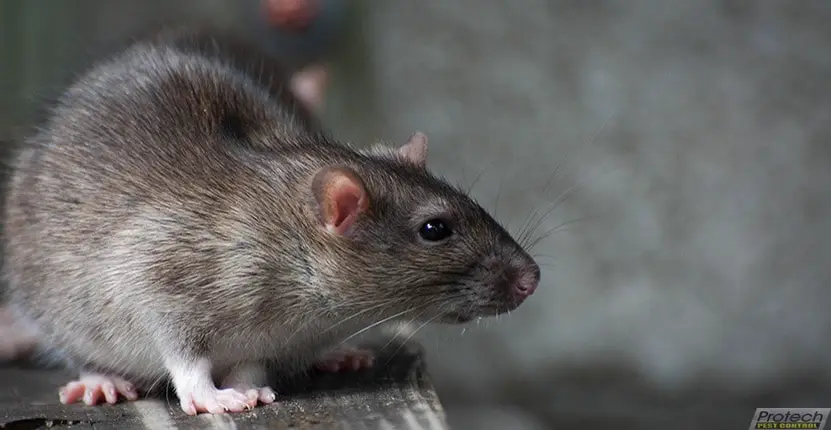
The health case for dealing with rats and mice promptly is real, and it is also frequently overstated. Rodents in a Melbourne roof or kitchen do carry disease risks worth taking seriously — and at the same time, some of the infections that dominate the internet's rat pages either do not occur in Australia at all or have not been seen here in a century. Knowing which is which lets you act on the genuine risks without the scare stories.
The infections that genuinely occur here
Leptospirosis
Leptospirosis is the rodent-borne infection Victorian health guidance treats as the headline risk. The bacteria pass in the urine of infected animals — Better Health Channel lists rats and mice among the carriers — and people pick it up when contaminated water or soil reaches a cut, the eyes or the mouth. Symptoms run from fever, headache and muscle pain through to serious illness needing hospital care. Serious cases are uncommon in an urban home, and the guidance still specifically recommends controlling rodents around the house as a prevention step, because urine on benchtops, stored food and roof insulation is exactly the exposure route.
Salmonellosis
Salmonella bacteria travel wherever rodents do: between drains, bins, compost and your food preparation surfaces. Food or water that has been in contact with rodent droppings or urine can pass on the infection, which brings on diarrhoea, fever and stomach cramps typically within a few days. This is the everyday risk in a house with active rodents — a colony does not need to bite anyone to contaminate a kitchen, and any food a rodent has reached should be discarded, not salvaged.
Rat-bite fever
A bacterial infection passed through the bite or scratch of an infected rat, or more rarely through contaminated food or water. Fever, joint and muscle pain, headache and a rash can follow days after the bite. It is uncommon in Australia, and it is one good reason never to handle a live or dead rat with bare hands — use gloves and a bag, and wash up thoroughly afterwards. Any rodent bite that breaks the skin deserves a doctor's attention.
Lymphocytic choriomeningitis (LCM)
A viral infection carried mainly by the house mouse rather than by rats, passed to people through contact with droppings, urine or nesting material. Most cases are mild or pass unnoticed; it carries particular risks in pregnancy. It is another argument for the same practical rule: treat droppings and nests as contaminated material, and clean them up with gloves and a damp cloth rather than a dry brush that raises dust.
The famous ones that are not an Australian problem
Two diseases dominate overseas rat content and deserve honest handling here. Hantavirus is a genuinely serious rodent-borne illness in parts of the Americas and Asia — and Better Health Channel records that there have been no cases of hantavirus infection reported in Australia. Plague, the great historical rat-borne disease, spread by the fleas rats carry rather than by the rats themselves, has likewise not been seen in Australia for around a century. Neither belongs on your list of reasons to worry tonight; the local risks above, plus the asthma and allergy load from droppings, dander and disturbed roof-space dust, are the real case for acting.
What actually protects your household
The exposure routes all run through the same few things: rodent urine and droppings reaching food and surfaces, dust from contaminated material being disturbed, and direct contact with the animals. So the protections are practical. Store food, pet food and birdseed in sealed containers and wipe benches before use if you suspect overnight visitors. Wear gloves to clean up droppings, damp-wipe rather than sweep, and bag the waste. Never handle rats or mice bare-handed, alive or dead. And deal with the population itself rather than living alongside it — the risks above all scale with how long a colony runs and how big it gets, which our roof rat guide covers in detail, right down to the breeding arithmetic.
If you are hearing scratching in the roof, finding droppings behind the kickboards or seeing gnawed packaging, a professional inspection settles what you are dealing with and a treatment program clears it. Protech has been protecting Melbourne homes since 2001 — call 03 9449 4244 or request a free quote, and we will arrange a visit, most often the same day.